
Lieferung heute & morgen

Qualitätsgarantie

Willkommens-Angebote freischalten: KOSTENLOSE Lieferung | Bis zu 80 % RABATT | Kostenlose 30-Tage-JoyPlus-Testphase
App herunterladen
An outdoor light with a motion sensor can automatically illuminate paths, entrances, garages and patios. In practice, however, disappointing purchases are often down to misjudged conditions at the installation site rather than the light itself. A high lumen rating is no substitute for a suitable position, and a solar light won’t work equally well in every location.
A high light output sounds impressive at first. What matters, though, is whether the light reaches the area you want to illuminate and whether the motion sensor is correctly positioned. A narrow beam may be enough for a front door, while a courtyard or driveway needs a wider beam angle.
So look out for:
A solar outdoor light needs enough direct sunlight to charge its battery. Under a balcony, on a north-facing wall or behind dense foliage, its operating time may be significantly shorter. In winter, the days are shorter and light levels are more diffuse, too.
Before you buy, check whether the solar panel will be in direct sunlight for several hours. If not, a mains-powered LED outdoor light or a rechargeable outdoor light with USB charging may be better suited to the location.
The IP44 rating means protection against solid objects above a certain size and splashing water from any direction. An IP44 outdoor light may therefore be suitable for a sheltered entrance or covered patio, for example, provided the installation instructions allow for it.
An IP65 outdoor light is also dust-tight and protected against water jets. However, the rating doesn’t mean you can install it anywhere: standing water, permanently exposed cable connections or incorrect positioning can all affect safe operation. Always check the manufacturer’s guidance for your specific installation location.
Colour temperature is measured in kelvins. Around 3,000 K gives a warm white light, while 4,000 K looks more neutral. Readings of around 7,000 K appear noticeably cooler and may suit functional security lighting. For living areas, patio lighting or a front door, your choice will depend on the atmosphere you want to create.
The lumen rating describes the total light output. A lower output is often enough for a small path, while a wide driveway may need more. Position a powerful light carefully so that it doesn’t cause unnecessary glare for neighbours or road users.
A sensor with a wide detection angle is useful for paths, courtyards and garage driveways. Other important features include:
Install an outdoor light with a motion sensor where people will actually cross the sensor’s detection area from the side. Depending on the design, movement directly towards the sensor may be detected later.
A solar light or portable rechargeable option can be installed without a mains connection. In Germany, mains-powered models must only be connected by a suitably qualified electrician. For outdoor installation, you should also use corrosion-resistant screws and suitable fixings.
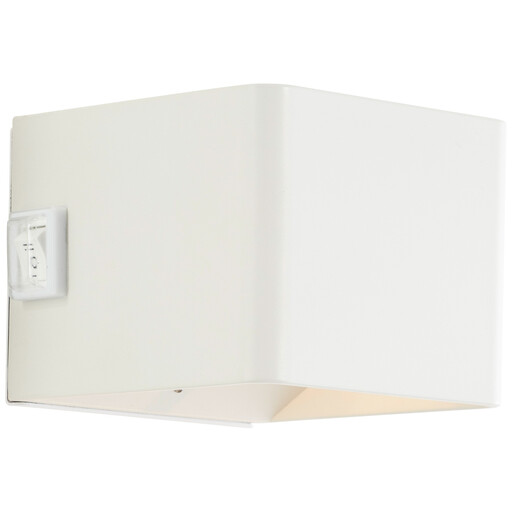
Why this product suits this profile: This portable outdoor LED wall light is a good choice for smaller entrance areas, covered patios or spots without a power socket. Its built-in battery charges via USB.
The IP44 rating clearly indicates the intended protection against splashing water. The light doesn’t rely on permanent mains wiring or a solar panel.
4 W, 300 lm, 3,000 K, built-in battery, USB port, magnetic mounting and motion sensor.
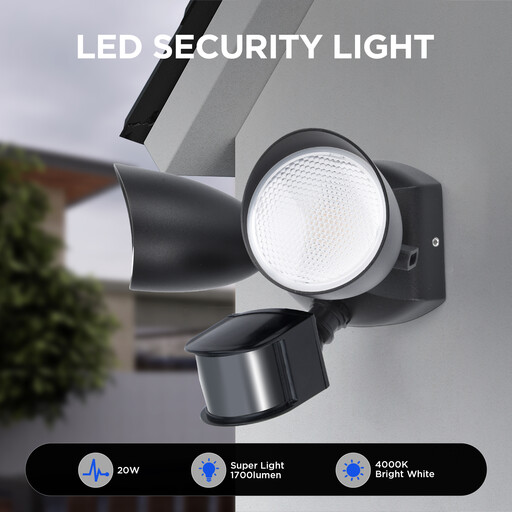
Why this product suits this profile: With two light heads and 1,700 lm, this model is designed for larger areas such as courtyards, garages and driveways, provided the installation conditions are suitable.
The specific light output and colour temperature are stated. This makes it easier to compare the light objectively with your intended use, rather than relying on marketing claims alone.
20 W, 1,700 lm, 4,000 K, sensor and integrated twin-head design, as stated in the product name.

Why this product suits this profile: Three light heads, 3,000 lm and wide coverage make this model suitable for courtyards, garages, driveways and larger garden areas.
The stated IP65 rating and guidance on positioning the solar panel make it clear that weather protection and sufficient sunlight need to be considered together.
302 LEDs, 3,000 lm, three operating modes, 180° sensor angle, 60-foot detection range and 1,800 mAh lithium-ion battery, according to the product specifications.
We’ve put together a complete, regularly updated list of products that meet these strict selection criteria and fully comply with the safety regulations in force in the EU.
Position the sensor so that people cross its detection area from the side wherever possible. Avoid nearby heat sources, moving branches and reflective surfaces. Mains-powered lights must be connected by a qualified electrician. If you’re installing a solar light, position its panel to face the sun as directly as possible.
Its actual lifespan depends on operating hours, heat dissipation, battery quality, moisture and ambient temperature. In a solar light, the battery is often a particularly important wear item. So check whether replacement parts, charging guidance and warranty information are available. The integrated LED may not always be replaceable either.
For a mains-powered LED light, you can estimate its consumption using this formula: power in watts × operating hours ÷ 1,000 = kilowatt-hours. A 20 W light that runs for one hour a day uses around 7.3 kWh per year. A solar light uses no mains electricity directly while operating, but it does need enough sunlight and a worn battery may lead to additional costs.