
Lieferung heute & morgen

Qualitätsgarantie

Willkommens-Angebote freischalten: KOSTENLOSE Lieferung | Bis zu 80 % RABATT | Kostenlose 30-Tage-JoyPlus-Testphase
App herunterladen
The right outdoor lighting can make paths easier to see, help you find your way to the entrance or add a decorative touch to your garden or balcony. In practice, however, unclear IP ratings, confusing lumen figures and unsuitable power supplies can often lead to the wrong purchase. It’s particularly important to choose a light based on where you’ll use it and its technical specifications – not just its product photo or marketing claims.
The ratings IP44, IP65 and IP66 describe protection against solid objects and water. They don’t automatically mean that a light can be used underwater for extended periods.
An outdoor light with IP44 may be suitable for a covered patio, provided it isn’t exposed to direct rain. For unprotected areas of the garden, IP65 outdoor lighting or an IP66 outdoor floodlight is often a better choice. Even so, the installation instructions and the exact location are still important.
Lumens measure the total light output, but on their own they tell you little about the actual brightness at a particular point. A narrow-beam outdoor floodlight can illuminate an area in the distance, while a wide-beam light spreads light more evenly over a larger area.
When choosing, you should also check:
Solar and battery lights are easy to position and don’t need a fixed power connection. However, how long they stay lit depends on battery capacity, charging conditions, temperature and operating time. For example, an outdoor string light with IP44 is suitable for sheltered decorative areas, but it shouldn’t be placed in water or left exposed to the elements without protection for extended periods.
For an entrance, garage or frequently used path, a hard-wired LED light is often a more predictable choice. Mains electrical installations should be carried out by a qualified electrician in accordance with current regulations.
First, check whether the light will be installed under a roof, on an exposed exterior wall, in a flowerbed or near an irrigation system. An IP65 outdoor floodlight, such as a garden spotlight, may be suitable for splashing water and water jets. However, the product must not be submerged contrary to its instructions.
Also look for:
Warm white outdoor lighting at around 2700 to 3000 K tends to create a softer effect and works well on patios, balconies and by the entrance. Neutral white at around 4000 K can suit practical areas such as garages, courtyards and access routes. Cool white at around 6500 K has a noticeably more functional feel and may not suit every location when used for decorative lighting.
An outdoor wall light or outdoor light with a motion sensor should distribute light without dazzling neighbours or shining directly into windows. Motion sensors can make it easier to get around and add convenience, but their detection range, time delay and direction need to be set correctly.
Integrated LEDs usually use little power and can’t be replaced in many lights. Before you buy, check the stated lifespan, warranty terms and whether the LED module can be replaced.
For smart garden lighting, compatibility and any required hub or base unit are particularly important. Matter, Wi-Fi, Bluetooth and manufacturer-specific apps aren’t automatically interchangeable. For example, an add-on spotlight may require an existing base light from the same system.
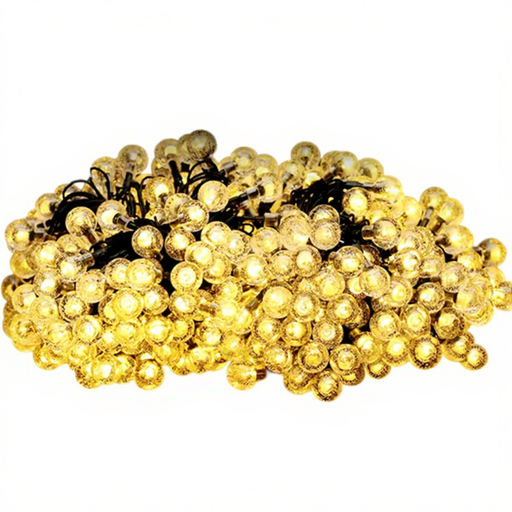
Why this product suits this profile: This battery-powered string light can be used on a balcony, covered patio or in a sheltered part of the garden without needing a fixed power connection. Its 50 LEDs, eight modes and timer make it a flexible decorative option.
The stated IP44 rating makes its limitations clear. The string light isn’t presented as an unprotected, all-weather lighting solution for exposed areas.
Runs on three AA batteries; 5 m long, with a timer and memory function. The battery box must not be submerged in water.
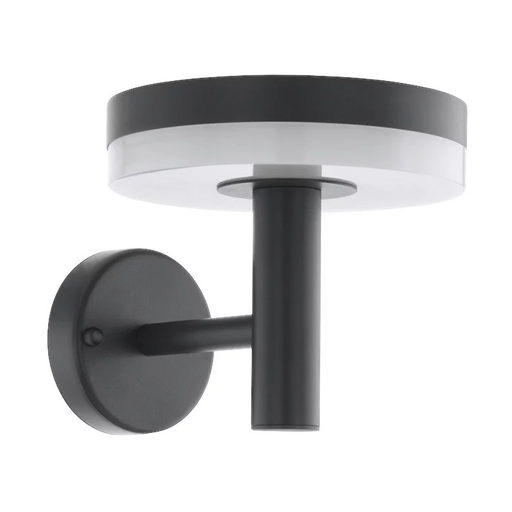
Why this product suits this profile: This fixed outdoor wall light combines an anthracite-coloured casing with an integrated LED module, making it suitable for entrances, paths, patios and gardens.
The choice is based on specific figures such as 11 W, 950 lm and 3000 K, rather than a vague claim about brightness. Check the product documentation to confirm that its stated weather resistance is suitable before installation.
Integrated LED module, warm white light at 3000 K and 950 lm light output. According to the product information, the LED module can’t be replaced.
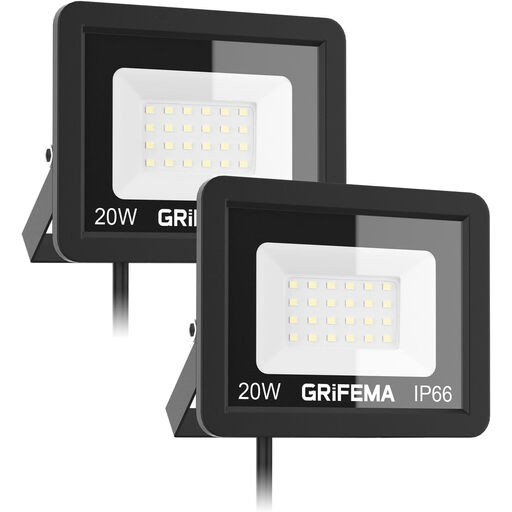
Why this product suits this profile: These two adjustable floodlights are designed for garages, courtyards, garden tasks or larger outdoor areas where practical lighting that can be directed as needed is important.
The specifications list light output, power, colour temperature, IP66 rating and the 180-degree bracket. This makes it easier to check whether the floodlights suit your planned mounting position and preferred colour temperature.
Two lights, each 20 W, with a combined output of 2200 lm according to the product information, an IP66 rating and an adjustable bracket for wall, ceiling or floor mounting.
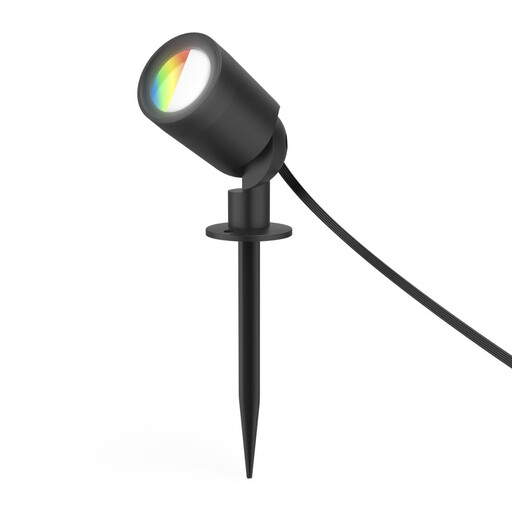
Why this product suits this profile: This add-on spotlight is for anyone looking to expand an existing Hama garden lighting setup using an app, Matter or voice control.
The main limitation is clear: this is an add-on and requires a Hama base light. That avoids the assumption that the spotlight can be used on its own.
IP65, 7 W, stepless dimming, adjustable direction, 16 million colours, Matter compatibility, and control via an app or voice assistant.
We’ve put together a complete, regularly updated list of products that meet these strict selection criteria and fully comply with the safety regulations in force in the EU.
An outdoor wall light, a light with a motion sensor or a combination of the two could work well by your entrance. The key things to consider are a suitable IP rating, enough brightness and positioning the light so that it doesn’t dazzle or shine directly into windows. Warm white light at around 3000 K is often used for entrances and paths.
Energy use depends on the wattage and how long the light is on each day. A 10 W light switched on for five hours a day uses 0.05 kWh per day. Motion sensors, timers and schedules can reduce the time it’s on. For battery-powered lights, you should also consider the battery type, capacity and operating mode.
Manufacturers usually state the lifespan in operating hours. It depends, among other things, on heat dissipation, how often the light is switched on and off, moisture and the quality of the power supply. Before buying a light with integrated LEDs, check whether the module can be replaced. Regular visual checks of the casing, cables and fixings can help you spot visible damage early.