
Lieferung heute & morgen

Qualitätsgarantie

Willkommens-Angebote freischalten: KOSTENLOSE Lieferung | Bis zu 80 % RABATT | Kostenlose 30-Tage-JoyPlus-Testphase
App herunterladen
The right outdoor lighting can make paths easier to see, illuminate your entrance or create a pleasant atmosphere on your patio or balcony. However, product descriptions often make grand promises, while important details can easily be overlooked. Three common mistakes cost buyers money particularly often:
By checking a few technical details before buying, you can choose outdoor lights more deliberately based on installation effort, energy consumption, weather conditions and the lighting effect you want to create.
The IP rating describes a product’s protection against solid foreign objects and water. For many covered patios, entrance areas and sheltered façades, IP44 outdoor lighting may be suitable. The first digit indicates protection against solid particles, while the second refers to water protection.
In practical terms, IP44 means that the light is protected against splashing water from different directions. It should still be installed and sealed correctly, and must not be fitted in a place where it could sit in water. For more exposed areas, a light with a higher rating, such as IP65, may be more suitable. The manufacturer’s installation instructions and the light’s actual position on the building remain decisive.
Wattage primarily indicates energy consumption, not brightness itself. For light output, the lumen (lm) value is more informative. For example, an integrated LED outdoor light with 950 lm is more suitable for an entrance area than a small solar garden light designed mainly to create decorative accents.
Colour temperature also affects how a light is used:
Warm white outdoor lighting often has a subtle, understated effect. Cool white light, on the other hand, can highlight details more strongly, but it will not suit every garden or façade design.
Solar garden lights and solar garden lanterns can usually be pushed into soft ground without permanent wiring. However, their performance depends on the location, time of year, shade and charging time. According to the product details, the Aigostar models require around 4 to 6 hours of charging time and offer 8 to 12 hours of operating time under suitable conditions.
Permanently connected outdoor wall lights require secure installation. Work on a 220–240-volt mains supply should be carried out by a qualified electrician in accordance with the manufacturer’s instructions. Lights with a replaceable E27 fitting allow you to change the light source later. With integrated LED modules, however, you should check whether the module is non-replaceable and what service life is specified.
The outdoor lights below are matched to different requirements. The technical details refer to the respective product descriptions.
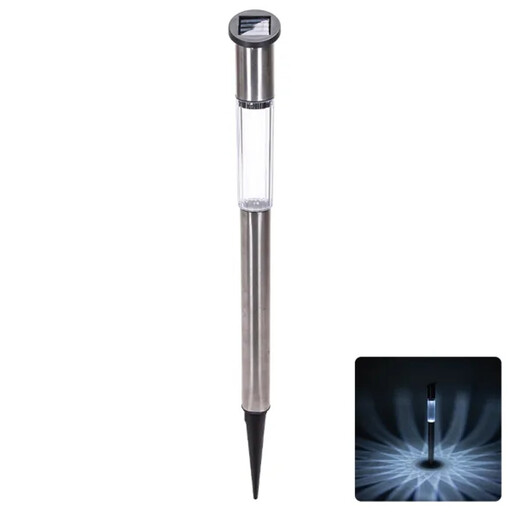
Why this product suits this profile: This solar path light can be placed in soft ground using its spike, without a permanent power connection. It is suitable for paths, flower beds and driveways.
The product details explicitly state the charging time, operating time and IP44 protection. This makes it easier to plan the location realistically before buying.
Solar-powered, 6500 K colour temperature, 4–6 hours of charging time and a stated operating time of 8–12 hours under suitable conditions.
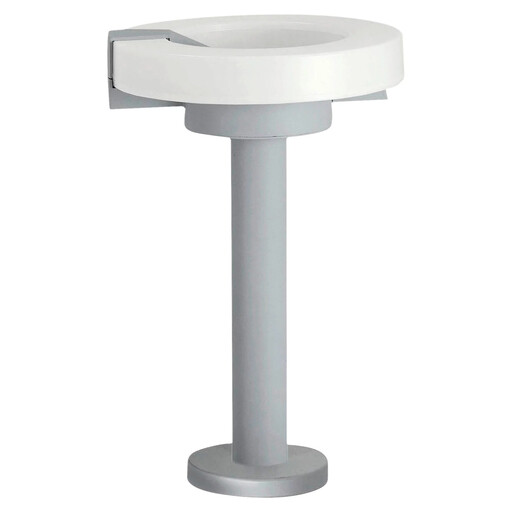
Why this product suits this profile: This freestanding garden light is appealing to buyers looking for permanent lighting for lawns, paths or driveways, backed by clear technical specifications.
The stated IP65 rating is higher than that of IP44 lights. Even so, installation and sealing must be carried out correctly; this rating does not mean the light can be immersed.
IP65 rating, integrated LED module, 3000 K warm white light and 470 lm according to the product description.
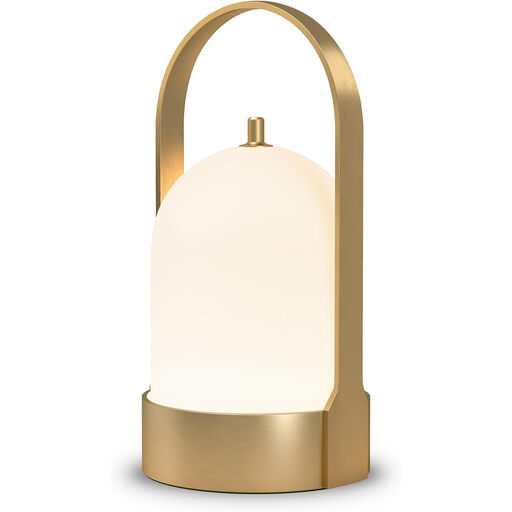
Why this product suits this profile: This portable light is ideal for patios, dining tables, campsites and situations where you do not want a permanent installation.
The light is not dependent on a sunny location. Nevertheless, the stated IP44 rating should not be confused with resistance to immersion.
4000-mAh battery, USB charging, four brightness levels with touch control and, according to the description, up to 80 hours at minimum brightness.
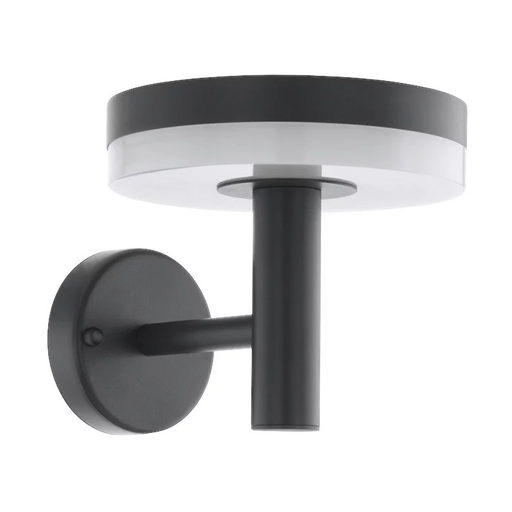
Why this product suits this profile: This permanently installed LED outdoor light is designed for entrances, façades, patios and paths with a permanent power connection.
The product data specifies 11 W consumption, 950 lm and 3000 K. This makes it easier to assess the light objectively against its intended location.
Integrated LED module, 950 lm, 3000 K warm white light and an anthracite-coloured metal and plastic construction.
We have put together a complete, regularly updated list of products that fully meet these strict selection criteria and the safety regulations applicable in the EU.
Path lights and solar lights with ground spikes are suitable for garden paths, provided there is enough sunlight at the location. You should also check the desired colour temperature, the height of the lights and the distance between individual lamps. Moderate light output is often enough for consistent visibility, while decorative solar garden lights tend to create individual accents.
IP44 means protection against solid foreign objects above a certain size and against splashing water. IP44 outdoor lighting is therefore suitable for many sheltered outdoor areas, but must not be immersed or exposed to permanently standing water. Professional installation is required to maintain the protective effect.
Solar lights use energy from the sun during the day and do not require direct mains electricity while operating. For LED outdoor lights, wattage, daily operating time and the electricity tariff all affect running costs. An 11 W light used for five hours consumes 0.055 kWh per day. For a reliable calculation, you should take actual usage and the current electricity price into account.