
Lieferung heute & morgen

Qualitätsgarantie

Willkommens-Angebote freischalten: KOSTENLOSE Lieferung | Bis zu 80 % RABATT | Kostenlose 30-Tage-JoyPlus-Testphase
App herunterladen
The right outdoor lighting improves visibility around entrances, garages and pathways, while also enhancing the look of your patio or garden. The choice ranges from classic outdoor lamps and outdoor wall lights to solar floodlights and smart RGB lights. However, differences in ingress protection, power supply and light output are not always explained clearly in product advertising.
Three common purchasing misconceptions particularly often lead to the wrong choice:
Matching the location, power supply and IP rating before buying reduces the risk of choosing an unsuitable light.
The IP code consists of two digits. The first describes protection against solid foreign objects and dust, while the second indicates protection against water. For example, an IP65 outdoor light is dust-protected and can withstand water jets from various directions. This makes it suitable for many façades, patios and covered outdoor areas.
Products rated IP66 or IP67 may be useful in highly exposed locations. IP67 means that temporary immersion under specified conditions is taken into account. However, the IP rating does not replace proper installation: cable connections, seals and wall penetrations must also be fitted correctly.
A light rated IP44 is protected against larger solid foreign objects and splashing water. It is suitable, for example, for sheltered entrances or covered areas, but should not be treated with a pressure washer or left permanently exposed to heavy rain.
Luminous flux is measured in lumens (lm). A decorative LED garden lamp usually needs less light than an LED outdoor floodlight for a courtyard or garage. For pathways, even distribution is also more important than having one particularly bright spot.
Colour temperature is measured in kelvins:
An RGB outdoor light can create colourful lighting scenes. For everyday visibility, it should also have an adjustable white-light function, such as RGB+CCT with a range of colour temperatures.
An outdoor solar light needs a location with sufficient sunlight. Claims such as “up to 12 or 24 hours” depend on the charge level, time of year, temperature and selected brightness. A separate solar panel offers greater flexibility, as the light itself can be installed in the shade.
Mains-powered outdoor wall lights usually deliver more consistent performance, but fixed connections require professional installation. With a dimmable outdoor wall light, the light and dimmer must be compatible. Motion sensors are practical for entrances, carports and garages, while continuous lighting may be more pleasant for patios or pathways.
Smart outdoor lighting should also be checked for range, app compatibility, whether a bridge is required and whether group control is possible. Bluetooth Mesh can connect multiple lights without requiring each one to be operated individually.
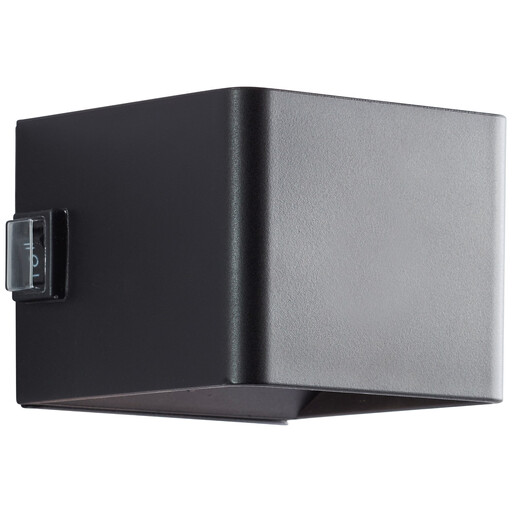
Why this product suits this profile: This portable light does not require a fixed power cable and can be attached magnetically to suitable metal surfaces. It is suitable for balconies, patios or a sheltered entrance.
Battery and USB operation avoid the need for complicated fixed installation. The stated IP44 rating makes the light suitable for splashing water, but not direct water jets.
300 lm, 3000 K, integrated motion sensor, magnetic mounting and USB charging port.
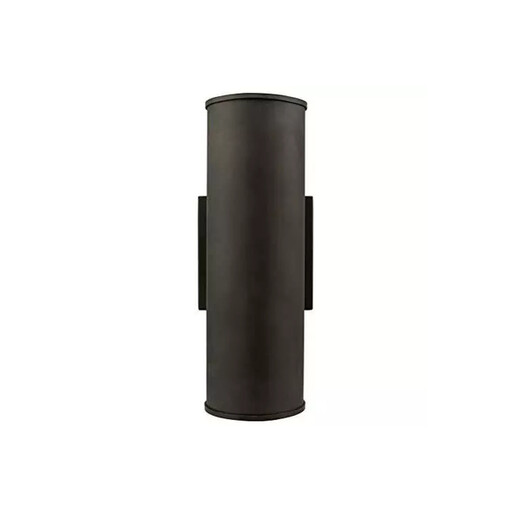
Why this product suits this profile: This permanently mounted outdoor wall light combines a rectangular design with upward- and downward-facing illumination. It is suitable for entrances, patios and garage doors with an existing mains connection.
The product details specify concrete values rather than making vague brightness claims: IP44, 870 lm, 3000 K and two integrated 8-W LEDs.
870 lm, warm white 3000-K light, up-and-down effect and frosted glass; the product description states that mounting accessories and instructions are included.
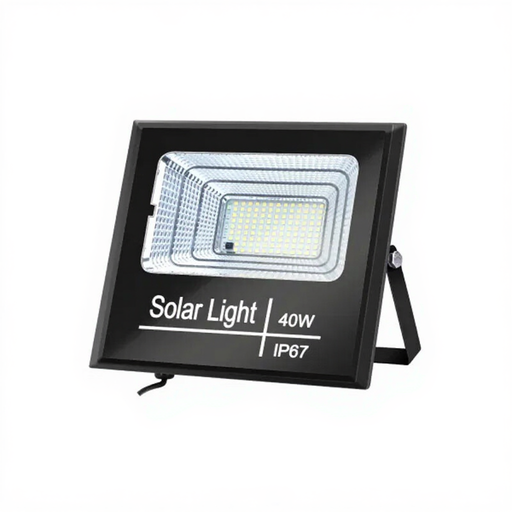
Why this product suits this profile: This solar floodlight is designed for gardens, pathways, courtyards or garages where no mains connection is available and the panel and light need to be positioned separately.
The separate panel makes it easier to position the unit towards the sun. The stated IP67 rating and 10,000-mAh battery are specific selection criteria for unprotected areas.
Solar operation without mains wiring, separate panel, aluminium-and-glass construction and, according to the product details, up to 12 hours of operating time.
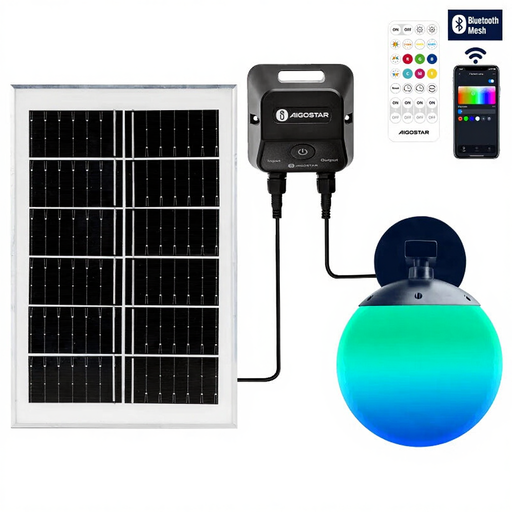
Why this product suits this profile: This solar-powered outdoor wall light is aimed at buyers who want to combine coloured light, white light and control of multiple lights via Bluetooth Mesh.
As well as RGB, a range of 2700 to 6500 K is available. This means the light is not limited to decorative colours. The IP65 rating defines the intended outdoor use in technical terms.
200 lm, Bluetooth Mesh control for more than 200 devices according to the product details, 5-m cable to the solar panel and automatic activation when it gets dark.
We have put together a complete, regularly updated list of products that fully meet these strict selection criteria and the safety regulations applicable in the EU.
Lights with fixed connections should be installed by a qualified electrician. Disconnect the power supply before carrying out maintenance. Solar lights need a clean panel that is free from shade. For motion sensors, the detection angle and mounting height are crucial to prevent passing vehicles or branches from triggering the light continuously.
Clean the housing and diffuser with a soft cloth. Do not use aggressive cleaning products and do not direct a high-pressure water jet at the light. With integrated LED modules, you should also bear in mind that replacing the light source at a later stage may not be possible, depending on the model.
IP44 is sufficient for many sheltered outdoor areas. For an exposed façade, in the garden or in other particularly exposed locations, IP65, IP66 or IP67 may be more suitable depending on the installation site. The complete manufacturer’s specifications and correctly sealed installation remain the deciding factors.
Operating time depends on battery capacity, charging time, sunlight, temperature and the selected brightness. Manufacturer claims such as “up to 12 hours” refer to specific conditions. In winter or after several cloudy days, the lighting duration may be shorter.
For the same light output, LED lights generally require less electrical power than conventional light sources. Running costs mainly depend on wattage, daily operating time and the electricity price. Solar lights draw their energy from the solar panel, but they still need to be maintained or replaced when the battery or panel wears out.