
Lieferung heute & morgen

Qualitätsgarantie

Willkommens-Angebote freischalten: KOSTENLOSE Lieferung | Bis zu 80 % RABATT | Kostenlose 30-Tage-JoyPlus-Testphase
App herunterladen
The right outdoor lighting makes paths easier to see, helps you find your way around the entrance and adds targeted accents to your patio or garden. However, design and lumen output are not the only factors to consider when buying. Unclear protection ratings, unsuitable installation locations and overstated solar performance can all mean that a light is barely practical in everyday use.
The description “waterproof outdoor light” is not, on its own, proof of technical performance. The crucial factor is the IP rating. Outdoor lighting rated IP44 is protected against solid foreign objects measuring 1 millimetre or more, as well as splashing water from various directions. However, it is not designed to be submerged in water or exposed to a direct high-pressure water jet.
For a sheltered entrance, covered patio or garden path, IP44 may be sufficient depending on the installation location. In exposed areas that regularly experience heavy rain, check the manufacturer’s specific guidance on suitable installation positions.
High brightness is not always useful. Lower light outputs are often sufficient for decorative garden path lighting. A light by the front door or garage, on the other hand, needs to provide enough illumination for orientation without causing glare.
Pay attention to:
Solar garden lights need a location with sufficient direct sunlight. Shade from trees, walls or porch roofs reduces charging performance. The stated operating time usually applies under suitable conditions and may be shorter in cloudy weather, low temperatures or when the solar panel is dirty.
A rechargeable outdoor light is more flexible, but it needs to be charged regularly. Check the charging method, charging time, battery access and intended installation location. A light with a USB charging cable is particularly suitable for areas without a fixed power connection.
When choosing LED outdoor lighting, the protection rating must be suitable for its intended location. IP44 means protection against splashing water, but not complete protection against permanently standing water. Solar garden lights with ground spikes should therefore not be placed in hollows where rainwater collects.
For permanently connected lights, such as an outdoor LED floodlight, electrical work may only be carried out by a suitably qualified professional. Before installation, you will also need suitable corrosion-resistant screws and a stable surface.
An outdoor wall light with a motion sensor switches on automatically when movement is detected. The important factors include not only the detection range, but also the detection angle, run-on time and whether the sensor can be adjusted.
A motion sensor is practical for a front entrance or garage when you do not want the light switched on continuously. On paths with frequent activity, however, a run-on time that is too short can be inconvenient. The sensor should not point directly at busy roads or moving branches.
Warm white light at around 2700 to 3000 K is often suitable for patio lighting, seating areas and decorative solar garden lights. Neutral or cool white light at 4000 K or above can be useful for driveways, garages and practical orientation.
Light distribution is also important for decorative purposes. A single floodlight can showcase a tree, façade or garden area. Several lower-level lights create more even guidance along a path.

Why this product suits this profile: This solar light can be pushed into soft ground without a fixed power connection, making it suitable for paths, flowerbeds or driveways.
The stated charging and operating times make it clear that direct sunlight is important for use. With an IP44 rating, the light is designed for splashing water, not submersion.
Solar module, NiMH battery, ground spike and stated IP44 rating; according to the product description, 4–6 hours of charging provides 8–12 hours of light under suitable conditions.
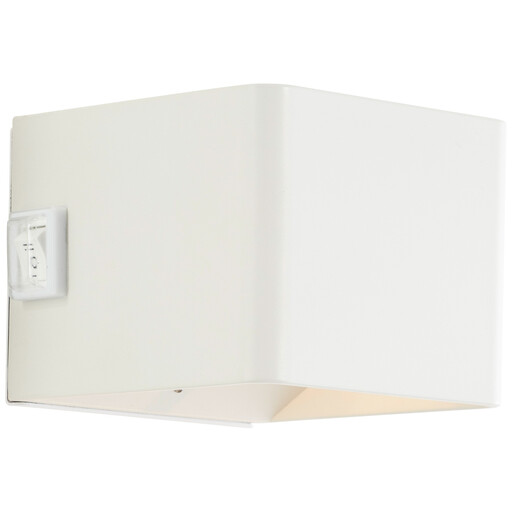
Why this product suits this profile: This portable LED wall light is designed for entrances, patios or gardens without an existing power socket.
The product data specifies the light output, colour temperature, rechargeable operation and IP44 rating. This makes it easier to match the light to its intended location.
4 W, 300 lm, 3000 K, integrated motion sensor, USB charging cable and magnet for attaching the light to metal surfaces.
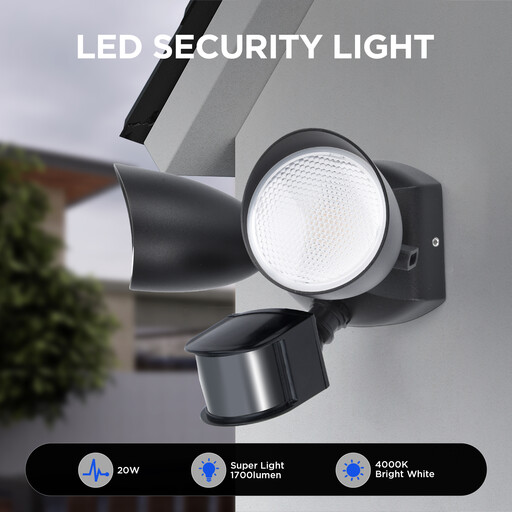
Why this product suits this profile: The stated light output of 1700 lm and sensor function are designed for larger areas such as courtyards, garages, driveways or gardens.
The higher output is clearly intended for practical area lighting. Before buying, check the installation location, power connection and complete protection-rating details.
20 W, 1700 lm, 4000 K, integrated sensor and two light heads according to the product name; suitable for wide-area outdoor lighting.
Before ordering, measure the area and decide on the lighting effect you want to achieve. For a narrow garden path, several small solar lights often provide more even illumination than one bright floodlight. A wall light should be positioned so that its sensor is not triggered by passing vehicles or neighbouring properties.
For solar garden lights, it is worth cleaning the panel regularly with a soft, damp cloth. Rechargeable lights should be kept dry and charged according to the manufacturer’s instructions. Damaged lights or cables must not be used. Permanently wired models must be installed by a qualified professional.
We have put together a complete, regularly updated list of products that fully meet these strict selection criteria and the safety regulations applicable in the EU.
That depends on the installation location. IP44 protects against splashing water and is suitable for many sheltered outdoor areas. For exposed or particularly vulnerable locations, consider the manufacturer’s guidance and the specific installation conditions.
Consumption depends on the power rating and operating time. A 4 W light operating for ten hours uses 0.04 kWh in theory. Motion sensors and solar or rechargeable operation can reduce the time the light runs from the mains. For an accurate cost calculation, the local electricity tariff and your actual usage are the deciding factors.
They can also be used in winter, provided the solar panel receives enough daylight. Shorter days, cloudy weather, snow and low temperatures can affect charging time and operating duration. For light that is needed reliably at a garage or entrance, a mains-powered light or regularly charged rechargeable outdoor light is more predictable.