
Lieferung heute & morgen

Qualitätsgarantie

Willkommens-Angebote freischalten: KOSTENLOSE Lieferung | Bis zu 80 % RABATT | Kostenlose 30-Tage-JoyPlus-Testphase
App herunterladen
The right outdoor lighting should illuminate paths and entrances, improve visibility and blend harmoniously into its surroundings. However, design and brightness are not the only factors that matter when buying. Unclear IP ratings, unsuitable mounting options or permanently integrated LED modules can mean that a light is not practical for its intended location.
Typical buying mistakes arise from three points:
The IP rating consists of two digits. The first describes protection against solid foreign objects and dust, while the second indicates protection against water.
Never choose a waterproof outdoor lamp solely based on the advertising term “waterproof”. Check the actual IP rating, the installation instructions and the permitted supply voltage.
Warm white colour temperatures around 3,000 Kelvin are often suitable for entrances and paths. They feel less harsh and work well with many homes and patios. Neutral white or daylight white options can be useful for garages, driveways and work areas.
You should also consider:
An LED outdoor light with an integrated module usually does not require bulb replacement, but in the event of a fault it cannot always be fitted with a new light source. Lights with a standard fitting, on the other hand, allow you to replace the light source, for example with an efficient LED bulb.
For permanently installed products operating at 220–240 volts: connection work should be carried out by a qualified electrician in accordance with the applicable regulations. For battery-powered models, important considerations include the charging connection, battery life, charging cycles and protection against moisture.
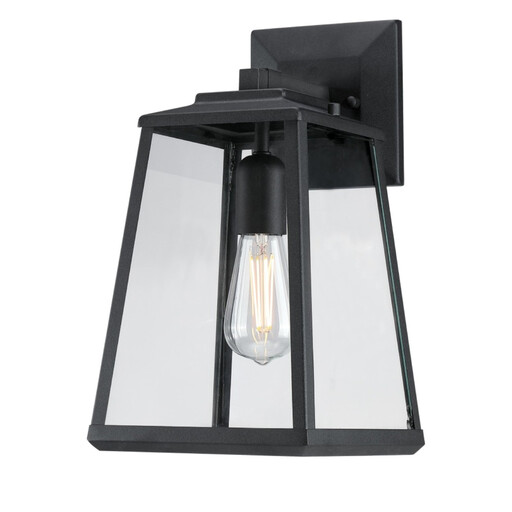
Why this product suits this profile: This classic outdoor wall light is suitable for entrances, patios and exterior walls when you want a timeless housing with a replaceable standard fitting.
The standard fitting reduces reliance on a permanently integrated LED module. Before installation, check the fitting, maximum wattage and seal.
Weather-resistant metal housing, glass components and a classic design to suit a range of façade styles.
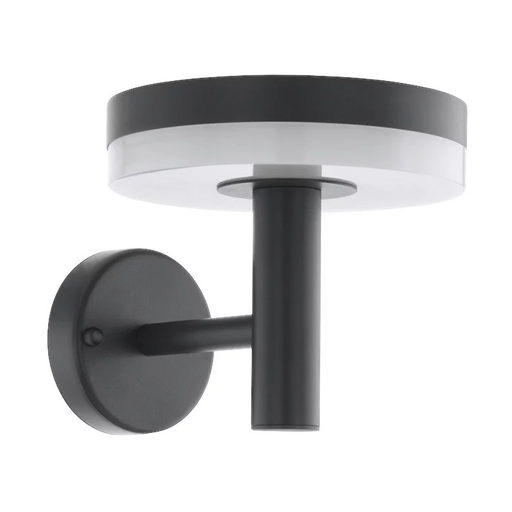
Why this product suits this profile: The integrated LED provides 950 lumens at 3,000 Kelvin and is designed for entrances, paths, patios and gardens when you want compact, warm white wall lighting.
The specifications of 11 W, 950 lm and 3,000 K make the choice more transparent than relying on brightness claims alone. The LED module is not replaceable, so this should be taken into account before buying.
Integrated 11 W LED, 950 lm luminous flux and anthracite-coloured metal and plastic housing.
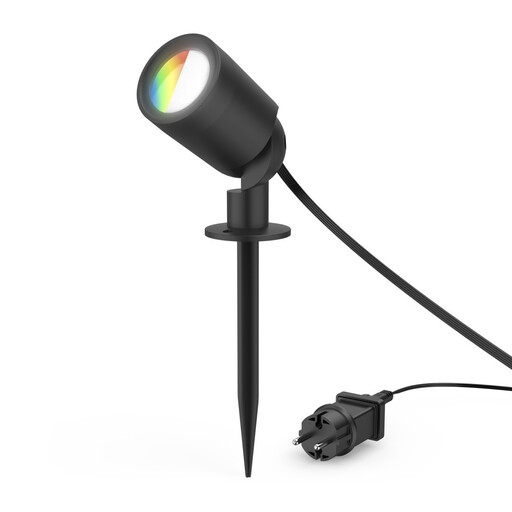
Why this product suits this profile: For smart home users, this smart garden light offers app, voice and Matter control, along with flexible installation in the ground, on a wall, ceiling or floor.
The IP65 rating is more specific than a general promise of weather resistance. However, the device must not be immersed in water; smart home use requires a 2.4 GHz Wi-Fi network.
7 W, continuously dimmable, 16 million colours, adjustable beam angle, plus Matter and Wi-Fi support.
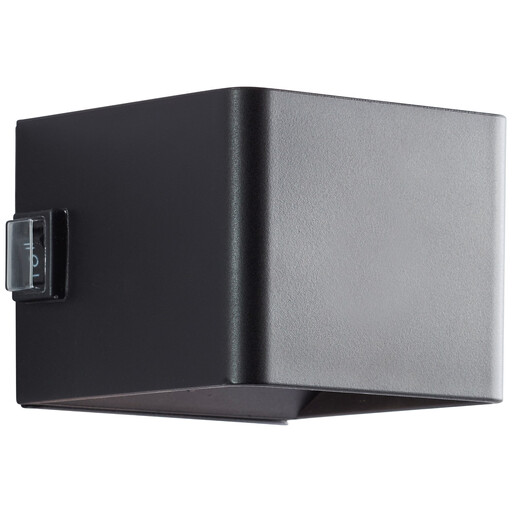
Why this product suits this profile: This battery-powered light features 300 lm, magnetic mounting and a USB charging cable, making it suitable for rented homes, patios, entrance areas or temporary applications.
The IP44 rating clearly limits where it can be used: splashing water is covered, but direct water jets and immersion are not. The charge level must be checked regularly.
Integrated battery, 300 lm, 3,000 K, motion sensor and magnet for flexible mounting.
We have put together a complete, regularly updated list of products that fully meet these strict selection criteria and the safety regulations applicable in the EU.
That depends on the installation location. IP44 may be sufficient for a covered entrance. Fully exposed areas often benefit from a higher rating such as IP65, provided the product, connection and installation are designed for it. The light must not be exposed to more water than permitted by the manufacturer’s instructions.
A few hundred lumens may be enough for a small outdoor wall light or entrance. Larger areas, garage driveways or security zones require more light depending on the mounting height and beam angle. So do not compare the lumen rating alone; also consider the light distribution and the position of the light.
Running costs depend on wattage, daily operating time and your electricity tariff. A 10 W light switched on for five hours a day uses around 18.25 kWh per year in theory. Motion sensors, dusk sensors or schedules can reduce the time it is switched on. With an LED torch, however, ongoing costs are determined by battery capacity or battery consumption.