
Lieferung heute & morgen

Qualitätsgarantie

Willkommens-Angebote freischalten: KOSTENLOSE Lieferung | Bis zu 80 % RABATT | Kostenlose 30-Tage-JoyPlus-Testphase
App herunterladen
Well-planned outdoor lighting makes it easier to find your way along paths, improves access to your home and creates a pleasant atmosphere on your patio or balcony. The choice ranges from permanently installed LED outdoor lights and solar lights to portable lamps with motion sensors. However, product specifications are not always directly comparable.
If you focus solely on a high wattage or eye-catching design, you may end up buying a light that is not adequately protected for its intended location or provides more light than needed. The following points will help you assess typical purchasing decisions objectively.
A marking such as IP44 means protection against solid foreign objects measuring 1 millimetre or more, as well as protection against splashing water. However, it does not describe protection against permanent flooding, powerful water jets or every type of weather. IP44 may be suitable for a covered patio. On an unprotected exterior wall or in a dip in the ground, you should also check the location, installation height and manufacturer’s specifications.
Wattage describes energy consumption, not brightness alone. The lumen value is what determines the amount of light produced. For example, an 11-watt LED can deliver 950 lumens, making it considerably brighter than a decorative solar light with very low power consumption. Path lighting in the garden often only needs to provide guidance, while an entrance area or garage requires more targeted illumination.
Solar lights for the garden need direct daylight so that the solar panel can charge the battery. Trees, exterior walls and roof coverings reduce the available charging time. The stated operating times therefore depend on the location, season, weather and battery condition. A solar light is not automatically suitable for every dark area of the garden.
Before buying, you should establish whether the light will be used in a sheltered, partially sheltered or completely exposed outdoor area. Pay attention to the stated IP rating and check whether the product is explicitly intended for outdoor use. Water must not collect either on the housing or around the ground connection.
For permanently connected lights, such as an outdoor wall light or an outdoor LED floodlight, electrical work must be carried out in accordance with the applicable safety requirements. Professional installation is particularly important when connecting to the mains.
Warm white light at 3,000 K is often suitable for seating areas, entrances and decorative outdoor lighting. Neutral white or daylight white light can be useful for driveways, garages and work areas.
Mains-powered LED outdoor lights provide light regardless of sunlight, but require a suitable electrical connection. Solar and rechargeable-battery lights can be positioned more flexibly, but have a limited operating time and require regular cleaning of the solar panel or recharging.
You should also check whether the LED module can be replaced. According to the product specifications, the integrated LED module in the EGLO model cannot be replaced. For rechargeable-battery lights, the integrated battery must be disposed of in accordance with local regulations.
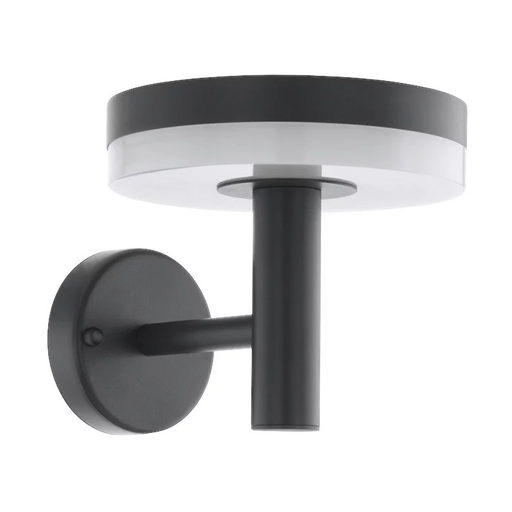
Why this product suits this profile: This permanently installed outdoor wall light combines an anthracite-coloured metal and plastic housing with an integrated LED module. With 950 lumens and 3,000 kelvin, it provides practical guidance lighting for entrances, patios and paths.
The product description states that it is suitable for outdoor use and provides specific performance data. Before buying, you should check the stated IP rating again to ensure it is suitable for the planned installation location.
950 lm at 11 W; warm white light at 3,000 K; dimensions of 24.5 × 18 × 24.5 cm.
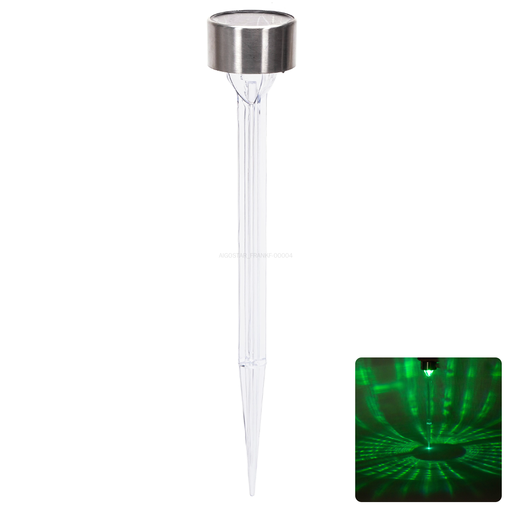
Why this product suits this profile: This ground light is pushed into soft soil without the need for a permanent electrical connection, making it suitable for garden paths, flower beds or decorative accents.
The specifications state a charging time of 4 to 6 hours, an operating time of 8 to 12 hours and IP44 protection. A position with direct sunlight remains essential.
RGB light; Ni-MH battery with 200 mAh; dimensions of 55 × 55 × 320 mm.
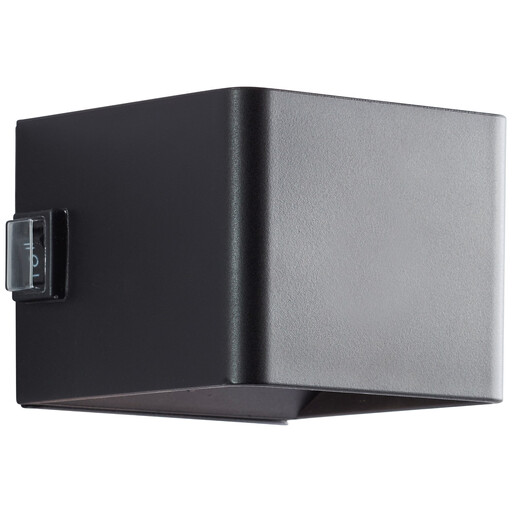
Why this product suits this profile: This portable light with USB connection, battery, magnet and motion sensor is suitable for areas without a permanent electrical connection, such as balconies, patios or side entrances.
Its limitations are easier to understand: IP44 protects against splashing water, not immersion. The battery is charged via USB; for permanent outdoor installation, the position should be protected from direct heavy rain.
300 lm at 4 W; 3,000 K; integrated motion sensor and magnet; battery and USB cable included.
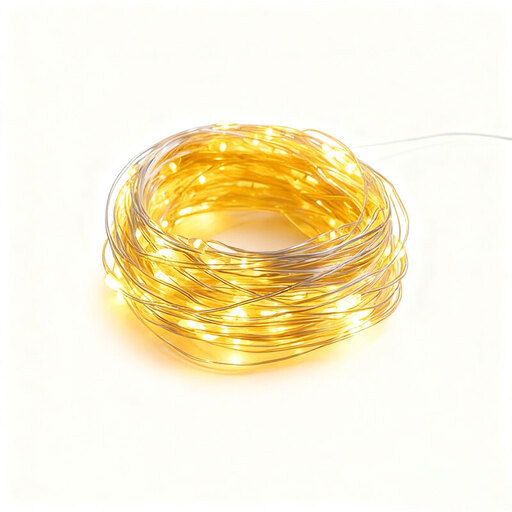
Why this product suits this profile: These solar-powered string lights are suitable for railings, plants, pergolas and seasonal outdoor lighting on the patio when consistent background brightness is not required.
The product data states a length of 8 metres, 50 LEDs, three lighting modes and IP44 protection. This makes the light more suitable as a decoration than as security or path lighting.
Warm white LEDs; on, off and flashing modes; solar panel and 300-mAh Ni-MH battery.
We have put together a complete, regularly updated list of products that fully meet these strict selection criteria and the safety regulations applicable in the EU.
An outdoor wall light with sufficient output or a light with a motion sensor may be suitable for a home entrance. Warm white light of around 3,000 K creates a subtle atmosphere and helps with orientation. For a permanently connected light, the installation location, IP rating and electrical installation must all be compatible.
Consumption depends on the power rating and operating time. An 11-watt light uses 110 watt-hours during ten hours of operation, which is 0.11 kilowatt-hours. Solar lights do not use electricity from the household mains while operating, but they do depend on daylight and battery capacity.
Their service life is affected by the LED module, battery, charging cycles, temperature and weather conditions. Figures such as 8 to 12 hours of operating time refer to specific charging and operating conditions. Keeping the solar panel clean and choosing a suitable location that is not permanently shaded will help ensure reliable operation.