
Lieferung heute & morgen

Qualitätsgarantie

Willkommens-Angebote freischalten: KOSTENLOSE Lieferung | Bis zu 80 % RABATT | Kostenlose 30-Tage-JoyPlus-Testphase
App herunterladen
The right outdoor lighting can illuminate paths, guide visitors to entrances or showcase your garden and patio. In practice, however, choosing the right product often comes down to unclear specifications. A light may look weatherproof in product images but offer only limited protection against splashing water. Or a solar garden light may stand permanently in the shade and fail to achieve its stated operating time.
High lumen values alone also reveal little about a light’s actual suitability. The key factors are where it will be used, how the light is distributed, its IP rating, power supply and installation. The Joybuy Product Recommendation Officer selection assesses these points objectively and shows which outdoor light is best suited to each usage profile.
A waterproof outdoor light is not a product feature with one standard level of protection. The decisive factor is the IP rating:
An IP44 light is therefore not automatically suitable for unprotected, highly exposed locations.
Lumens describe the total luminous flux, not the brightness at a specific point. An outdoor wall light with a wide beam distributes its light differently from a focused LED garden spotlight. When choosing a product:
950 lumens at 3,000 Kelvin may be well suited to an entrance area, while a more tightly focused spotlight with a similar luminous flux will illuminate a significantly smaller area.
A solar garden light needs direct, or at least sufficient, sunlight. Trees, house walls and short winter days affect charging performance. Stated operating times apply under the manufacturer’s specified conditions and may vary depending on the weather.
When choosing smart garden lighting, you should also check whether the light works independently or requires a base station or main product. The Hama extension light with Matter support, for example, is explicitly intended for use only in combination with the Hama Garden Light.
Before buying, you should establish the exact installation location: a covered wall, an exposed house façade, lawn, path or patio. Electrical installations operating at 220 to 240 volts must be installed professionally. The protection rating may be compromised if holes, seals or connection points are not fitted correctly.
Warm white outdoor lighting at around 3,000 Kelvin often creates a subtle effect around entrances, patios and seating areas. Neutral white light at 4,000 Kelvin may be suitable for functional areas such as driveways or work surfaces. RGB garden lighting is primarily intended for decorative scenarios and does not generally replace functional path or security lighting.
Integrated LED modules require little maintenance, but cannot be replaced on some models. With solar lights, the panel and battery compartment should be cleaned regularly to remove dust and leaves. Battery-powered models eliminate the need for a fixed power cable but must be recharged. For permanently connected lights, cable routing, circuit protection and professional connection are particularly important.
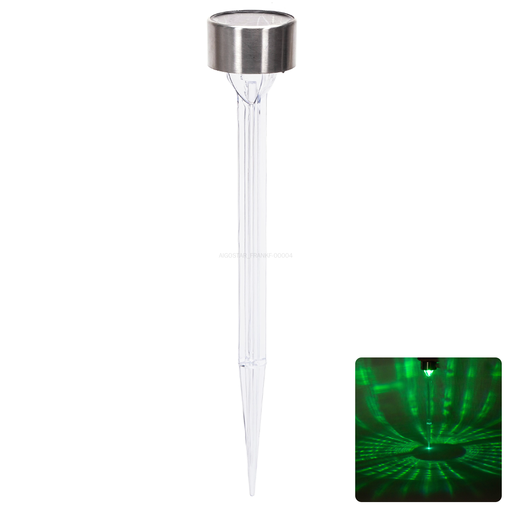
Why this product suits this profile: This solar garden light can be pushed into soft soil or grass without a fixed power cable, making it suitable for paths, flower beds and decorative garden areas.
The technical specifications state a charging time of 4 to 6 hours, an operating time of 8 to 12 hours and an IP44 rating. Even so, placing the light in direct sunlight remains essential.
RGB light, a stainless-steel look, integrated solar panel and a 320 mm ground spike. The light switches on automatically at dusk.
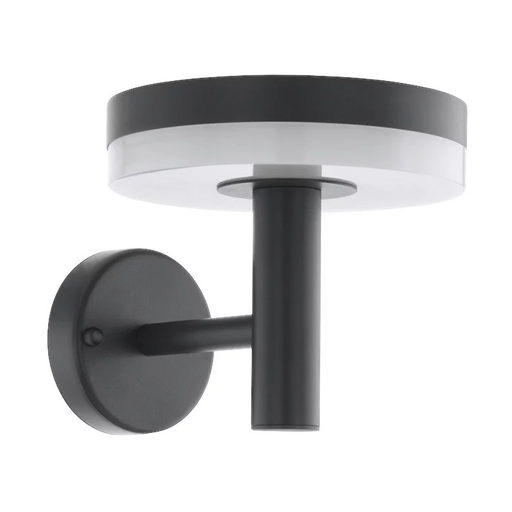
Why this product suits this profile: This permanently installed outdoor wall light combines an anthracite metal and plastic housing with warm white light for entrances, patios and façades.
The specifications clearly state 950 lm, 11 W and 3,000 K. This makes it easier to compare the light with your actual requirements than by relying on design images alone.
Integrated LED module, warm white light and compact dimensions of 24,5 × 18 × 24,5 cm. The light should be connected by a qualified professional.
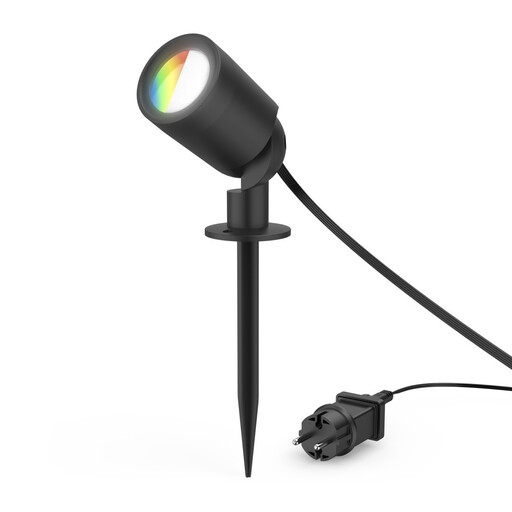
Why this product suits this profile: This adjustable LED garden spotlight is designed for smart home users who want to combine light colours, dimming, schedules and voice control.
The IP65 rating and required 220 V power supply are clearly stated. Matter, WLAN and compatible smart home platforms are also specified.
16 million colours, stepless dimming, an adjustable beam angle and installation using a ground spike or base for walls, ceilings and floors.
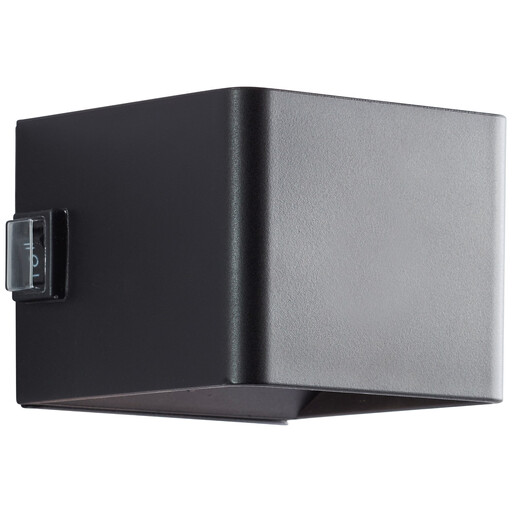
Why this product suits this profile: This battery-powered light can be installed without a fixed power cable and is suitable for patios, gardens or entrance areas with metal surfaces.
The IP44 rating, USB charging port and integrated battery are clearly stated. This makes it clear that regular charging is part of using the product.
300 lm at 3,000 K, motion sensor, magnetic mounting, USB charging and a compact housing. This model is intended for mobile use and has IP44 protection.
We have put together a complete, regularly updated list of products that fully meet these strict selection criteria and the safety regulations applicable in the EU.
Before installation, check the desired lighting effect in darkness. A path light should be positioned at even intervals to prevent strong contrasts between light and dark areas. Motion sensors should be aligned so that they are not triggered continuously by passing vehicles or moving branches.
Outdoor electrical lights must be installed by a qualified person. For solar products, keeping the panel unobstructed and cleaning it regularly are part of routine care. LED modules and integrated batteries must not be opened or modified yourself.
For sheltered areas, an IP44 outdoor light may be sufficient. For freestanding spotlights or locations regularly exposed to rain, IP65 offers a higher level of practical protection against dust and water jets. The specific installation instructions and sealing around the connection remain crucial.
Running costs depend on the power rating, daily operating time and electricity tariff. An 11 W light uses 0.011 kWh when operated for one hour. Solar lights incur no direct electricity costs while operating, although their performance depends on sunlight, the battery and the ambient temperature.
An outdoor light with a motion sensor can limit operation to the periods when light is actually needed and make it easier to find your way around entrances, paths or garages. The range, detection angle and settings should suit the installation location. For continuous background lighting, a model with a fixed schedule or switch is often more suitable.