
Lieferung heute & morgen

Qualitätsgarantie

Willkommens-Angebote freischalten: KOSTENLOSE Lieferung | Bis zu 80 % RABATT | Kostenlose 30-Tage-JoyPlus-Testphase
App herunterladen
The right outdoor lighting not only enhances the look of your home and garden but also provides greater security. However, a purchase can quickly lead to disappointment if the new lamp fails after the first downpour or the light creates an uninviting atmosphere. Many products promise durability and performance, but weaknesses are often hidden behind marketing buzzwords. This guide will help you identify the crucial features and make an informed choice.
We'll show you the most common pitfalls and what to look out for:
To avoid these mistakes, it's important to understand the technical specifications. Three parameters are central to choosing suitable and durable outdoor lighting.
The IP (Ingress Protection) rating indicates how well an electrical device is protected against the ingress of foreign objects (first digit) and water (second digit). For outdoor use, the following classes are relevant:
The ambience is largely determined by the light colour, which is specified in Kelvin (K).
The brightness (lumens) should match the purpose. An 1800-lumen floodlight is effective as a deterrent, while a 200-lumen table lamp provides a pleasant atmosphere. Many modern lights are also dimmable, allowing for flexible brightness adjustment.
The choice of power source depends on the location and the desired reliability.
Instead of presenting an overwhelming list, we have selected products for specific user profiles.
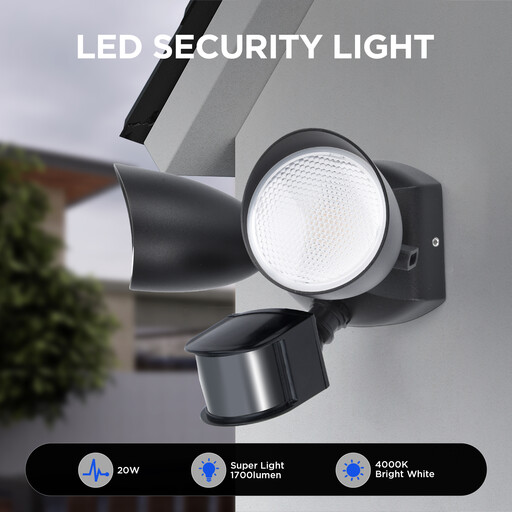
Why This Fits Their Persona: This light is designed for reliable illumination of driveways, gardens, and entrance areas. The integrated sensor ensures that the light is activated only when needed, which increases security and saves energy.
The mains-powered supply ensures consistent performance, regardless of weather or season. The light colour of 4000K (Neutral White) and brightness of 1700 lumens are specifically designed for security applications, not for ambience.
Features an integrated motion sensor and two adjustable light heads for targeted illumination. The robust housing is designed for permanent outdoor use.
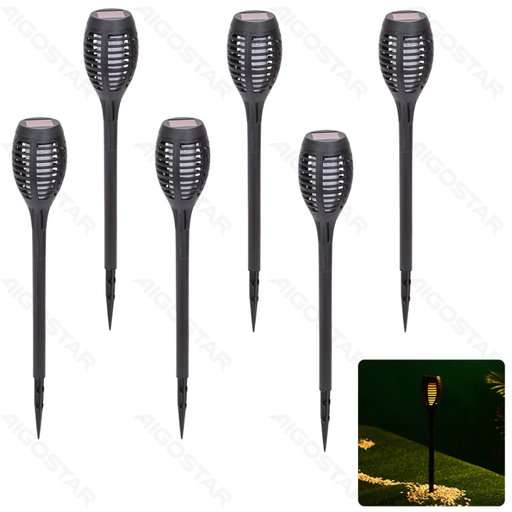
Why This Fits Their Persona: Ideal for users who want to create an atmospheric ambience in the garden, along paths, or in flowerbeds without any wiring. The realistic flame effect provides a decorative highlight.
The light colour is clearly designed for ambience at 2700K (Warm White). The product description provides specific performance data (4-6 hours of charging for 8-12 hours of runtime), which avoids the solar trap. The IP44 rating is sufficient for its use as a path light.
No wiring required; simple installation with ground stakes. Automatic on/off via a dusk-to-dawn sensor. Comes in a convenient 6-pack.
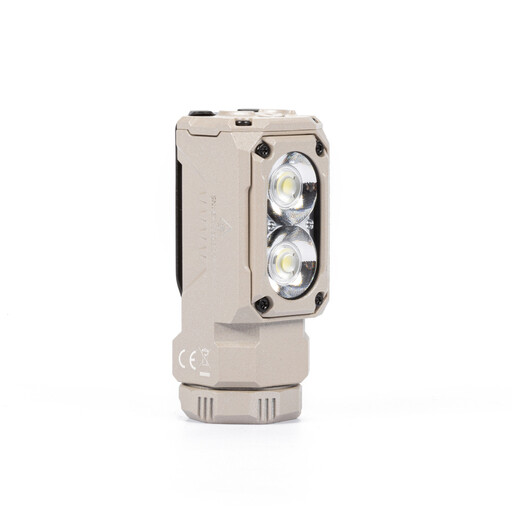
Why This Fits Their Persona: Perfect for DIY enthusiasts, campers, and for the car's glove compartment. This compact yet extremely bright flashlight is a versatile tool for any situation where powerful light is needed spontaneously.
The IP68 certification ensures this lamp functions even under extreme conditions (heavy rain, submersion), bypassing the 'waterproof' trap. Six different light modes allow you to adapt the brightness and function to the situation.
Very high brightness of up to 1800 lumens. Rechargeable via USB-C. A strong magnet on the base allows for hands-free use by attaching the lamp to metal surfaces.
We have compiled a complete, up-to-date list of products that fully meet these strict selection criteria and safety regulations.
The IP rating consists of two digits. The first (0-6) describes protection against foreign objects like dust, while the second (0-9) describes protection against water. For outdoor use, the second digit is crucial. IPx4 means protection against splashing water, IPx5 against water jets (e.g., from a garden hose), and IPx7/8 protection against submersion. Always choose the rating that is appropriate for the installation location.
The runtime depends on the amount of sunlight during the day, the efficiency of the solar panel, and the battery's capacity. On short, cloudy winter days, the runtime can be significantly shorter than the maximum duration stated by the manufacturer, which is based on optimal summer conditions. High-quality models with large panels and batteries can still provide several hours of light in winter, whereas basic models may only last for an hour or two.
For a cosy and inviting atmosphere, for example on a patio or for illuminating plants, warm white light (approx. 2700-3000 K) is the standard choice. It looks natural and is less glaring. For functional areas like paths, driveways, or the main entrance, where good visibility and security are important, neutral white light (approx. 4000 K) can be a sensible alternative.