
Lieferung heute & morgen

Qualitätsgarantie

Willkommens-Angebote freischalten: KOSTENLOSE Lieferung | Bis zu 80 % RABATT | Kostenlose 30-Tage-JoyPlus-Testphase
App herunterladen
An outdoor wall light should reliably illuminate your entrance, patio, balcony or garden. It also needs to suit the wall, power supply and lighting effect you want. Many poor purchases are down to unclear information about the IP rating, unsuitable light output or a misunderstanding of the installation requirements, rather than the design.
This buying guide explains which details really matter when choosing an LED outdoor wall light, a solar outdoor wall light or a traditional outdoor wall lamp.
The term waterproof outdoor light is not always technically precise in retail listings. What matters is the IP rating. An IP44 outdoor light is protected against solid objects larger than 1 millimetre and splashing water from various directions. However, this does not automatically make it suitable for direct jets of water or permanently exposed locations.
IP44 may be sufficient for a covered front door. A higher IP rating may be more suitable for a freestanding garden wall or an exposed façade. The position of the light and correct sealing also affect the level of protection it provides.
Power consumption in watts tells you how much electricity a light uses, not directly how bright it is. For brightness, look at the lumen output. An integrated 11-watt LED producing 950 lumens may be enough for an entrance, while a brighter light may be needed for a courtyard, garage or driveway.
Light distribution matters too. An up-and-down light creates a decorative beam, but it will not necessarily illuminate a large area. Adjustable spotlights can direct light more precisely onto paths, gates or garage entrances.
An outdoor light with a motion sensor will only work as intended if its detection angle, range and run-on time suit the location. Depending on the sensor, branches, passing vehicles or pets may trigger it unnecessarily.
If you’re considering an outdoor light with a dusk sensor, check whether the sensor is built in and how the automatic switch-on works. A dimmable outdoor wall light also needs a compatible LED dimmer. Some lights do not include a dimmer.
Check the IP rating and compare it with the intended installation location:
The IP rating is only maintained if the housing, cable entry and wall connection are installed correctly. In Germany, permanently wired 220- to 240-volt lights should be connected by a qualified electrician.
Warm white light at around 2700 to 3000 Kelvin creates a subtle feel at entrances and on patios. Neutral white light at around 4000 Kelvin helps you find your way and may suit paths or work areas. Cool white light prioritises visibility and is often used for security or area lighting.
As well as the colour temperature, check:
A hard-wired LED outdoor light needs an existing power connection, but provides consistent light output. A solar outdoor wall light avoids the need for cables, although its run time depends on sunlight, positioning, battery capacity and temperature. Solar panels often perform poorly on a north-facing wall or in a permanently shaded area.
For lights with built-in LEDs, check whether the LED module can be replaced. With replaceable E27 bulbs, you can change the light colour, brightness and energy consumption later. It also makes replacement easier if a bulb fails.
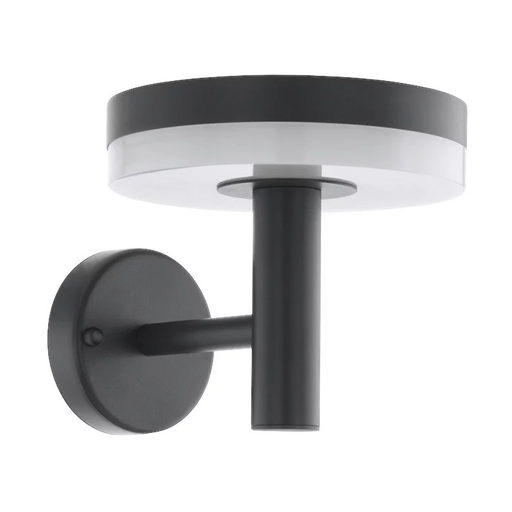
Why this product suits this profile: The integrated 11-watt LED produces 950 lumens at 3000 Kelvin. This makes the light a good choice for entrances, garden paths and patios if you’re looking for a compact LED solution with a warm white glow.
Its brightness is specified as 950 lumens, rather than described by wattage alone. The IP44 rating gives you a clear indication of its protection against splashing water.
950 lumens, 3000 Kelvin, integrated 11-watt LED and anthracite finish.
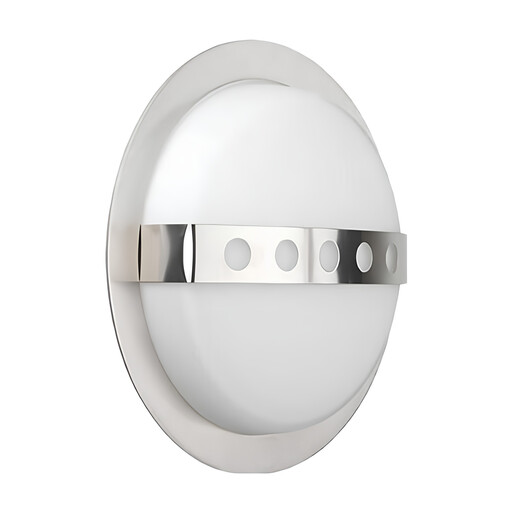
Why this product suits this profile: This outdoor wall light combines matt nickel with a frosted glass shade. According to the product specifications, it produces 2050 lumens of neutral white light. It’s designed for larger entrances or outdoor areas that need brighter lighting.
The specific 2050-lumen rating makes it easier to plan your lighting. The frosted glass shade can soften the light visually, but with an IP44 rating, you’ll still need to choose a suitable installation location.
2050 lumens, neutral white light, 230-volt operation and dimensions of 32,5 × 9,2 centimetres.
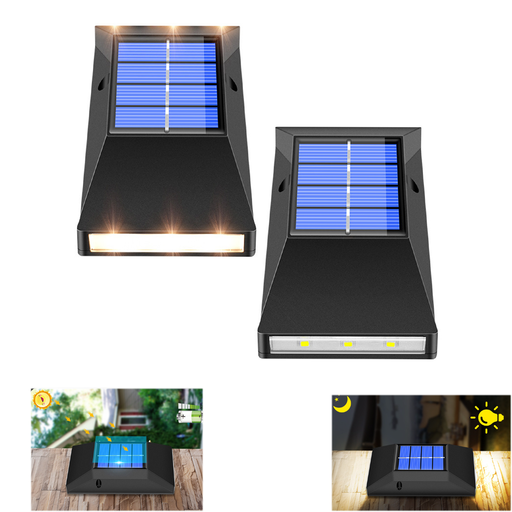
Why this product suits this profile: This two-pack runs on solar power and is specified with a 600-mAh battery and IP65 protection. It’s suitable for places without a power connection, such as garden paths, fences, balconies or side entrances.
The IP65 rating is higher than that of many IP44 models. However, the solar panel should still get as much direct sunlight as possible so the battery can charge sufficiently.
Wireless installation, two lights in the set, LED technology and an IP65 rating.
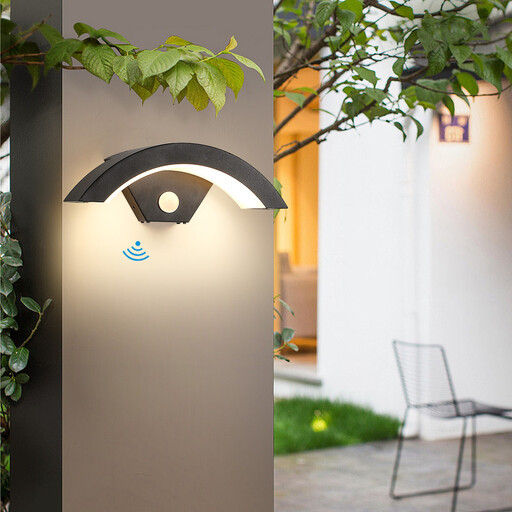
Why this product suits this profile: This 24-watt light is described as offering warm white light at 3000 Kelvin, as well as light and motion sensors. It could be a good choice for entrances, garages, stairways and paths where you only need light when required.
The sensor function is clearly specified, rather than being promoted simply as automatic lighting. Before buying, check the detection area and recommended installation height in the product information.
24 watts, 3000 Kelvin, and combined light and motion sensors according to the product description.
We’ve put together a complete, regularly updated list of products that meet these strict selection criteria and fully comply with the safety regulations in force in the EU.
IP44 may be suitable for a partially sheltered entrance or balcony, provided the light is installed correctly. For greater exposure to the elements, consider a higher rating such as IP65. Suitability depends on the installation location, orientation and manufacturer’s specifications.
Consumption depends on the wattage and how long the light is on each day. A 10-watt light switched on for five hours a day uses 0,05 kilowatt-hours per day. Sensors or dusk switches can reduce the time it’s on, but they don’t replace the need to plan for suitable brightness.
Lifespan depends on the LED module, electronics, temperature, moisture and hours of use. With replaceable E27 bulbs, you can simply replace the bulb. If an integrated LED fails, you may need to replace the whole light. Before buying, check whether the product specifies a lifespan and whether the light can be repaired or replaced.