
Lieferung heute & morgen

Qualitätsgarantie

Willkommens-Angebote freischalten: KOSTENLOSE Lieferung | Bis zu 80 % RABATT | Kostenlose 30-Tage-JoyPlus-Testphase
App herunterladen
The right outdoor lighting can make paths easier to see, illuminate your entrance or complement the look of your garden and patio. When shopping, many people focus first on design, light colour or high lumen figures. Yet other details have a greater bearing on whether an outdoor light will work reliably day to day.
Three common buying mistakes are:
An IP rating consists of two digits. The first indicates protection against solid objects, while the second indicates protection against water. An IP44 outdoor light is protected against solid objects measuring 1 millimetre or more, as well as splashing water from various directions.
Depending on the installation, IP44 may be sufficient for covered balconies, entrances or sheltered patios. For an exposed outdoor wall, also check that the installation location, connection and manufacturer’s instructions are all compatible. An IP44 light must not be immersed in water. The IP rating is also only maintained if cable entries, seals and wall connections are installed correctly.
Measured in lumens (lm), luminous flux indicates how much light a fitting produces. A few lumens may be enough for a decorative accent, while paths, driveways or larger wall areas need a brighter light. The beam angle and whether the light heads can be adjusted also affect how well the area is illuminated.
For an outdoor light with a motion sensor, check that the detection range, delay time and installation height suit your property. A sensor that responds to people on the pavement or passing vehicles can be disruptive in everyday use.
When installed correctly, mains-powered LED outdoor lights provide consistent illumination. Fixed wall lights connected to 220–240 V should be installed by a qualified electrician. Integrated LED modules are often non-replaceable, so it’s worth checking the stated power, luminous flux and average lifespan.
A solar light with a ground spike can be positioned without a mains connection. However, its solar panel needs a location that receives as much direct sunlight as possible. Manufacturer figures such as 4 to 6 hours of charging time and 8 to 12 hours of illumination are based on suitable conditions. Clean the panel regularly with a soft, damp cloth. In frosty or very cloudy weather, the actual operating time may be shorter.
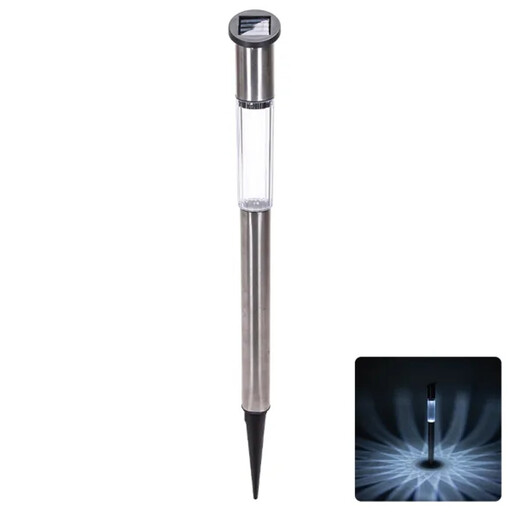
Why it’s a good fit: This solar garden light doesn’t need a mains connection and can be placed in soft ground along flower beds or paths.
The specifications state a charging time of 4 to 6 hours, an operating time of 8 to 12 hours and an IP44 rating. This makes it easier to set realistic expectations for its use.
Solar-powered, with stainless steel elements, a NiMH battery and a stated operating temperature of -10 to 50 °C.
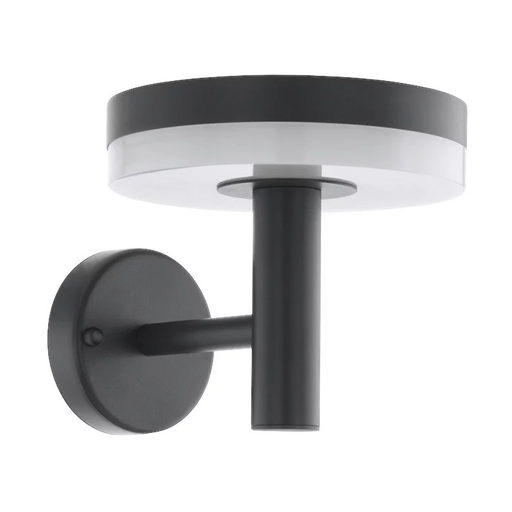
Why it’s a good fit: This integrated LED outdoor light offers a fixed-installation solution with warm white illumination for entrances, patios or garden paths.
The product details specify 11 W, 950 lm, 3,000 K and an integrated light source. That gives you clear figures to compare, rather than vague claims about brightness.
Warm white light at 3,000 K, 950 lm, and an anthracite finish with metal and plastic elements.
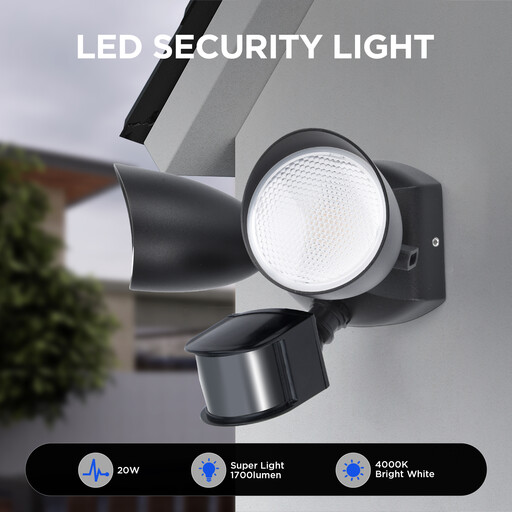
Why it’s a good fit: This twin-head security light is designed for larger outdoor areas such as courtyards, driveways, gardens or patios.
It comes with clear performance figures of 1,700 lm and 4,000 K. You should still choose based on the installation height and the detection range you need.
20 W power, 1,700 lm, 4,000 K and two light heads for flexible positioning.
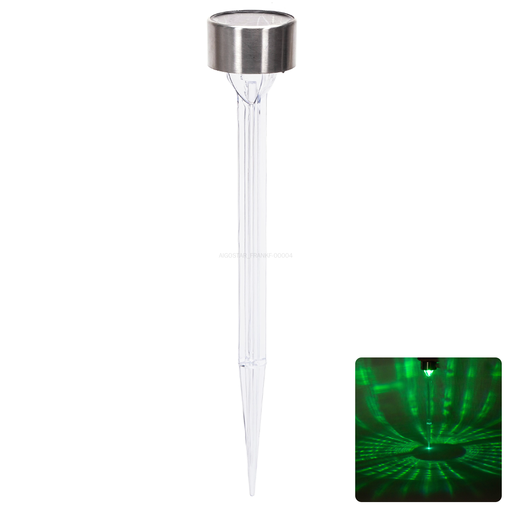
Why it’s a good fit: This RGB garden light adds splashes of colour along paths, in flower beds or on the patio, without the need for fixed wiring.
The IP44 rating makes clear that the light is protected against splashing water. Avoid placing it in dips or areas that remain wet.
RGB light, a 200 mAh NiMH battery, a stated operating time of 8 to 12 hours and a simple ground spike.
We’ve put together a complete, regularly updated range of products that meet these strict selection criteria and the safety regulations in force across the EU.
Consumption depends on the wattage and how long the light is on each day. A 10 W light used for five hours consumes around 0.05 kWh a day. Solar lights don’t use mains electricity when operating, but their performance depends on sunlight and battery capacity.
Warm white light at around 3,000 Kelvin is a popular choice for seating areas and subtle patio lighting. Neutral white may be more practical for paths, work areas or larger courtyards. RGB lights are best suited to decorative effects and are no substitute for functional security lighting.
How long they stay lit each night depends on their charge level, sunlight, temperature and battery. Figures such as 8 to 12 hours are manufacturer estimates based on suitable conditions. Regularly cleaning the solar panel and choosing a spot without shade can help the light work as intended.