
Lieferung heute & morgen

Qualitätsgarantie

Willkommens-Angebote freischalten: KOSTENLOSE Lieferung | Bis zu 80 % RABATT | Kostenlose 30-Tage-JoyPlus-Testphase
App herunterladen
Well-planned garden outdoor lighting combines guidance, safety and style. But when you’re shopping, many options can look similar at first glance: long strings of lights, high LED counts and claims such as ‘weatherproof’ don’t tell you much on their own about whether a product is right for your needs.
Three common buying pitfalls are worth watching out for:
The IP rating describes protection against solid objects and water. The first digit indicates protection against solid particles, while the second indicates protection against water.
Important: The IP rating does not automatically apply to every component. For example, a string light’s plug or control unit may need a different level of protection. Always read product details such as ‘IP44 outdoor light’ together with the installation instructions.
Solar garden lighting can be installed without power cables. However, for reliable run times, the solar panel needs a spot that gets as much sun as possible. In shade, during short days or after several overcast days, the lights may not stay on for as long. Models with an additional USB-C charging option offer more flexibility.
Mains-powered LED garden lighting provides light whatever the weather, but requires a suitable outdoor socket and a safe cable route. 220- to 240-volt lights should be installed by a qualified electrician in accordance with the manufacturer’s instructions.
For outdoor solar string lights or outdoor LED string lights, cable length, spacing between LEDs and fixing options all matter. A 5-metre model, for example, may suit a small balcony, while 18 or 50 metres is better suited to pergolas, fences and larger patio areas.
If you’re considering dimmable outdoor lighting, also check:
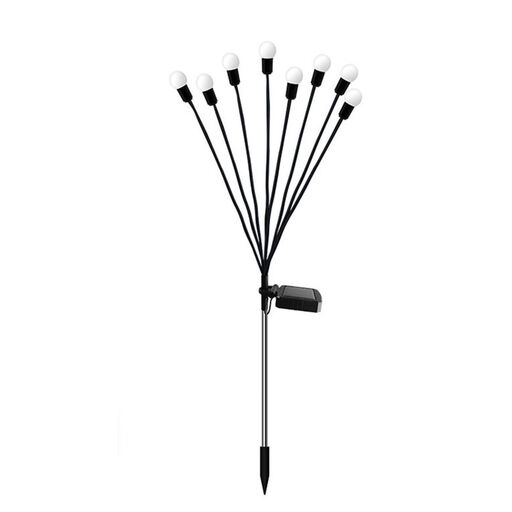
Why this product suits this type of shopper: According to the product description, these two solar lights don’t need a power connection and switch on automatically when it gets dark. They’re a good choice for paths, small flowerbeds, patios and balconies.
The built-in solar panel means fewer cables to deal with. The stated IP65 rating is designed for exposed outdoor use, although the lights should not be left standing in water.
A set of two lights, eight warm white LEDs and automatic switch-on at dusk.
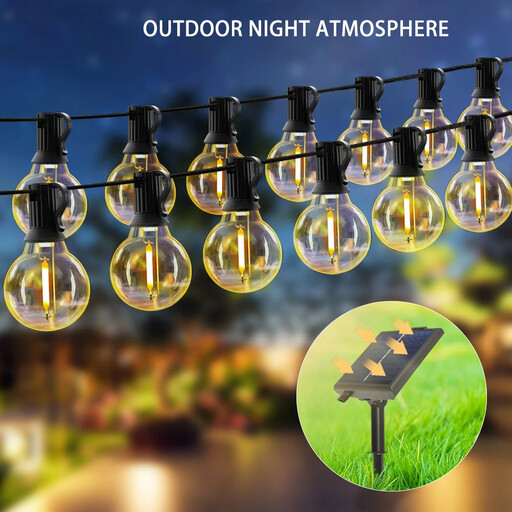
Why this product suits this type of shopper: This 18-metre solar string light is designed for patios, pergolas, gardens and balconies. Its warm white light, at 2700 K, creates a subtle, decorative glow for your patio.
The stated IP65 rating and impact-resistant plastic housing give you clear technical details, rather than a vague claim such as ‘weatherproof’.
30 LEDs, dimming function, warm white 2700 K lighting and solar power with no permanent power connection required.
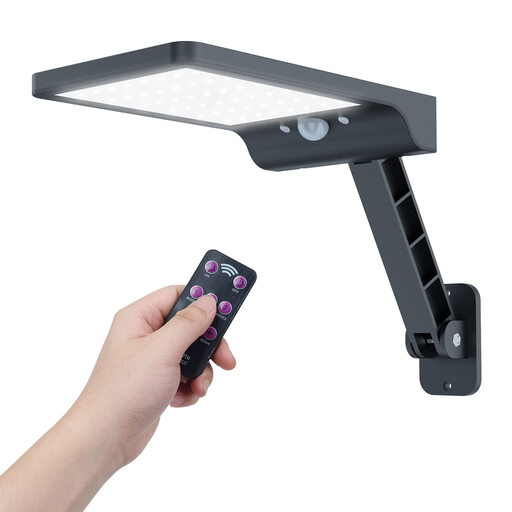
Why this product suits this type of shopper: This solar-powered outdoor wall light has a PIR sensor, making it a good choice for an entrance, courtyard, garage, patio or driveway where you only want the light to come on when needed.
The product details specify a 5-metre detection range, a 120-degree detection angle and three operating modes. This makes it easier to decide in advance whether it’s right for your needs.
48 LEDs, 2200-mAh battery, IP65 rating and remote control with Dim-to-Bright, Off-to-Bright and continuous light modes.
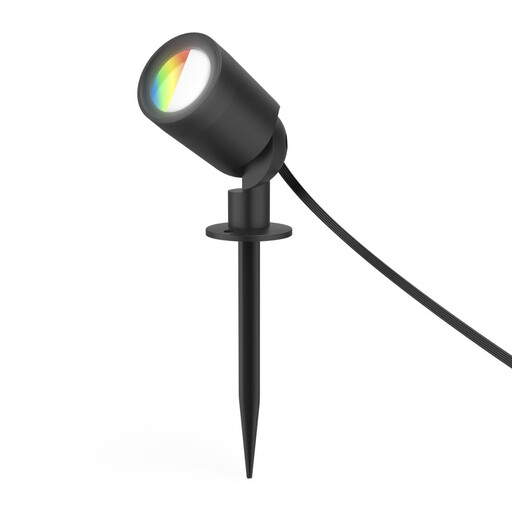
Why this product suits this type of shopper: This IP65 garden light is designed for people who want to manage scenes, schedules, dimming and colour changes using an app or voice control.
The product description makes clear that this is an expansion unit and requires a Hama base light. Check this system requirement before you buy.
We’ve put together a complete, regularly updated list of products that meet these strict selection criteria and fully comply with the safety regulations in force in the EU.
For solar lights, position the panel somewhere as free from shade as possible, away from house walls, trees and roof overhangs. Secure string lights so the cables and connection points aren’t under tension. If you’re using outdoor Christmas lights, it’s also a good idea to store them somewhere dry and sheltered after the season.
For permanently connected products, such as an outdoor wall light or a 220-volt garden spotlight, follow the manufacturer’s installation instructions. Switch off the power circuits before installation. Don’t continue using a light if its cable is damaged, its housing is cracked or its seals are loose.
Solar lights with ground stakes are handy for paths where there’s no power cable. For consistently even lighting, a mains-powered LED light may be a better option. Make sure it’s positioned at a suitable distance from the path, securely fixed and has an IP rating that’s right for the location.
Actual run time depends on sunlight, battery capacity, temperature and the selected lighting mode. Dimming and timers can help reduce energy use. If the lights don’t stay on as long as they used to, start by cleaning the solar panel and checking the battery according to the manufacturer’s instructions.
LEDs generally use less energy than many older types of light bulb. However, running costs depend on wattage, daily use and your electricity tariff. Solar lights reduce the amount of mains electricity you use, but their performance depends on the sunlight available.