
Lieferung heute & morgen

Qualitätsgarantie

Willkommens-Angebote freischalten: KOSTENLOSE Lieferung | Bis zu 80 % RABATT | Kostenlose 30-Tage-JoyPlus-Testphase
App herunterladen
Whether it’s your front door, patio, garage, garden path or campsite: outdoor lighting needs to suit the location. Many bad purchases aren’t down to too little light, but to vague specifications, unsuitable water protection or an impractical power supply. A decorative garden light has different requirements to an LED floodlight for the garage or an LED torch for emergencies.
This buying guide explains which specifications really matter and which product features you should check before buying an outdoor light.
A high lumen figure alone says little about practical use. A wide beam is ideal for a patio or yard, whereas a focused beam can be more useful for paths, repair work or hikes. Colour temperature also affects how light is perceived: Warm white around 2700 to 3000 Kelvin appears subtler in the garden, while 4000 to 6500 Kelvin delivers a cooler, more contrasty illumination.
So alongside luminous flux, check the beam angle, range and colour temperature.
“Waterproof” isn’t a sufficiently precise measure in retail. The decisive measure is the IP rating:
An IP44 outdoor wall light therefore shouldn’t be mounted in an exposed spot where it’s regularly subject to heavy rain or standing water. Cable connections, charging ports and power supplies also need protection.
Permanently installed outdoor floodlights or a wall-mounted outdoor light need a suitable mounting surface, corrosion-protected screws and, for a mains connection, a properly executed electrical installation. Battery and solar lights are more flexible, but they need regular charging or sufficient sunlight.
Clarify before you buy:
Moderate light output is often sufficient for entrances or paths. An LED floodlight for a yard, garage or work area needs broader and stronger illumination. The lumen figure should always be considered in relation to the area.
An LED outdoor light with 300 lumens can be enough for a small front entrance. For a larger yard, several lights or a more powerful floodlight make sense. With torches, range and focus also matter. A long range doesn’t automatically mean even illumination at close distances.
Integrated LEDs generally consume less energy than older light sources. For electricity costs, the actual power draw is what counts. The simple calculation is:
Power in kilowatts × operating hours × electricity price = running costs
Solar garden lights don’t use mains electricity in operation, but depend on daylight, orientation and battery capacity. According to the product details, the Aigostar solar lights take about 4 to 6 hours to charge in suitable sunlight and provide around 8 to 12 hours of illumination. In winter or under persistently overcast skies, runtime may be shorter.
Aluminium housings, glass covers and sealed enclosures can be suitable for outdoor use, but they are no substitute for correct installation. Check seals, fixings and cables regularly. For battery products, ensure the charging port is dry before charging. A waterproof torch should only be used within its stated protection class.
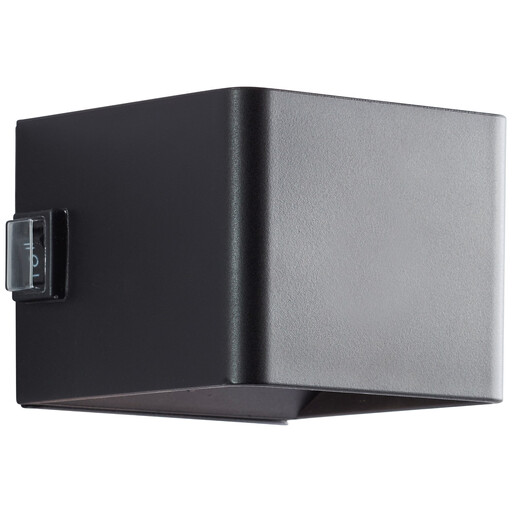
Why this product fits the profile: The portable outdoor wall light is suitable for small entrances, patios or metal surfaces without a permanently available mains supply.
The product details list IP44, an integrated battery, USB charging and a motion sensor. That makes it easier to assess power and switching convenience before you buy.
300 lumens, 3000 Kelvin, magnetic mounting, USB port and integrated motion sensor.
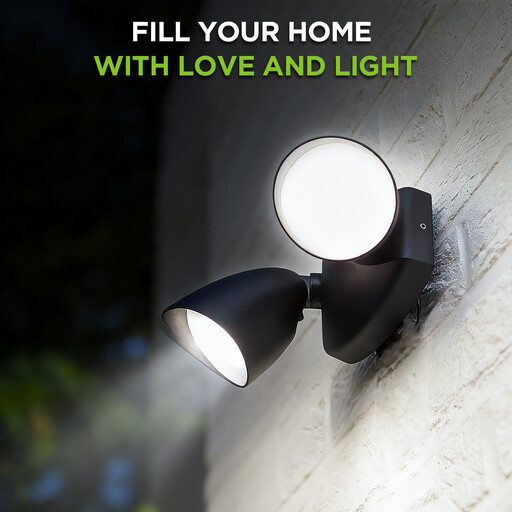
Why this product fits the profile: The dual floodlight is intended for larger outdoor areas such as yards, gardens, patios or driveways when a fixed installation is desired.
The description lists 1800 lumens, 20 watts, 4000 Kelvin and a metal housing. These details make it easier to assess light output, colour temperature and construction.
Two lamp heads and a luminous flux of 1800 lumens according to the product details; suitable for targeted area illumination.
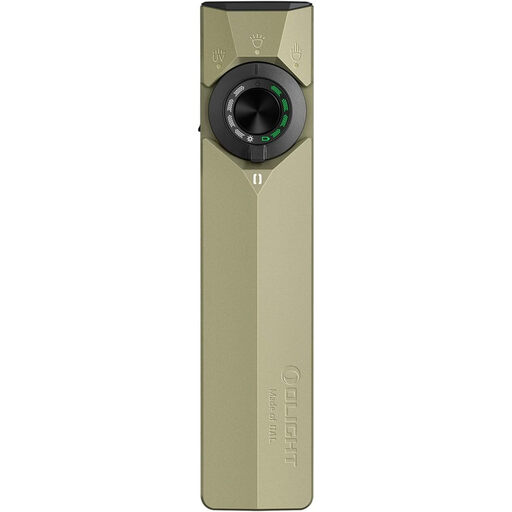
Why this product fits the profile: For campers, hikers, DIYers and anyone who needs a compact LED torch with different light types.
Instead of quoting only a maximum brightness, the product description lists multiple light sources and use cases. The IPX7 rating should still not be equated with dust protection.
According to the product details, up to 1700 lumens, 205 metres of range, white light, UV light and a green beam, plus USB-C and magnetic charging.
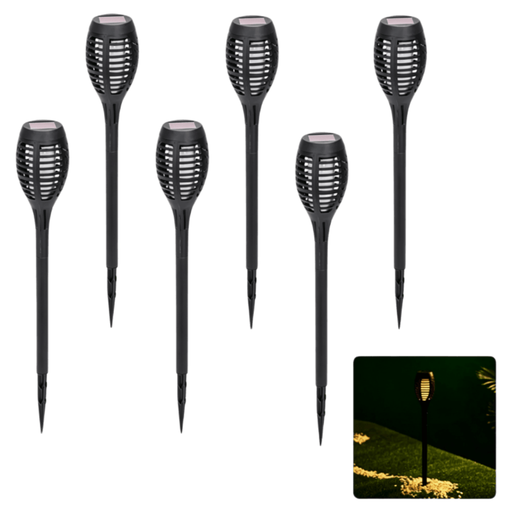
Why this product fits the profile: This set is aimed at garden and patio owners who want to mark paths or beds decoratively without a mains connection.
The product details state IP44, a Ni-MH battery, the required sunlight, plus charge time and runtime. This helps you evaluate the location before buying.
Six-piece set, warm white at 2700 Kelvin and solar power with no fixed cabling.
We’ve compiled a complete, continually updated list of products that fully meet these strict selection criteria and the safety regulations applicable in the EU.
For entrance areas, a motion sensor outdoor light can reduce the need to switch lights manually. Look for an adjustable detection field and check whether the light also activates in daylight. For hard-wired models, electrical work should only be carried out by appropriately qualified persons.
With torches, the battery and battery compartment are critical points. Lithium or button cells should be stored out of children’s reach and must not be damaged, heated or opened. Avoid shining powerful LEDs directly into the eyes.
That depends on the mounting location. For a partially sheltered entrance, IP44 may be sufficient. In exposed positions with harsher weather, products with higher protection such as IP66 are often more appropriate. The specific manufacturer’s instructions and the installation manual are decisive.
For small paths or a front entrance, a few hundred lumens are often enough. Larger yards, garages or work areas need significantly more light or multiple lights depending on the area. Beam angle, mounting height and colour temperature are also crucial.
Solar lights don’t use mains electricity, but depend on sunlight and battery capacity. Mains-powered models, when correctly installed, offer more consistent availability but incur ongoing electricity costs. So compare not only the purchase price, but also usage frequency, charging effort and maintenance.