
Lieferung heute & morgen

Qualitätsgarantie

Willkommens-Angebote freischalten: KOSTENLOSE Lieferung | Bis zu 80 % RABATT | Kostenlose 30-Tage-JoyPlus-Testphase
App herunterladen
Outdoor lights can illuminate paths, highlight entrances or enhance the look of your garden and exterior walls. The choice ranges from outdoor wall lights and solar garden lights to LED outdoor lights with motion sensors. The wide variety of models, however, can make it easy to choose the wrong product.
IP44 outdoor lighting is protected against solid objects larger than 1 millimetre and splashing water from different directions. However, it is not designed to be permanently submerged or exposed to a powerful jet of water. IP44 may be suitable for an outdoor wall light beneath a porch roof. For an unprotected position exposed to heavy rain, you should carefully check the installation conditions and the manufacturer’s guidance.
A solar garden light needs enough direct daylight. In the shade of trees, on a north-facing wall or in the shadow of a building, its charging performance can be significantly lower. Claims such as 8 to 12 hours of light are generally based on suitable charging conditions. Actual running time may differ in winter, in cloudy weather or if the solar panel is dirty.
A higher lumen rating means more light, but not necessarily more comfortable or suitable lighting. For a narrow path, an outdoor path light with a wide beam is often a better choice than a powerful outdoor spotlight. A colour temperature of around 2700 Kelvin gives a warm glow, while 4000 or 6500 Kelvin looks noticeably more neutral or cool. The right choice depends on where the light will be used, its beam angle and the colour of light you want.
The level of protection is shown by an IP code. With IP44, the first digit indicates protection against solid objects and the second indicates protection against splashing water. This is not the same as protection against temporary immersion. Metal, glass, plastic and aluminium also differ in weight, appearance and maintenance requirements. Seals, cable entries and secure fixing all affect the actual level of protection once the light is installed.
With a light that has an E27 fitting, you can choose the bulb separately and replace it later. Integrated LEDs do not need a separate bulb, but they cannot be replaced on some models. A dimmable outdoor light must be used with a compatible LED dimmer. Also check the voltage, maximum wattage, colour temperature and, where relevant, the colour rendering index.
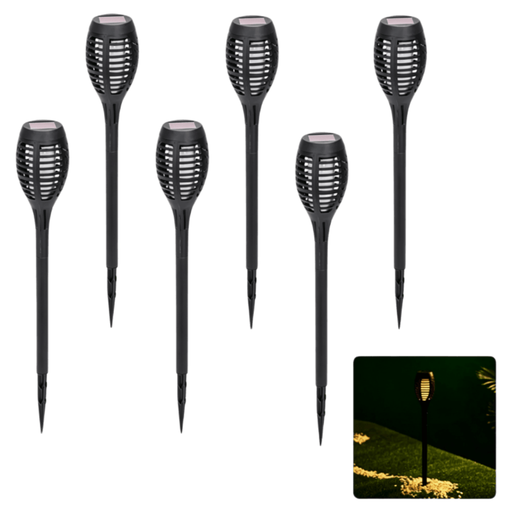
Why this product suits this profile: This six-light set is a good choice if you want to mark paths, flower beds or lawn areas without a mains connection. The lights push into the ground and need no fixed wiring.
The product information lists a charging time of around 4–6 hours, a possible lighting time of 8–12 hours and an IP44 rating. A position in direct sunlight is still essential.
Six lights, warm white light at 2700 K and integrated Ni-MH batteries; according to the product information, suitable for temperatures from -10 to 50 °C.
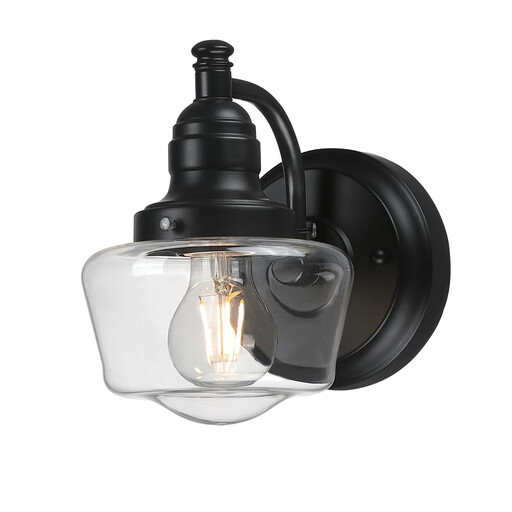
Why this product suits this profile: This outdoor wall light pairs a matt black housing with clear glass. It works well by entrances, on patios and on exterior walls with either a classic or modern look.
The fitting is clearly specified: 1 × E27, up to a maximum of 60 W. The bulb is not included, so you can choose one to suit your preferred colour temperature and brightness.
IP44 splash protection, 220–240 V at 50 Hz and compact dimensions of around 15 × 21 × 22 cm.
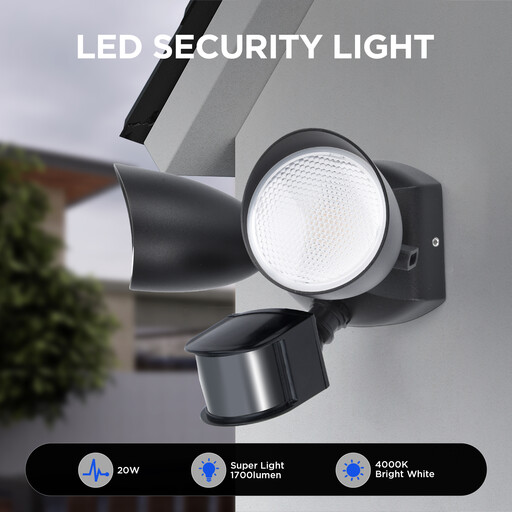
Why this product suits this profile: An LED outdoor spotlight with a sensor can be a practical choice for driveways, courtyards or larger garden areas where you only need light when movement is detected.
The product name specifies 1700 lumens, 20 W, 4000 K and a motion sensor, making it easier to assess the brightness and colour temperature before you buy.
Integrated LED technology and two adjustable light heads, according to the product name; ideal for directing light onto paths or driveways.
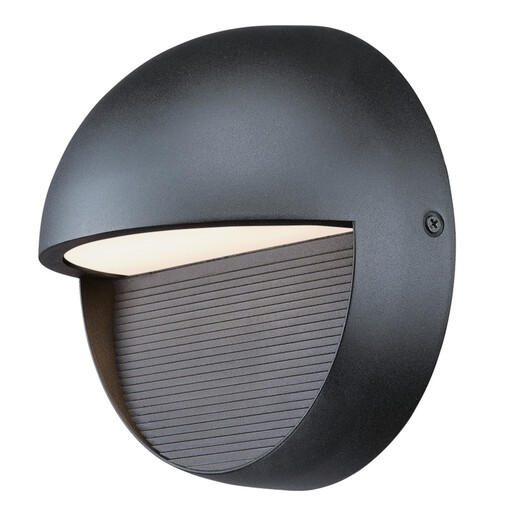
Why this product suits this profile: This compact outdoor wall light is suited to entrances, patios and garden walls if you want an integrated LED with adjustable brightness.
The light is rated IP44 and has 10 W integrated LED technology, with external dimming. As the LED module is not replaceable, it is worth taking this into account before buying.
Two integrated LED modules, each rated at 7.5 W, and a slim width of 12 cm; an LED-compatible dimmer is required.
We’ve put together a complete, regularly updated list of products that meet these strict selection criteria and fully comply with the safety regulations in force in the EU.
Mains-powered outdoor lights should be installed by a qualified electrician. Disconnect the power supply before carrying out any maintenance or cleaning. The light must be fixed securely and flush against the surface so that the seals and cable entries work as intended.
Fully charge solar lights before use, then position them where the panel will get as much sun as possible. Dust and leaves can reduce charging performance. When placing an outdoor path light, also make sure it is a safe distance from lawnmowers, water and frequently used paths.
Consumption depends on the wattage, how long the light is on and how it is controlled. A 10 W LED switched on for three hours a day uses 0.03 kWh per day in theory. Motion sensors can reduce the time the light is on. Solar lights get their energy from daylight, but still rely on batteries, which may need replacing as their capacity declines, if the model allows this.
IP44 protects against splashing water and is suitable for many covered entrances, patios and sheltered exterior walls. Suitability also depends on the installation location, orientation and correct sealing. For positions that are permanently exposed or subject to harsh weather, check the manufacturer’s specific guidance on the intended installation.
Lifespan depends on the LED module, battery, temperature, moisture and how the light is used. The Aigostar models mentioned are rated for an LED lifespan of up to 15,000 hours. This is a product specification, not a guarantee for the entire light. If an integrated LED fails, the whole light often needs to be replaced.