
Lieferung heute & morgen

Qualitätsgarantie

Willkommens-Angebote freischalten: KOSTENLOSE Lieferung | Bis zu 80 % RABATT | Kostenlose 30-Tage-JoyPlus-Testphase
App herunterladen
Whether for your front entrance, balcony, garage, garden path or patio, outdoor lights need to suit the location, power supply and desired lighting effect. Many poor purchases are not caused by the price, but by unclear information about brightness, IP rating or installation. For example, a decorative light is not automatically suitable for constant rain, while a bright LED floodlight may be excessive for a small balcony.
This buying guide explains which details you should check before purchasing and which types of light are suitable for different uses.
Power consumption in watts indicates how much electrical power a light requires. For the actual brightness of LED products, the luminous flux in lumens is particularly important. An LED outdoor wall light with 950 lumens will not necessarily illuminate an area in the same way as an LED floodlight with 1,700 or 1,800 lumens. The beam angle, installation height and reflector also affect how much light reaches a surface.
An outdoor light should have a clearly stated IP rating. The first digit indicates protection against solid foreign objects, while the second indicates protection against water. IP44, for example, means protection against solid foreign objects measuring 1 millimetre or more and against splashing water. This is suitable for many covered outdoor areas, but it does not replace checking the specific installation location.
If no IP rating is provided, you should not automatically plan to use the light as a waterproof outdoor lamp. With battery-operated or decorative products in particular, the moisture guidance in the manual can be crucial.
An outdoor light with a motion sensor can make life more convenient, but it needs to be positioned correctly. Common mistakes include choosing a detection range that is too small, pointing the sensor towards passing cars or installing it directly next to heat sources. Check whether motion and light sensors are included and whether the lighting duration or sensitivity can be adjusted.
Moderate lumen values are often sufficient for paths and entrances, while an outdoor security light or dual-head outdoor floodlight should cover larger areas. As a guide:
Light colour is measured in Kelvin. Warm white at around 2,700 to 3,000 Kelvin creates a subtle effect and is ideal for a pleasant atmosphere. Neutral white at around 4,000 Kelvin supports clear, functional illumination. Values around 5,000 Kelvin create a cooler, daylight-like appearance and may be suitable for work or security areas.
Hard-wired lights such as an LED outdoor wall light or an LED floodlight require a suitable connection cable and should be installed by a qualified electrician when used as part of an outdoor electrical installation. Before purchasing, check the wall material, cable routing, installation height and space required.
For rented homes, balconies or locations where the light may need to be moved, a solar and rechargeable-battery outdoor lamp, USB light or battery-operated hanging light may be more practical. Check the charging time, runtime, battery type and whether batteries are included.
Metal, plastic and glass have different care and usage properties. A light with an aluminium housing may be robustly constructed, while glass surfaces should be checked regularly for cracks. With garden lanterns and decorative lanterns, it is also important to check whether they are designed for real candles, LED candles or both.
The following recommendations categorise specific models by intended use and documented product details. Not every light is suitable for every outdoor area; in particular, check the IP rating and installation instructions on the product page before installation.
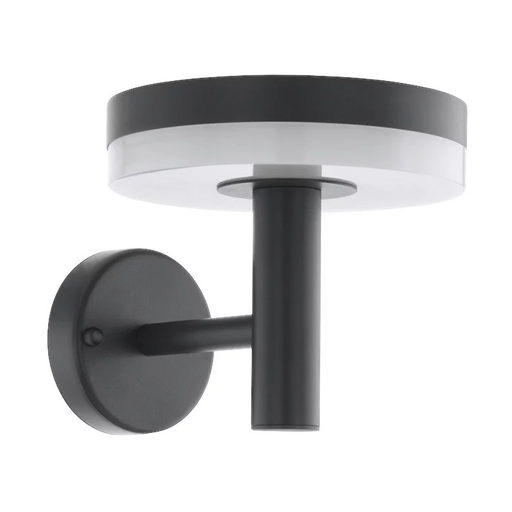
Why this product suits the profile: This hard-wired outdoor wall light offers a clearly defined combination of 11 W, 950 lm and warm white 3,000 K lighting for entrances, paths or smaller patios.
The luminous flux, colour temperature and dimensions are clearly specified. This makes it easier to choose than products making vague brightness claims.
Integrated LED module, 950 lm, 3,000 K and anthracite finish. The LED module is not replaceable.
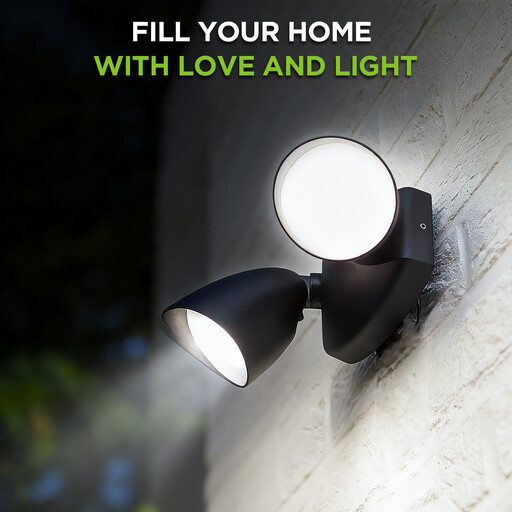
Why this product suits the profile: This dual-head outdoor floodlight is ideal for users who want to illuminate a larger area such as a courtyard, garden or driveway with two adjustable light heads.
The two heads can be adjusted to suit the area you want to illuminate. This means you do not necessarily have to choose a single light with an extremely wide beam.
20 W, 1,800 lm, 4,000 K and two light heads. The product description specifies a full metal housing and a water-resistant design.
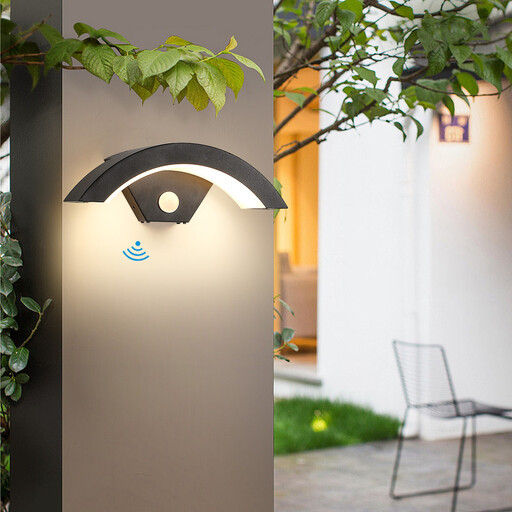
Why this product suits the profile: For front entrances, garages, driveways and paths, the combination of light and motion sensors is practical when you do not want the lighting switched on continuously.
The sensors are explicitly listed as a product feature. Before installation, check the detection direction, field of view and desired activation time using the instructions.
24 W, warm white 3,000 K, matt aluminium housing, plus light and motion sensors according to the product description.
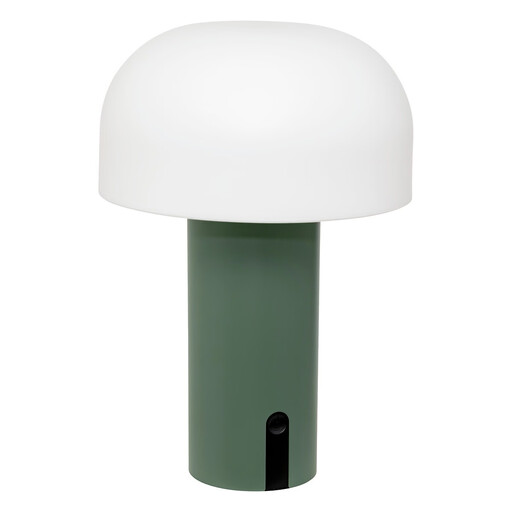
Why this product suits the profile: This compact rechargeable outdoor lamp is suitable for tables and consoles when no fixed power connection is available and you want warm white lighting.
The battery runtime of up to 6 hours and charging time of 5 to 6 hours are specified. With IP44, however, use should still be limited to suitable outdoor conditions.
90 lm, 3,000 K, USB-C charging cable, rechargeable lithium-ion battery and touch switch.
We have put together a complete, regularly updated list of products that fully meet these strict selection criteria and the safety regulations applicable in the EU.
It depends on where it will be used. For a table lamp or subtle balcony lighting, 90 to 150 lumens may be sufficient. Entrances and paths often require around 500 to 1,000 lumens. For courtyards, driveways or larger garden areas, 1,500 lumens or more may be appropriate. Installation height, beam angle and the distance to the area being illuminated are also important.
Many sheltered outdoor areas require at least a suitable splash-resistant rating, often IP44. For exposed locations, direct rain or increased moisture, a higher IP rating may be necessary. Always check the specific manufacturer’s information and installation instructions rather than relying solely on the term “outdoor”.
Pay attention to the detection angle, range, installation height, adjustable lighting duration and the difference between motion and dusk sensors. Correct positioning is essential so that the light is activated by genuine movement rather than switching on unnecessarily because of passing vehicles or moving branches.