
Lieferung heute & morgen

Qualitätsgarantie

Willkommens-Angebote freischalten: KOSTENLOSE Lieferung | Bis zu 80 % RABATT | Kostenlose 30-Tage-JoyPlus-Testphase
App herunterladen
An outdoor light with a motion sensor is a practical investment for greater security and convenience around your home and garden. It illuminates paths when you arrive home, deters uninvited guests, and helps prevent accidents in the dark. However, the market is flooded with products whose marketing promises often fall short in practice. Before you make a decision, it's crucial to understand the typical weaknesses that can quickly turn a supposedly good investment into a source of frustration.
As your Joybuy Product Recommendation Officer, I'm here to help you separate the wheat from the chaff. In this guide, I'll show you the three most common pitfalls to avoid when buying and which technical features you should really focus on.
Many lights look robust at first glance, but prove to be useless after only a short time. Pay close attention to these three points to avoid making a bad purchase:
To avoid these pitfalls, you should focus on objective, technical data. These three parameters are essential for making an informed purchasing decision.
The IP rating (Ingress Protection) indicates how well an electrical device is protected against the ingress of foreign objects (first digit) and water (second digit). For outdoor use, the following classes are relevant:
The type of power supply significantly determines the installation effort and operational reliability.
Modern outdoor lights typically use Passive Infrared (PIR) sensors, which react to changes in heat. The adjustment options are crucial for practical usability:
Here are some product recommendations tailored to specific use cases that meet the criteria mentioned above.
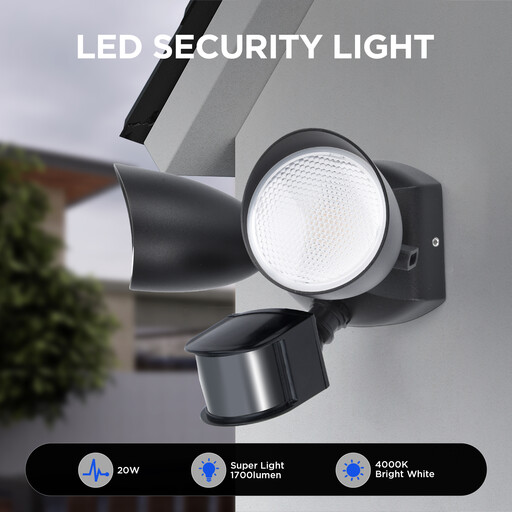
Why it's a good fit: Ideal for reliably illuminating driveways, yards, and entryways where consistent, powerful light output is crucial for security.
As a hardwired model, it completely bypasses the pitfall of unreliable battery and solar performance, delivering full brightness at all times.
The high light output of 1700 lumens and the two pivoting floodlight heads provide broad, intense illumination for deterrence.
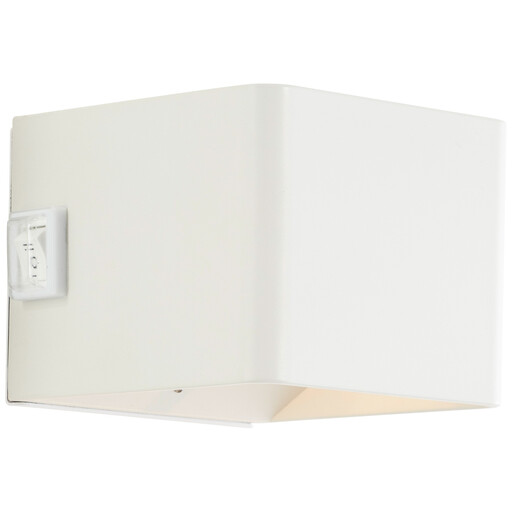
Why it's a good fit: Perfect for balconies, patios, or indoor areas where a permanent installation is not desired. Ideal for renters who are not allowed to drill holes.
The IP44 protection rating is clearly declared and sufficient for sheltered outdoor areas (e.g., a covered balcony), without overpromising on ruggedness.
Maximum flexibility thanks to an integrated battery (USB-rechargeable) and a magnetic mount for easy attachment to metal surfaces.
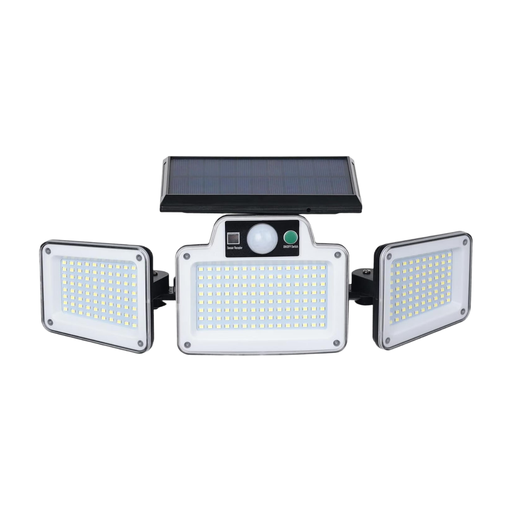
Why it's a good fit: A self-sufficient solution for illuminating garden paths, sheds, or garages where no power outlet is available and you want to avoid running costs.
The separate solar panel with a long cable allows for optimal positioning towards the sun, even if the light itself is mounted in the shade. This maximises charging efficiency and bypasses the pitfall of weak solar performance.
Three adjustable light heads and a remote control with three operating modes offer high adaptability for various lighting and security needs.
We have compiled a complete, up-to-date list of products that fully meet these strict selection criteria and German safety regulations.
It depends on the mounting location. For a sheltered area under a roof overhang, an IP44 rating (protection against splashing water) is sufficient. If the light is exposed to rain, snow, and wind without protection, you should choose a light with at least an IP65 rating (protection against water jets) to ensure a long lifespan.
Reliability heavily depends on the product's quality. Look for models with a large, efficient solar panel and a high battery capacity (e.g., 2400 mAh or more). Models with a separate solar panel connected by a cable are advantageous because the panel can be optimally positioned towards the sun while the light remains in the shade. Nevertheless, the runtime may be reduced on very short, overcast winter days.
Yes, this is possible with many models. Look for products that allow you to adjust the detection zone (range and angle) and sensor sensitivity. Through precise adjustment, you can limit the monitored area to the desired path and reduce the sensitivity so that small animals no longer trigger the sensor.