
Lieferung heute & morgen

Qualitätsgarantie

Willkommens-Angebote freischalten: KOSTENLOSE Lieferung | Bis zu 80 % RABATT | Kostenlose 30-Tage-JoyPlus-Testphase
App herunterladen
An outdoor light with motion sensor can automatically illuminate paths, entrances, patios or garages. At first glance, choosing one seems simple: LED, a sensor and a weatherproof housing appear to be all you need. In practice, however, unclear technical specifications, unsuitable positioning or an incompatible power supply often lead to disappointing purchases.
A high lumen figure describes the luminous flux, but says little about how effectively a path or courtyard will actually be illuminated. The beam angle, the position of the light and the ability to adjust the light heads are also important. A compact outdoor LED light with a narrow beam may be sufficient for an entrance, while a driveway requires broader light distribution.
The level of protection is indicated by the IP code. For a waterproof outdoor light such as a model rated IP65, the first digit, 6, indicates protection against dust. The second digit, 5, indicates protection against water jets from different directions. This does not mean that the light is suitable for permanent underwater use.
A light rated IP44 is protected against solid foreign objects above a certain size and against splashing water. It may be suitable for a partially covered patio, but should not be installed in an exposed position where it is regularly subjected to powerful water jets or standing water.
A solar outdoor light with motion sensor needs sufficient daylight on its solar panel. Beneath a balcony, on a north-facing wall or in the shade of dense trees, the available charging power may be limited. The stated lighting duration also depends on sunlight, battery capacity, temperature and the number of sensor activations.
For comparison purposes, luminous flux in lumens is relevant. As a general guide:
Colour temperature is measured in Kelvin. Temperatures of 2,700 to 3,000 Kelvin produce a warm white light and often work well for patio lighting. Neutral white at around 4,000 Kelvin provides more functional illumination. Specifications such as “7000K warm white” should be checked carefully, as 7,000 Kelvin is technically a very cool, daylight-like shade.
With an outdoor wall light with sensor, it is also important to check whether the light head is fixed or adjustable. Multiple adjustable heads can provide better coverage around house corners, garage entrances or wide courtyards.
An outdoor light with motion sensor should suit its intended location. A limited detection area is usually sufficient for an entrance. For a driveway or garden path, the detection angle, range and sensor positioning are crucial.
Excessive range can cause passing vehicles, animals or movement outside your property to trigger the light. Check whether the sensor angle, sensitivity and stay-on time can be adjusted.
Mains-powered lights require a suitable electrical installation. Work on fixed electrical connections must only be carried out by appropriately qualified professionals. Battery-powered or USB models are more flexible, but need to be charged regularly.
For solar floodlights, the panel should receive as much direct daylight as possible. The following points are also important when installing the light:
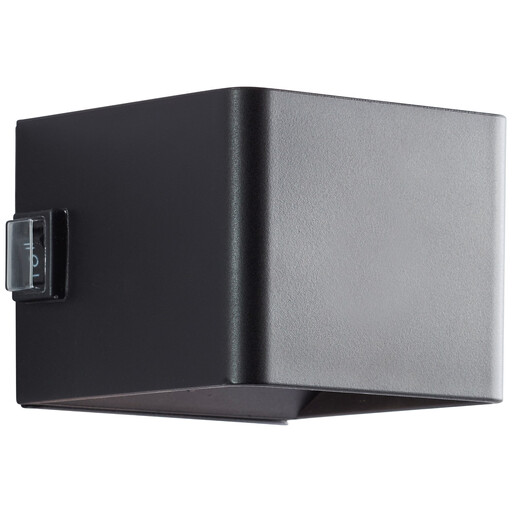
Why this product suits the profile: This battery-powered light is ideal for tenants or beginners looking for flexible lighting without a fixed power connection. It can be charged via USB and attached to suitable metal surfaces using a magnet.
The technical specifications state 300 lumens, 3,000 Kelvin and IP44. This makes it easier to assess the light realistically for covered areas or locations protected from splashing water, rather than treating it as a universal solution for every weather condition.
Built-in battery, USB charging cable, magnetic attachment and motion sensor; 4 watts of power consumption according to the product specifications.
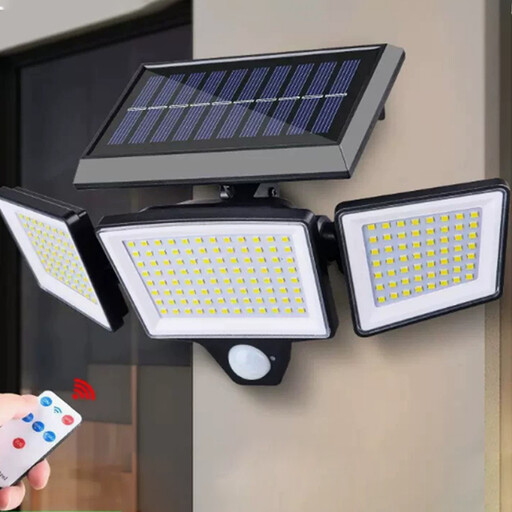
Why this product suits the profile: Three adjustable light heads, a wide illumination area and solar power are attractive to homeowners who want to light their courtyard, garage, garden or driveway without installing an additional power cable.
The specifications state not only the luminous flux, but also three lighting modes, a 180° detection angle and a sensor range of 60 feet. The IP65 rating allows for a clear assessment of its suitability for outdoor use.
3,000 lumens according to the product specifications, 302 LEDs, 1,800 mAh lithium-ion battery, 270° adjustable illumination area and IP65.
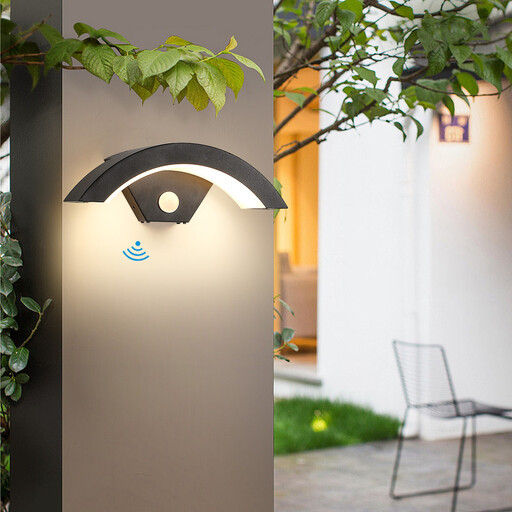
Why this product suits the profile: This permanently installed outdoor wall light with light and motion sensors is designed for users looking for a fixed solution for porches, paths, balconies, garages or stairways.
The description specifies a matt-painted die-cast aluminium housing and constant-current power supply. Before buying, check the protection rating and connection details in the full product specifications.
24 watts, warm white light at 3,000 Kelvin according to the product name, metal housing and combined light and motion sensor.
We have put together a complete, regularly updated list of products that fully meet these strict selection criteria and the safety regulations applicable in the EU.
Install the light so that the sensor detects movement across its expected range, rather than only from directly in front. House corners, walls, dense plants and moving heat sources can affect detection. The solar panel on a solar outdoor light should be positioned as openly as possible towards the daylight. For permanently connected models, installation must be carried out by a qualified professional.
The lifespan depends on the LED module, electronics, battery, temperature, moisture and daily operating time. With solar lights, the battery is often the component whose capacity may decline over time. Clean the panel and sensor window regularly with a soft, slightly damp cloth, and follow the manufacturer’s care instructions.
A mains-powered LED security light only uses its stated amount of power while it is operating. Running costs depend on the wattage, stay-on time and number of activations. A solar light does not draw electricity from the household mains while operating, but it does require sufficient sunlight and may discharge more quickly if it is triggered frequently.