
Lieferung heute & morgen

Qualitätsgarantie

Willkommens-Angebote freischalten: KOSTENLOSE Lieferung | Bis zu 80 % RABATT | Kostenlose 30-Tage-JoyPlus-Testphase
App herunterladen
A well-chosen outdoor light with a motion sensor offers more than just illumination in the dark. It ensures safety on pathways, deters unwanted visitors, and welcomes you with a lit entrance. However, the market is flooded with products whose promises often don't hold up in practice. Before you make a decision, it's important to understand the common pitfalls that can lead to disappointment and unnecessary expense.
Many buyers focus on an appealing design or a low price, overlooking crucial technical shortcomings. Three common problems are:
To avoid these mistakes, you should base your selection on objective criteria.
To find a durable and functional outdoor lamp with a sensor, you should carefully examine three technical specifications. These are the primary determinants of the product's performance and reliability.
The IP (Ingress Protection) rating indicates how well a light is protected against the ingress of foreign objects (first digit) and water (second digit). For weatherproof outdoor lighting, the following values are relevant:
A higher IP rating generally means a more robust construction and a longer lifespan outdoors.
The choice of power source depends on the installation location and your preferences:
A good motion sensor should be adjustable. Important parameters include:
Instead of making a one-size-fits-all recommendation, we have identified products that meet specific user profiles and avoid the pitfalls mentioned earlier.

Why it's a good fit: Ideal for anyone looking for a hassle-free lighting solution without drilling or wiring. Perfect for balconies, rental properties, or the garden shed, where flexibility is key. The magnetic mount allows for quick attachment to metal surfaces.
Thanks to its battery operation and USB charging function, this light bypasses the reliance on weak solar cells during darker months. The IP44 rating ensures sufficient weather resistance for sheltered outdoor areas.
The combination of battery power, a motion sensor, and a magnetic mount offers maximum portability and ease of use. The warm white light (3000 K) creates a pleasant atmosphere.
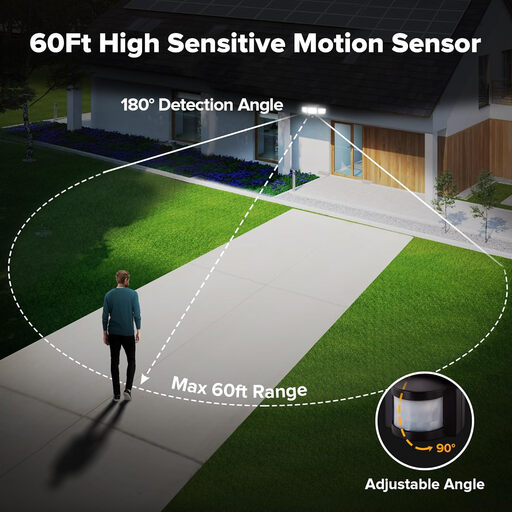
Why it's a good fit: For homeowners whose priority is wide-area, bright illumination of driveways, gardens, or garages. The three adjustable heads allow for flexible light positioning for optimal coverage.
This model tackles the problem of unreliable sensors with a wide 180° detection angle and a long range. The IP65 rating ensures the light functions reliably even in heavy rain and adverse weather conditions.
The high brightness of 3000 lumens provides intense illumination and thus a high level of security. Thanks to solar technology, it eliminates electricity costs and complex wiring.

Why it's a good fit: For those who want a permanently installed, aesthetically pleasing, and reliable light for their home's facade, entrance, or terrace. The modern design of this black outdoor wall light blends seamlessly into contemporary architecture.
The mains connection ensures constant and reliable performance without depending on weather or battery charge. The die-cast aluminium housing is robust and weather-resistant, promising a long service life.
The combination of a modern U-shaped design, durable material, and warm white light (3000 K) visually enhances the property while providing the functionality of a motion sensor.
We've compiled a complete, up-to-date list of products that fully meet these strict selection criteria and local safety regulations.
The recommended mounting height is typically between 1.80 and 2.50 metres. At this height, the sensor's detection area is optimal, and the light is protected from easy tampering. Always follow the specific instructions provided by the manufacturer in the manual.
On many models, the light duration (on-time) can be adjusted. Common setting ranges are between 10 seconds and several minutes. This allows you to tailor the lighting to your needs—a short duration for a walkway or a longer one for the entrance area to give you time to unlock the door.
The IP rating classifies a housing's degree of protection against the ingress of foreign objects and water. The first digit (0-6) represents protection against solids (e.g., dust), and the second (0-9) represents protection against water. For outdoor use, a minimum of IP44 (protection against splashing water) is required. For exposed locations, IP65 (protection against water jets) or higher is recommended.