
Lieferung heute & morgen

Qualitätsgarantie

Willkommens-Angebote freischalten: KOSTENLOSE Lieferung | Bis zu 80 % RABATT | Kostenlose 30-Tage-JoyPlus-Testphase
App herunterladen
An outdoor planter should look attractive, stand securely and provide enough space for the plants in question. In practice, however, three common buying mistakes in particular can lead to unnecessary expense: using a decorative container without suitable drainage, allowing a lightweight pot to tip over in the wind, or misjudging the stated dimensions. A modern outdoor planter is not automatically suitable for every plant or location either.
Before buying, it is therefore worth considering material, dimensions, weight and drainage. The following criteria will help you choose a decorative planter that is suitable for your balcony, patio or garden.
A tall planter or plant stand with a planter can add structure to an entrance area or patio. However, this does not automatically mean that the container is designed for permanently damp soil, heavy rain or frost. With a metal model, you should check whether it has an inner container and how water can drain away.
Without adequate drainage, waterlogging can occur. This is less relevant for artificial flowers, but for real plants it is one of the most important points to check.
Slim containers save space, but they have a smaller base. A stable planter should therefore be suitable for its location: a sheltered balcony has different requirements from an exposed patio that is regularly affected by gusts of wind.
A tall model with a narrow base should not be placed near an unprotected edge. Additional stability may be provided by a heavy filling, a suitable inner pot or a sheltered position. It is not possible to make a blanket statement about tip resistance without knowing the specific conditions at the location.
The height of a planter does not automatically indicate how much soil it can hold. With a plant stand and planter, some of the volume may be taken up by the frame, inner container or base. Before ordering, you should therefore compare the height, width and depth with the available space and the plant you intend to use.
A weather-suitable planter needs to be made from a material that matches its intended use. PE plastic is lightweight and easy to move. This can be useful on small balconies if you want to reposition plants according to the position of the sun. At the same time, a very lightweight pot must be secured against tipping or placed in a sheltered position.
Iron offers greater inherent weight when appropriately constructed. With metal products, buyers should follow the care instructions. For the Trosa models featured here, wiping with a damp cloth is recommended; according to the product information, abrasive cleaners should not be used. Whether a metal container can remain outdoors permanently without protection depends, among other things, on its surface treatment and the local weather conditions.
Compact dimensions are often crucial for balconies and patios. A planter with a 23 × 23 cm base takes up considerably less space than a model measuring 28 × 28 cm. The additional height can have a decorative effect, but it also changes the centre of gravity.
With a tall planter, the following points should be considered together:
Controlled drainage is important for flowers and edible plants. If no drainage opening is specified, a separate inner pot with drainage or a drainage layer may be required. Even then, excess water must still be able to leave the system.
Anyone who wants to grow potatoes in a pot needs a different type of container from one intended for artificial flowers. A potato planter should provide sufficient height, air circulation and a way for water to drain away. The planter must also not be allowed to dry out completely or be left standing in a saucer containing stagnant water.
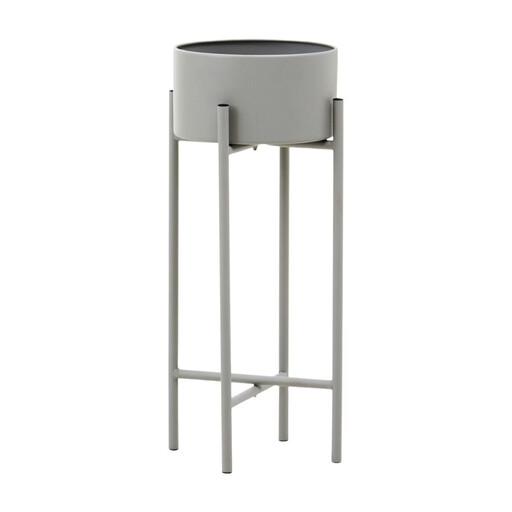
Why this product suits the profile: The compact grey model measures 51 × 23 × 23 cm and is suitable for smaller spaces, such as a sheltered balcony or beside a patio door.
The dimensions are clearly stated. Before using it with real plants, you should still check whether a suitable inner pot and drainage are required.
Iron frame, crossed legs and a net weight of 8.37 kg according to the product specification. Clean with a damp cloth.
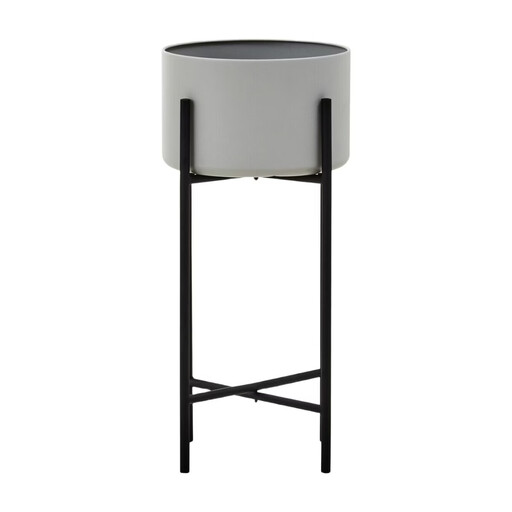
Why this product suits the profile: The large Trosa model combines a grey planter body with a black iron frame and is intended for artificial flowers according to the product description.
With artificial flowers, there is no issue with watering inside the planter body. For real plants, its suitability for moisture should be checked separately.
Dimensions of 55 × 28 × 28 cm, an iron frame and a stated weight of 9 kg. Assembly is required.
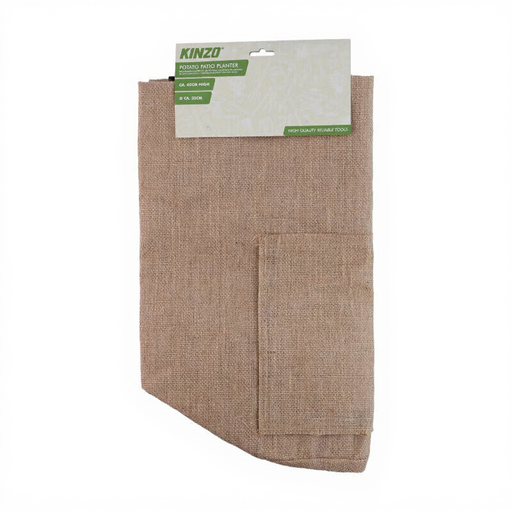
Why this product suits the profile: This potato planter is designed for small outdoor spaces and measures 35 cm in diameter and 45 cm in height. Weighing 330 g, it is easy to move.
The container is specifically designed for growing potatoes in limited spaces. The product description mentions drainage and ventilation; the location should nevertheless be protected from waterlogging.
Lightweight PE material, 35 cm diameter and 45 cm height. The format is designed for balconies, patios and small gardens.

Why this product suits the profile: The green model adds a bold splash of colour and takes up little space, with a base measuring 23 × 23 cm.
The product details specify the material, dimensions and care requirements. For a permanently exposed outdoor location, buyers should check its suitability for moisture and frost in advance.
Iron construction, crossed legs and a stated weight of 8.37 kg. The product is delivered assembled but requires setup.
We have put together a complete, regularly updated list of products that fully meet these strict selection criteria and the safety regulations applicable in the EU.
First, check whether the planter has drainage holes. If not, you can use a suitable inner pot with drainage. A saucer can collect water, but it should be emptied regularly. The right amount of water depends on the plant, location, time of year and growing medium.
There is no general answer regarding durability. It depends on the material, surface treatment, exposure to rain and frost, and the level of care. Metal should be cleaned according to the manufacturer’s instructions and checked for visible damage. Lightweight PE containers can easily be moved and stored in a protected place during severe frost or storms.
To grow potatoes in a pot, you need a suitable planter, loose growing medium, seed potatoes, water and a bright location. A potato planter with sufficient height and controlled drainage makes it easier to grow potatoes on a balcony or patio. The expected harvest depends, among other things, on the variety, light, care, planting time and weather conditions.