
Lieferung heute & morgen

Qualitätsgarantie

Willkommens-Angebote freischalten: KOSTENLOSE Lieferung | Bis zu 80 % RABATT | Kostenlose 30-Tage-JoyPlus-Testphase
App herunterladen
A suitable outdoor planter needs to do more than just look decorative. What really matters is drainage, stability, the material and the space you have available. When you come across offers with big promises, it’s easy to make a mistake: a pot might look generous in product photos, but in reality it’s too small for the plant you had in mind. Or the material is described as weather-resistant, yet it doesn’t have proper drainage.
These three pitfalls crop up particularly often:
Measure the intended space before you buy. For narrow patio areas, a rectangular planter works well, as it can also serve as a visual boundary or room divider. A round planter distributes its volume evenly and often suits single specimen plants.
Don’t just look at the external dimensions – pay attention to the internal volume too. A planter with a 42-litre capacity, for example, offers more room for larger plants than a compact outdoor flower pot. For herbs, strawberries or small edible plants, a smaller model may be perfectly adequate.
On a balcony, you should also check:
An outdoor planter for balcony and patio should also be positioned so that it cannot tip over the edge.
A drainage hole is useful for many plants because it allows excess water to escape after watering. On some models, the hole needs to be activated or drilled first. So check whether a plug, a removable insert or a separate inner pot is included.
According to the product details, the Beliani MYRA has two small openings in the base and requires an inner pot or lining. The Beliani ABDERA has a pre-formed opening that can be drilled through if needed; a plug is listed as included.
For a ceramic plant pot used indoors, a saucer is recommended unless you have a permanently waterproof surface. A drainage hole alone is no substitute for a suitable base.
A weather-resistant planter should have verifiable information about UV resistance, moisture resistance and the permitted temperature range. The location will determine how important these features are:
For metal models, the care instructions are important. The Trosa planters from Interiors by Premier should, according to the product details, be cleaned with a damp cloth; abrasive cleaners are not recommended.
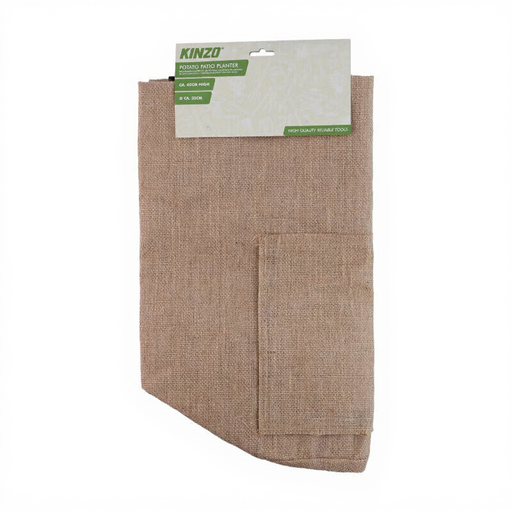
Why this product fits the profile: This compact planter is designed for growing potatoes on a balcony, patio or in a small courtyard, and with a stated weight of 330 g it is easy to move around.
The dimensions of 35 cm diameter and 45 cm height, along with the stated drainage and ventilation design, make it easier to plan where to place it and how to manage watering.
Lightweight PE material, compact shape and designed specifically for growing potatoes.
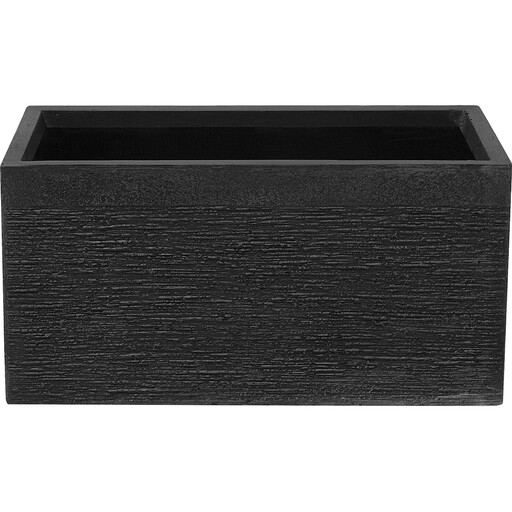
Why this product fits the profile: The rectangular shape is ideal for modern rooms, patios and as a planted privacy screen. The stated volume is 42 litres.
The product details mention drainage openings, UV resistance, water resistance and a temperature range of -20 °C to 40 °C.
Rectangular dimensions of 60 × 29 × 30 cm, 42-litre volume and stated wind resistance.
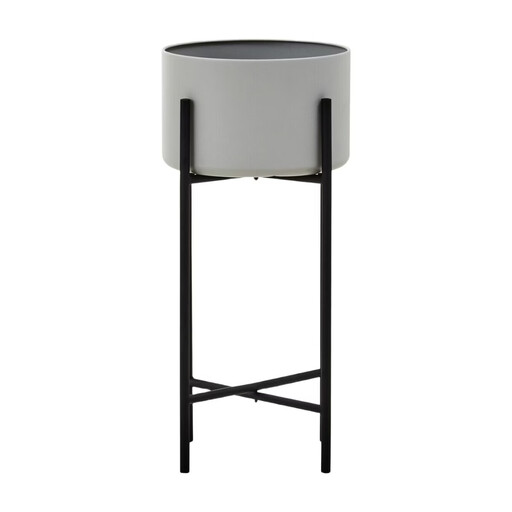
Why this product fits the profile: This raised container lifts plants up on a patio or in an entrance area, combining a grey planter with a black iron frame.
The raised height and dimensions of 55 × 28 × 28 cm can be checked in advance. The frame is supplied assembled or requires assembly.
Raised construction with four iron legs, a cross-frame element and stated material of iron.

Why this product fits the profile: This slim, round plant pot suits modern living concepts and can, according to the product description, be used both indoors and outdoors.
The opening can be drilled through if needed for outdoor use and sealed with the supplied plug.
Round shape, 31-litre volume, stone-polyresin-fibreglass composite and stated UV and moisture resistance.
Place every planter on a level, load-bearing surface. For large models, the location should be decided before filling, as moving them once they contain soil and a plant can be difficult. Check regularly that drainage openings are clear.
For the cold season, follow the manufacturer's instructions. Even a planter described as weather-resistant may need extra protection in extreme conditions. Models made of ceramic or stoneware should only be left outdoors over winter if frost resistance is explicitly stated. Use mild cleaning products and avoid abrasive sponges unless the care instructions say otherwise.
We have put together a complete, regularly updated list of products that fully meet these strict selection criteria and the safety regulations in force in the EU.
The size depends on the type of plant, the root space needed and the location. Measure the available area and also allow room for maintenance and water drainage. For small balconies, compact models with a low empty weight are often more practical than a large planter.
Not necessarily, but controlled drainage is useful for many plants. Without a drainage option, watering water can collect. With a model that has a closable or drillable opening, you can better adapt its use for indoor and outdoor spaces.
A planter with legs can raise plants visually and increase the gap between the pot and the ground. What matters is a stable frame, a level surface and a weight that remains secure even when planted. On balconies, you should also consider the maximum load capacity and the wind conditions.