Choosing an outdoor security camera is a key step in protecting your home, property, or business premises. However, with a vast array of models and features available, the selection process can be overwhelming. This guide provides clear direction by explaining important selection criteria and presenting a curated selection of models for various applications. Our goal is to provide you with an informed basis for your decision, based on objective product features.
What to Look for When Choosing an Outdoor Security Camera
Before you decide on a model, several technical and functional aspects should be considered to ensure the camera meets your specific needs.
Power Supply and Connectivity
Installation flexibility largely depends on the power source and the method of data transmission.
- Battery-Powered Security Camera: A wire-free security camera offers maximum placement flexibility, as no power cables are required. Battery life varies depending on the model and frequency of use.
- Solar-Powered Security Camera: Some battery-operated models can be paired with an external solar panel. This enables nearly self-sufficient operation, as the battery is continuously recharged with sufficient sunlight.
- Outdoor Wi-Fi Camera: Most wireless cameras connect to the internet via your home Wi-Fi network. This allows for remote access to live feeds and recordings through an app. A stable Wi-Fi signal at the installation site is a prerequisite.
- Security Camera with SIM Card: For locations without Wi-Fi access, such as allotment gardens, construction sites, or remote holiday homes, a camera with cellular connectivity (4G/LTE) is a suitable solution. It only requires a SIM card with a data plan and cellular reception.
Image Quality and Coverage Area
The ability to clearly discern details is a core function of any security camera.
- Resolution: A higher resolution (e.g., 2K or 4K) delivers sharper images, making it easier to identify faces or license plates. Full HD (1080p) is often a good starting point.
- Security Camera with Night Vision: For monitoring in the dark, there are two common technologies: infrared night vision, which produces a black-and-white image, and color night vision, which uses sensitive sensors or integrated spotlights to generate color images even at night.
- Field of View and Mobility: A wide-angle lens captures a broad area. A 360-degree security camera that can pan and tilt (Pan-Tilt-Zoom, PTZ) offers the ability to monitor the entire perimeter without blind spots and zoom in on specific areas when needed.
Data Storage and Privacy
The method of storing video recordings is an important factor that also has data privacy implications.
- Local Storage: Many cameras offer a slot for a microSD card. Recordings are stored directly on the card, giving you full control over your data and typically involving no recurring costs.
- Cloud Storage: Manufacturers often offer optional cloud subscriptions. The recordings are saved on external servers, protecting them from theft or damage to the camera. This incurs monthly or annual fees. Pay attention to the server location and the provider's data privacy compliance (GDPR).
Recommended Outdoor Security Cameras
Here, we present three models that cover different requirements and use cases. The selection is based on the technical specifications and features provided by the manufacturer.
eufy Security SoloCam S340

Why it stands out: The eufy SoloCam S340 combines two cameras—a wide-angle and a telephoto lens—in a single unit. Paired with a 360° pan-and-tilt function and an integrated solar panel, this model aims for seamless and energy-autonomous surveillance.
Pros:
- Dual Camera: Allows for a simultaneous wide-angle overview and detailed view via zoom (up to 8x).
- 360° Coverage: The pan-and-tilt function covers the entire area without any blind spots.
- Integrated Solar Power: According to the manufacturer, the detachable solar panel ensures a perpetual power supply.
- High Resolution: Offers 3K resolution for highly detailed recordings.
- On-Device AI: Motion detection and subject tracking occur directly on the device, which protects privacy and reduces false alarms.
- No Monthly Fees: Using the basic functions does not require a subscription.
Who is it for? For users seeking a comprehensive surveillance solution for larger areas like driveways or gardens, who value energy independence and a one-time investment with no recurring fees.
Reolink Go-Series-G330
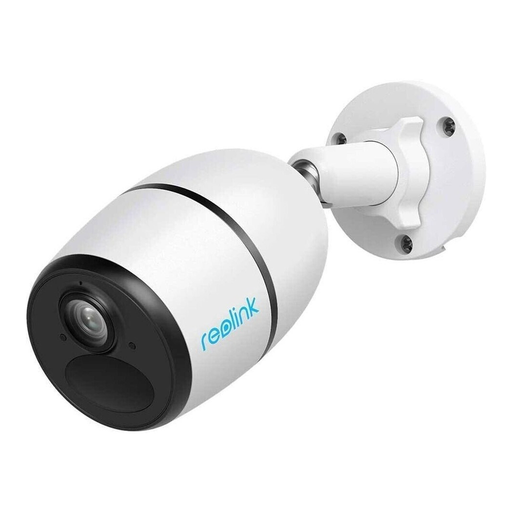
Why it stands out: The Reolink Go-Series-G330 is specifically designed for use in locations without a Wi-Fi connection. By utilizing the 4G LTE cellular network, it offers high flexibility for remote sites.
Pros:
- 4G Cellular Connectivity: Operates independently of a Wi-Fi network via a SIM card.
- Weatherproof: With an IP65 certification, the camera is protected against dust and water jets.
- 4MP Resolution: Delivers clear images with a resolution of 2560 x 1440 pixels.
- Flexible Power Supply: Powered by a rechargeable battery and is compatible with a Reolink solar panel (sold separately).
- Local Storage: Supports microSD cards up to 128 GB for storing recordings.
Who is it for? Ideal for monitoring locations without power and internet access, such as construction sites, horse paddocks, holiday homes, or RVs.
TP-Link Tapo C420S2 Outdoor Security Camera Set
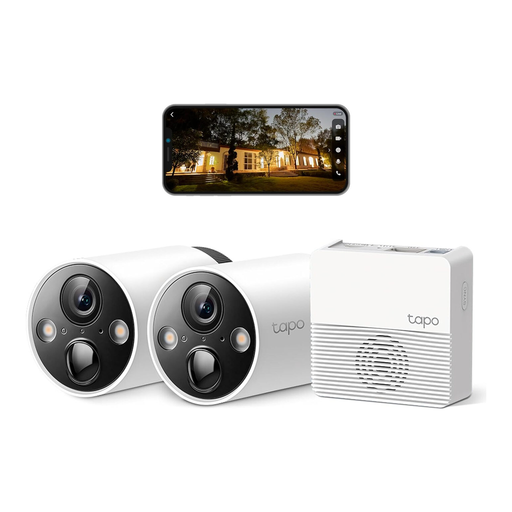
Why it stands out: The TP-Link Tapo C420S2 is an outdoor security camera set consisting of two cameras and a base station (Hub). The Hub ensures a stable connection and enables local storage, making the system particularly reliable.
Pros:
- Complete Set: Includes two cameras and a hub for immediate use in multiple locations.
- 2K QHD Resolution: Provides sharp and clear video recordings.
- Color Night Vision: According to the manufacturer, a Starlight sensor enables color images even in low light.
- Long Battery Life: The manufacturer states a battery life of up to 180 days per charge, depending on settings.
- Smart AI Detection: Differentiates between people, pets, and vehicles to send relevant notifications.
- Hub-Based Storage: The hub supports microSD cards up to 256 GB for local storage.
Who is it for? For homeowners looking for an easy-to-install and expandable system to monitor multiple areas like the front door and garden, who prefer a stable connection that is decoupled from their Wi-Fi router.
Find More Models and Accessories
The models presented here cover common use cases. However, if you have different requirements or wish to compare more options, you can find a broader selection of devices and matching accessories in our Outdoor Security Camera category.
Frequently Asked Questions (FAQ)
What are the legal considerations for an outdoor security camera?
In many regions, you are generally only permitted to film your own private property. Public areas such as sidewalks, streets, or a neighbor's property must not be recorded. Additionally, visitors (e.g., postal workers) must be informed about the video surveillance with a clearly visible sign. This text does not constitute legal advice. For binding information, consulting a qualified attorney is recommended.
How long does the battery of a wireless security camera last?
Battery life is highly dependent on usage. Factors such as the frequency of motion detection, the length of recorded clips, signal strength, and ambient temperature play a significant role. Manufacturer claims, like "up to 180 days," often refer to optimized conditions. Models with an optional or integrated solar panel can significantly extend the runtime with sufficient sunlight.
Does an outdoor Wi-Fi camera always need an internet connection?
An active internet connection is required for remote access via a smartphone, receiving notifications, and using cloud storage. However, many models with local microSD card storage can continue to detect motion and record video even during an internet outage. The recordings can then be accessed later once the connection is restored.


