
Lieferung heute & morgen

Qualitätsgarantie

Willkommens-Angebote freischalten: KOSTENLOSE Lieferung | Bis zu 80 % RABATT | Kostenlose 30-Tage-JoyPlus-Testphase
App herunterladen
As a Product Recommendation Specialist at Joybuy, I see countless customers every day searching for reliable, cost-effective lighting for their outdoor spaces. An outdoor solar light with motion sensor seems like the ideal solution: eco-friendly, no electricity costs, and enhanced security. However, the market is flooded with products whose real-world performance often falls short of their promises.
This guide will help you avoid the common pitfalls and make an informed decision. We'll focus on the technical features that truly matter, ensuring your investment continues to provide light and security for many winters to come.
Many products entice buyers with impressive numbers but fail on fundamental design aspects. Pay close attention to these three points to avoid disappointment.
outdoor security light fails when you need it most.To avoid the issues mentioned above, you should check three technical specifications before buying. These largely determine the longevity and functionality of your solar garden light.
The IP (Ingress Protection) rating indicates how well a housing is protected against the ingress of foreign objects (first digit) and water (second digit).
for the garage and garden.An LED solar floodlight with an IP65 certification is a more robust choice that can withstand heavy rain and wind-blown snow.
The performance of a solar light depends directly on its ability to store solar energy. Pay attention to the battery capacity, specified in milliampere-hours (mAh). A value of 2000 mAh or more is a good benchmark for a solar floodlight with motion sensor intended to last all night.
Equally important is the solar panel. Models with a separate, larger panel offer the advantage of being optimally positioned towards the sun, while the light itself can be mounted in the shade. This maximises energy yield, especially during the darker seasons.
Modern solar lights offer more than just on/off functionality. High flexibility significantly increases their practical value.
Outdoor lamp with remote control: A remote control allows for convenient adjustment of operating modes (e.g., motion-activated only, dim continuous light, full brightness) without needing to climb a ladder.Here are some product recommendations tailored to different needs and use cases.
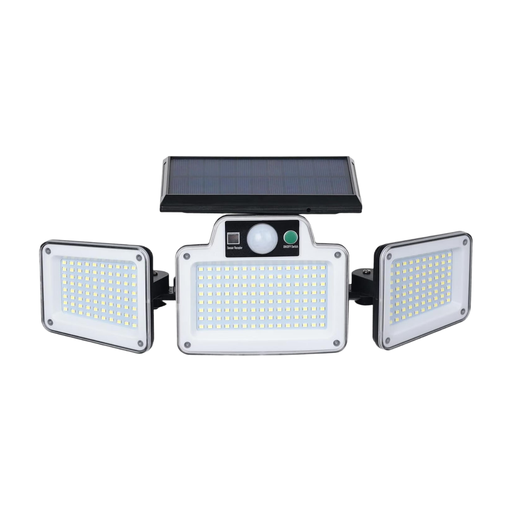
Why it's a great fit: Ideal for anyone needing flexible and powerful security lighting for a driveway, garage, or garden. The three adjustable heads illuminate a wide area, while the remote control allows for easy operation.
With an IP65 rating, the light is robust against the elements. The separate solar panel with a long cable solves the inflexible mounting problem. The 2400mAh battery ensures reliable illumination time.
High flexibility thanks to three adjustable light heads, a remote control with three modes, and a separate solar panel for optimal energy harvesting.
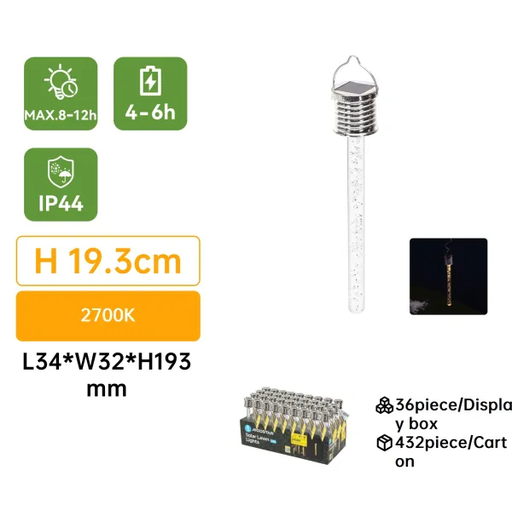
Why it's a great fit: For users whose priority is creating a pleasant atmosphere. Ideal for subtle illumination of paths, flowerbeds, or patio edges without harsh light.
This product is designed for a different purpose. The IP44 rating is sufficient for its intended use as a decorative light in garden beds. It avoids the "false expectation" pitfall—it's an ambient light, not a security floodlight.
Creates a warm white light (2700K) for a welcoming atmosphere. The decorative design with a bubble effect stylishly integrates into any garden design.
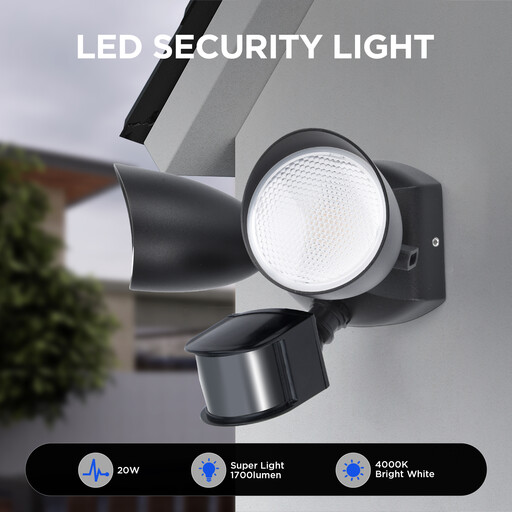
Why it's a great fit: For areas where maximum and constant brightness is the top priority and a mains connection is available. Ideal for commercial properties or home entrances where no compromises on illumination can be made.
As a mains-powered light, this model completely bypasses common solar-related issues like insufficient charging on cloudy days or diminishing battery performance. It delivers consistently high power, regardless of the weather.
Extremely high and, most importantly, stable light output of 1700 lumens that isn't dependent on sun exposure or battery charge. Two pivoting heads ensure broad illumination.
We have compiled a complete, up-to-date list of products that fully meet these rigorous selection criteria and safety standards.
Yes, high-quality solar lights do work in winter. However, charging performance is reduced due to shorter days and a lower sun angle. Models with efficient solar panels and large batteries have a clear advantage here. The illumination time per night may be shorter compared to summer. However, most motion-sensor modes are designed to ensure the core function—lighting up upon motion—even with a lower charge.
The lifespan depends on several components. The LEDs themselves often have a rated life of 15,000 hours or more. The most critical factor is usually the battery. Rechargeable batteries have a limited number of charge cycles. In good models, the battery will last several years before its capacity noticeably degrades. The quality of the housing (keyword: IP65) is also crucial, as it protects the electronics from weather damage.
The ideal location meets two conditions: the solar panel receives direct sunlight for many hours (ideally south-facing), and the light and its motion sensor optimally cover the desired surveillance area. You have the most flexibility with models that have a separate panel. Mount the light at a height of about 2 to 3 metres to maximise the motion sensor's detection range and deter vandalism.