
Lieferung heute & morgen

Qualitätsgarantie

Willkommens-Angebote freischalten: KOSTENLOSE Lieferung | Bis zu 80 % RABATT | Kostenlose 30-Tage-JoyPlus-Testphase
App herunterladen
Outdoor solar lights promise a simple, cost-effective, and eco-friendly way to illuminate gardens, balconies, and pathways. With no wiring or electricity costs, they seem like the ideal solution. But the reality is often different: many buyers are disappointed after a short time because the lights don't live up to their advertising claims.
As your Joybuy Product Recommendation Officer, I'm here to help you recognise the common pitfalls and make an informed decision. Instead of falling for marketing hype, you should focus on the crucial technical specifications.
Before you invest, you should know the three main reasons why many solar lights fail to meet expectations:
To avoid these mistakes, focus on three verifiable metrics. These will give you an objective basis for your selection.
The brightness of a light is measured in lumens (lm), not watts. A higher lumen value means more light. For orientation lighting, such as with solar path lights, 15-50 lumens may be sufficient. For illuminating patios or as a security light, you should look for 300 lumens or more.
Brightness is directly related to battery capacity, measured in milliampere-hours (mAh). A powerful lamp needs a high-capacity battery (e.g., 1800 mAh or more) to provide several hours of light, even after cloudy days.
The IP rating indicates how well a light is protected against the ingress of foreign objects and water. For unprotected outdoor use, this is a critical factor.
Look for an IP rating of at least IP65 to ensure your light is waterproof enough for year-round use.
Modern solar lights offer more than just turning on and off. An integrated motion sensor is ideal for security lights on garages or home entrances. It conserves energy, as the light is only activated at full brightness when needed.
Also, look for adjustable lighting modes. Many models offer a combination of a continuous low-brightness mode and a brighter activation upon motion. For decorative purposes, like with a solar string light, various flashing or dimming modes are a useful addition.
Here are some recommendations tailored to different user profiles that meet the criteria mentioned above.
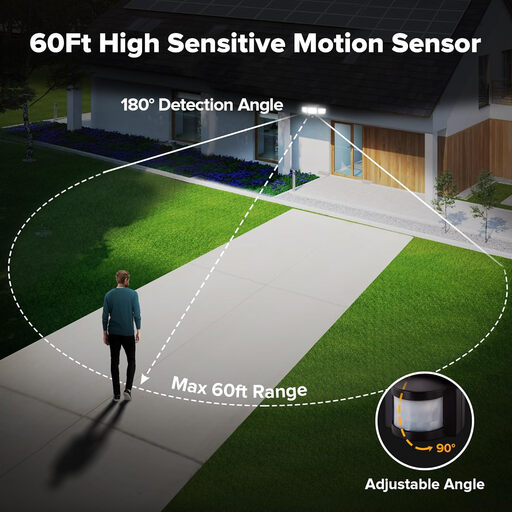
Why This Fits Their Persona: Ideal for securing driveways, garages, and dark corners of the garden. The three adjustable heads allow for wide and targeted illumination of up to 270 degrees.
Directly addresses the "disappointing brightness" trap with a powerful 3000 lumens and is purpose-built as a dedicated security spotlight. The IP65 certification ensures weather resistance.
High light output (3000 lm), a wide motion detection range (180°), and three adjustable modes for maximum flexibility and security.
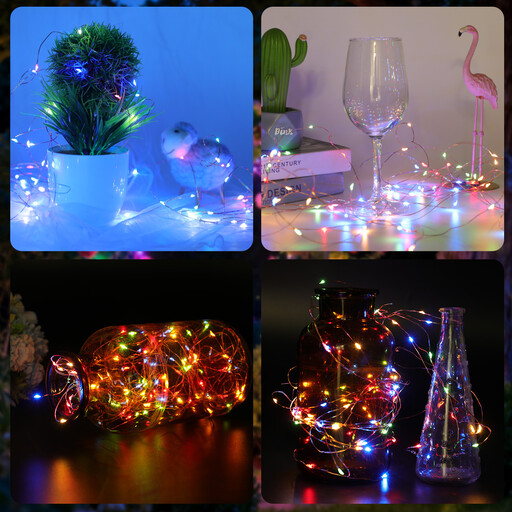
Why This Fits Their Persona: Perfect for creating a festive atmosphere on a balcony, patio, or in the garden. The flexible copper wire can be easily wrapped around railings, plants, or other objects.
These lights are clearly designed for decorative purposes, thus avoiding the "wrong light type" trap. The IP65 rating ensures reliability for seasonal outdoor use.
Eight different lighting modes with a memory function to create the desired ambiance. The set includes two separate 8-meter string lights for versatile decorating possibilities.
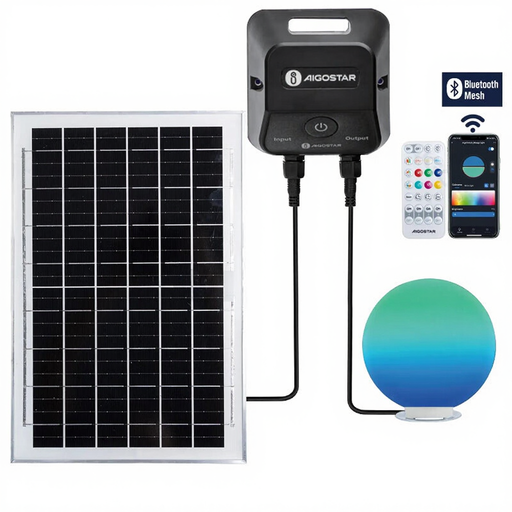
Why This Fits Their Persona: For users who appreciate modern design, smart features, and high-quality craftsmanship. This floor light is more than just a light source—it's a design statement for the patio or garden.
This model bypasses the common pitfalls with a large 8000 mAh battery, 350 lumens of brightness, and smart control options that go far beyond standard features.
Control via Bluetooth Mesh, adjustable light colours and colour temperatures (RGB+2700K-6500K), and a long battery life of up to 24 hours according to the manufacturer.
We've compiled a complete, up-to-date list of products that fully meet these strict selection criteria and safety standards.
The runtime in winter depends heavily on the quality of the solar panel, the battery capacity (mAh), and the hours of sunlight. On short, cloudy days, the batteries charge less. Models with high-efficiency (often monocrystalline) solar panels and large batteries (over 2000 mAh) have a better chance of lasting for several hours even in winter. Lights with a smart dimming mode or motion sensor are also advantageous as they conserve energy.
The IP rating is an international standard that defines the degree of protection against the ingress of solids (first digit) and liquids (second digit). For outdoor use, the following are relevant:
Yes, direct sunlight is crucial for optimal charging. While solar panels do charge on cloudy days, they do so much more slowly and less efficiently. The location of the solar panel is therefore the most important factor for the light's performance. Some models, such as certain spotlights or pendant lights, offer a separate solar panel with a long cable. This allows the panel to be placed in a sunny spot (e.g., on a roof) while the light itself can be mounted in the shade.