
Lieferung heute & morgen

Qualitätsgarantie

Willkommens-Angebote freischalten: KOSTENLOSE Lieferung | Bis zu 80 % RABATT | Kostenlose 30-Tage-JoyPlus-Testphase
App herunterladen
A poorly lit driveway, a dark garden path, or a gloomy patio can be more than just an inconvenience—they can also compromise your sense of security. However, installing conventional outdoor lighting is often costly and complicated, especially when it involves laying cables. An outdoor solar light with motion sensor offers a practical and energy-efficient alternative. It harnesses the power of the sun, requires no power connection, and only turns on when light is actually needed.
This article serves as a guide. It explains the key technical features to consider when making your choice and presents a selection of models for various applications.
To find the right light for your needs, a few technical criteria are essential. Instead of being swayed by marketing promises, it's best to focus on objective product specifications.
An outdoor light is exposed to the elements all year round. The IP (Ingress Protection) rating indicates how well the housing is protected against the entry of foreign objects and water.
Also, look for materials like ABS (Acrylonitrile Butadiene Styrene) plastic, which is known for its heat and frost resistance.
The brightness of a light is measured in lumens (lm). The higher the lumen value, the brighter the light. For a solar path light, lower lumen values are often sufficient, whereas an outdoor solar floodlight for illuminating large areas or as a solar security light should have a higher brightness of 1000 lumens or more.
Many models offer different operating modes:
The motion sensor (usually a PIR sensor) is the heart of the automatic system. Two values are relevant here:
For a targeted LED outdoor wall light with motion sensor at an entrance, a smaller angle is sufficient, while an angle of 180° or more can be advantageous for monitoring a yard.
Based on the criteria mentioned, we have compiled a selection of products that meet different requirements.

What sets it apart: The standout feature of this model is its split design. The solar panel is connected to the light via a 5-metre cable. This allows for flexible installation: the panel can be placed in a sunny spot, while the light itself is mounted in the shade, for example, under an eave.
Advantages:
Who is it for? Ideal for users looking for lighting for eaves, carports, or shaded house walls where a light with an integrated panel would not receive enough sunlight.
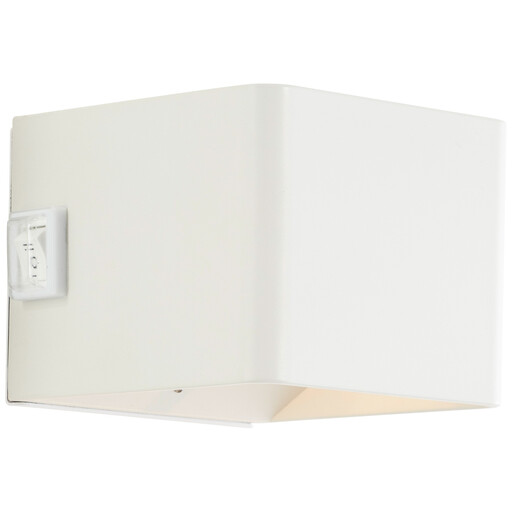
What sets it apart: This model combines the function of a wall light with high portability. Thanks to the integrated battery, which is charged via a USB cable, it is not dependent on sunlight and can be used flexibly in various locations. A magnet on the back allows for easy attachment to metallic surfaces.
Advantages:
Who is it for? Suitable for anyone who needs a flexible light source for a balcony, patio, camping, or workshop and doesn't want to be dependent on sunlight. The magnetic mount makes it particularly practical for temporary use.
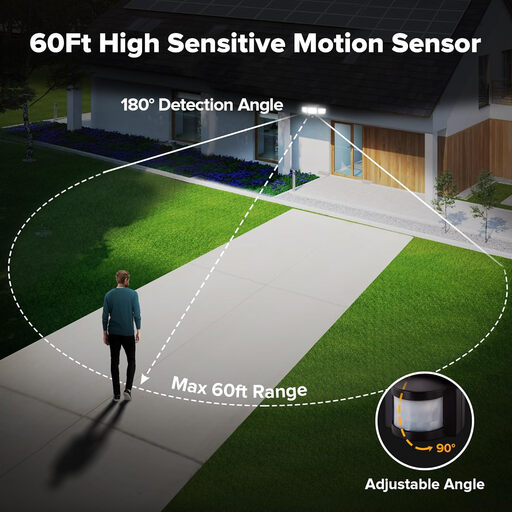
What sets it apart: This outdoor solar floodlight is designed for maximum brightness and wide coverage. With 302 LEDs, each light in the 2-pack produces a light output of 3000 lumens. The three adjustable light heads allow for flexible aiming of the light up to a 270° angle.
Advantages:
Who is it for? A great choice for homeowners who want to brightly and reliably illuminate large areas such as garage driveways, parking lots, or the entire garden as a solar security light.
The models presented cover common use cases. However, if you are looking for a battery-powered solution without a solar panel or other specific models, you can find more options in our range.
? Discover our range of Outdoor Battery-Powered LED Motion Sensor Lights
How long does a fully charged solar light stay on? The runtime depends on the battery capacity, the amount of sunlight during the day, and the selected mode. Most models, like the Grifema light, offer 8 to 10 hours of operation in sensor mode on a full charge. In constant-on mode, the runtime is correspondingly shorter.
Do solar lights charge on cloudy days or in winter? Yes, modern solar panels also charge in diffused light, but with lower efficiency than in direct sunlight. On short winter days or during prolonged overcast weather, the charging performance may be reduced, which shortens the runtime. Models with a separate panel can be advantageous here, as the panel can be optimally aligned with the weak winter sun.
Where is the best place to install a solar light? The ideal installation location is a compromise between two factors: the solar panel should receive as much direct sunlight as possible, ideally with a south-facing orientation. The light itself should be positioned to effectively illuminate the desired area (e.g., entrance, path, stairs) and ensure the motion sensor is free from obstructions.