
Lieferung heute & morgen

Qualitätsgarantie

Willkommens-Angebote freischalten: KOSTENLOSE Lieferung | Bis zu 80 % RABATT | Kostenlose 30-Tage-JoyPlus-Testphase
App herunterladen
Solar lights promise an easy, cost-effective, and eco-friendly way to illuminate gardens, balconies, and pathways. However, the market is flooded with products whose real-world performance often falls short of the promises on the packaging. Before you invest, it's crucial to understand the most common pitfalls that lead to disappointing results and unnecessary expenses.
As your Joybuy Product Recommendation Officer, I've summarised the key points to help you distinguish marketing hype from actual functionality and find the right outdoor solar lights for your needs.
Many buyers find that their new solar lights lose brightness after a short time or fail completely after the first heavy rain. This is often due to three common but avoidable problems:
To avoid these pitfalls, focus on three core technical specifications. These are the primary determinants of your solar lighting's performance and durability.
The IP (Ingress Protection) rating indicates how well an electrical device is protected against the ingress of foreign objects (first digit) and water (second digit). For waterproof outdoor lights, the following ratings are relevant:
The combination of the battery and panel determines the runtime, especially on cloudy days.
The lighting effect depends on two values that are often confused.
Based on these objective criteria, we have identified several products that represent a smart choice for specific user profiles and requirements.
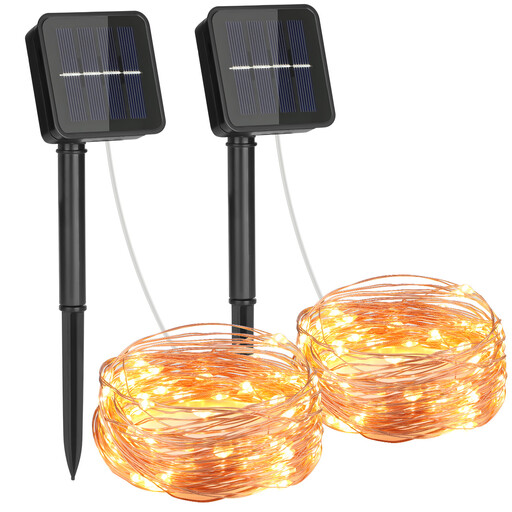
Why it's a match: Ideal for users who want to create an atmospheric ambience on their balcony, terrace, or in the garden. The flexible copper wire can be easily wrapped around railings, plants, or decorations, and the warm white LEDs produce an inviting light for cosy evenings.
With an IP65 rating, this string light is protected against water jets, making it significantly more robust against rain than models with a lower rating. This prevents failure after the first storm.
Offers 8 different lighting modes (from steady on to flashing) and a memory function that retains the last setting. The set includes two separate 8-metre string lights for versatile decorating options.
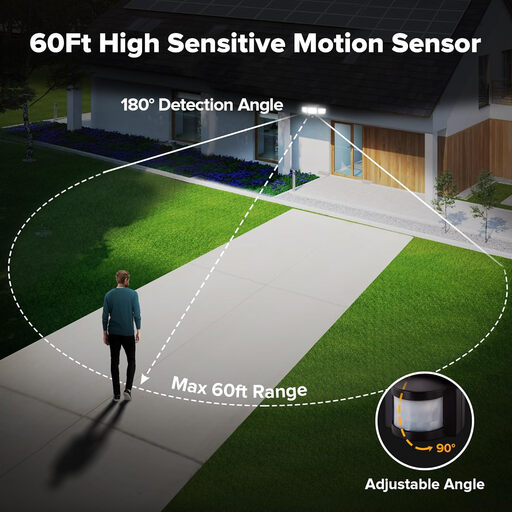
Why it's a match: Designed for the functional illumination of driveways, garages, or dark corners of the garden. The focus here is clearly on security and brightness, not decoration. The motion sensor provides on-demand, energy-saving light.
This model directly addresses the problem of low brightness with a clearly declared value of 3000 lumens. This ensures a significant light output that goes far beyond purely decorative purposes.
Three adjustable light heads allow for a wide illumination angle of 270°. The 1800 mAh battery and tempered glass panel ensure reliable performance and longevity.
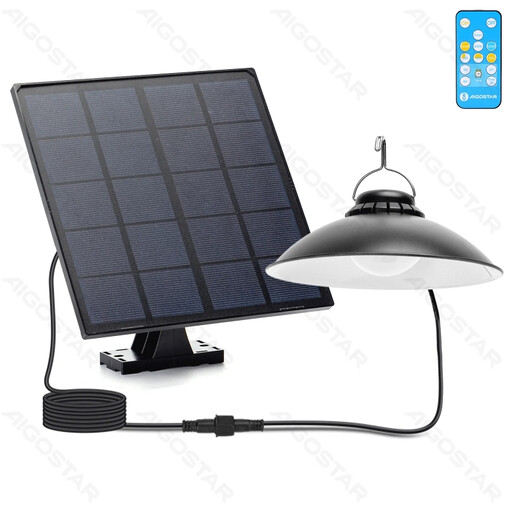
Why it's a match: A unique solution for locations where the light fixture itself doesn't have direct access to the sun, such as inside a garden shed, on a covered porch, or in a carport. Thanks to a 3-metre cable, the solar panel can be optimally placed in the sun.
It bypasses the problem of insufficient charging in shady spots with its detached solar panel. Furthermore, it features a high-capacity 5000mAh LiFePO4 battery, which ensures a long lifespan and a runtime of up to 12 hours.
The light colour is adjustable in three stages (3000K/4000K/6500K), allowing you to customise the atmosphere from warm white to cool white. The brightness of 500 lumens is impressive for a pendant light.
We have compiled a complete, up-to-date list of products that fully meet these strict selection criteria and rigorous safety standards.
Yes, outdoor solar lights do work in winter, but with reduced performance. The shorter days and the lower angle of the sun reduce charging time and intensity. Models with high-efficiency (monocrystalline) solar panels and large battery capacities have an advantage here. The runtime will be noticeably shorter in winter than in summer.
The lifespan is determined by two main components: the LED and the battery. The LEDs themselves have a very long life, often 15,000 hours or more. The limiting factor is usually the battery. Ni-MH batteries typically last 1-3 years, while higher-quality Lithium-ion or LiFePO4 batteries can have a significantly longer lifespan. On many models, the battery can be replaced, which extends the service life of the light.
The most important factor is the placement of the solar panel. It should be mounted or positioned in a location that receives as much direct, unobstructed sunlight as possible throughout the day. Avoid placing it under trees, eaves, or near other nighttime light sources (like streetlights), as these can interfere with the dusk-to-dawn sensor and prevent the light from turning on automatically.