
Lieferung heute & morgen

Qualitätsgarantie

Willkommens-Angebote freischalten: KOSTENLOSE Lieferung | Bis zu 80 % RABATT | Kostenlose 30-Tage-JoyPlus-Testphase
App herunterladen
Outdoor solar lights promise a simple and cost-effective way to illuminate gardens, balconies, and pathways. No laying cables, no additional electricity costs—the benefits are obvious. Yet, the reality is often quite different: many products disappoint after only a short time. Before you make a purchasing decision, it's crucial to understand the most common pitfalls that lead to frustration and unnecessary expense.
As your Joybuy Product Recommendation Officer, I'm here to help you separate marketing promises from facts. Here are the three most common problems with solar lights and how to avoid them:
To find a durable and functional solar light, you should focus on objective technical data rather than marketing slogans. These three criteria are essential for making an informed decision.
The brightness of a light is measured in lumens (lm). This value is the only reliable indicator of actual light output. Don't be fooled by terms like "ultra-bright."
solar garden lights or a solar balcony fairy light, values between 50 and 200 lumens are often sufficient. They create a pleasant atmosphere without being glaring.LED solar floodlight with motion sensor should have a significantly higher brightness to effectively illuminate paths or driveways. Here, values from 500 to over 3000 lumens are appropriate. Such a solar security light serves as a deterrent and for orientation.The IP (Ingress Protection) rating indicates how well an electrical device is protected against the intrusion of foreign objects and water. For a waterproof outdoor solar light that can withstand the UK weather, an IP65 rating is a key benchmark.
The combination of a powerful battery and an efficient solar panel determines how long your light will shine after dark. Battery capacity is measured in milliampere-hours (mAh)—higher values generally mean a longer runtime. At the same time, the solar panel must be large and efficient enough to reliably charge this battery, even on less sunny days. Look for products whose descriptions provide realistic charging and lighting times, explicitly marked as weather-dependent.
Based on these objective criteria, we have identified several products suitable for specific needs and profiles.
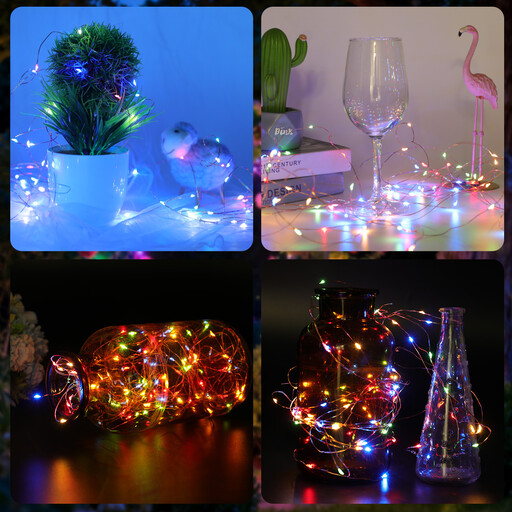
Why This Fits Their Persona: Ideal for users looking for flexible and colourful solar garden decor. The pliable copper wire can be easily draped around plants, railings, or on a balcony to create a festive or romantic atmosphere.
The string light itself is IP65 certified and therefore protected against rain. The specified runtime of 8–14 hours is realistically declared as "weather-dependent."
Eight different lighting modes with a memory function offer creative versatility. The installation requires no tools.
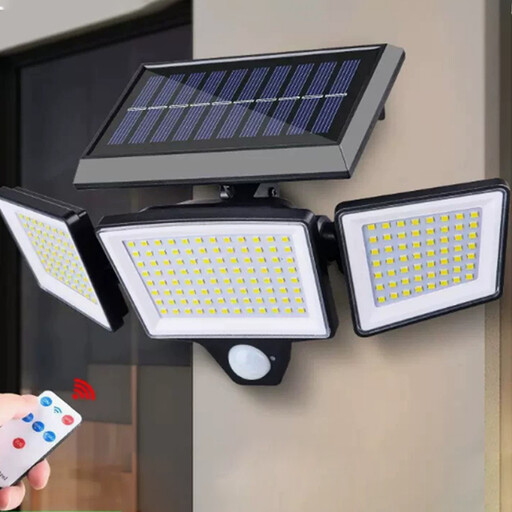
Why This Fits Their Persona: Perfect for homeowners who need a high-performance solar security light for driveways, garages, or dark corners of their property. The focus here is clearly on functionality and deterrence.
The housing, made of durable ABS and PC plastic, and the IP65 certification ensure longevity. The brightness is clearly stated as 3000 lumens, allowing for an objective performance assessment.
Three adjustable heads provide a wide 270° illumination angle. The sensitive motion sensor detects movement up to 18 metres away.
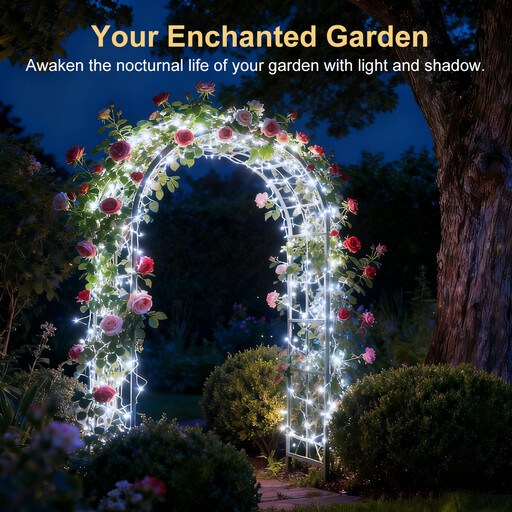
Why This Fits Their Persona: For users who prefer a modern and subtle aesthetic. The cool white light is excellent for highlighting architectural details, modern patio furniture, or clean garden structures.
This model also features an IP65-certified string light and a reinforced solar panel housing. The performance data is transparent and listed as dependent on weather conditions.
Offers the same flexibility and eight lighting modes as the multi-colour version, but produces a crisp, elegant light for a contemporary ambience.
We have compiled a complete, real-time list of products that fully satisfy these strict selection criteria and UK safety regulations.
1. Do solar lights work in winter or on cloudy days? Yes, solar lights do work on cloudy days and in winter, but with reduced performance. The solar panel still charges the battery in diffuse light, but much more slowly than in direct sunlight. This results in a shorter runtime in the evening. Don't expect the same performance in the darker months as you would in high summer.
2. What is the lifespan of outdoor solar lights? The lifespan depends on the quality of the components. The LEDs themselves can last for 50,000 hours or more. The limiting factor is usually the battery, which, depending on the type and usage, may lose capacity after 2-4 years and might need to be replaced. High-quality housings made of UV-resistant ABS plastic or metal will last significantly longer than cheap plastic.
3. What should I consider when installing solar lights? The most important factor is the placement of the solar panel. It should be south-facing and receive as many hours of direct sunlight as possible each day. Avoid locations in the shade of trees, buildings, or overhangs. Occasionally clean the panel with a soft cloth to remove dust and dirt to maintain charging efficiency.