
Lieferung heute & morgen

Qualitätsgarantie

Willkommens-Angebote freischalten: KOSTENLOSE Lieferung | Bis zu 80 % RABATT | Kostenlose 30-Tage-JoyPlus-Testphase
App herunterladen
By the Joybuy Product Recommendation Officer, 28 August 2026
Outdoor solar lights promise an easy and cost-effective way to illuminate gardens, balconies, and patios. But the reality is often disappointing: lights that fail after the first rainfall, a runtime that barely lasts a short evening, or materials that become brittle after just a few months. Before you make a decision, it's crucial to understand the common pitfalls that lead to buyer's remorse.
This guide will help you identify the critical features and make an informed choice that meets your needs for ambiance, security, and durability.
Many products on the market don't live up to their descriptions. Pay close attention to these three points to avoid a poor investment:
To find durable and reliable solar garden lighting, you should carefully examine three technical parameters. These provide objective information about a product's quality and performance.
The IP (Ingress Protection) rating is an internationally standardised code that indicates how well an electrical device is protected against the entry of foreign objects (first digit) and water (second digit).
For reliable off-grid patio lighting or solar balcony lighting, you should look for at least an IP65 certification.
The runtime of an LED solar light depends directly on two factors: the battery's capacity (measured in milliamp-hours, mAh) and the solar panel's efficiency. A larger panel with high-quality solar cells can generate more energy even in less-than-optimal light conditions. A higher-capacity battery can store this energy and release it over a longer period. Look for specific details on charging time (e.g., 6–8 hours in direct sunlight) and the resulting runtime (e.g., 8–14 hours).
The atmosphere a light creates is largely determined by its colour and brightness.
Here are some product recommendations tailored to specific needs that meet the criteria mentioned above.
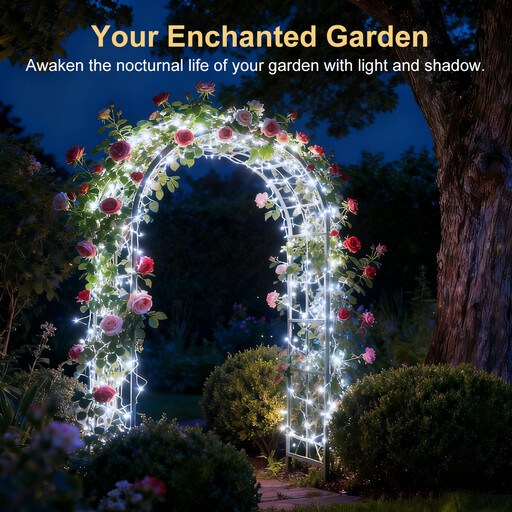
Why This Fits Their Persona: Ideal for beginners looking for a straightforward and flexible decorative solution for balconies, fences, or plants. The pliable copper wire is easy to shape, and the twin-pack offers excellent value for money.
The explicit IP65 rating provides security against rain, unlike vague "waterproof" promises. The stated runtime of 8–14 hours is linked to the charging time, making it a realistic estimate.
8 different lighting modes with a memory function; flexible copper wire for creative designs.
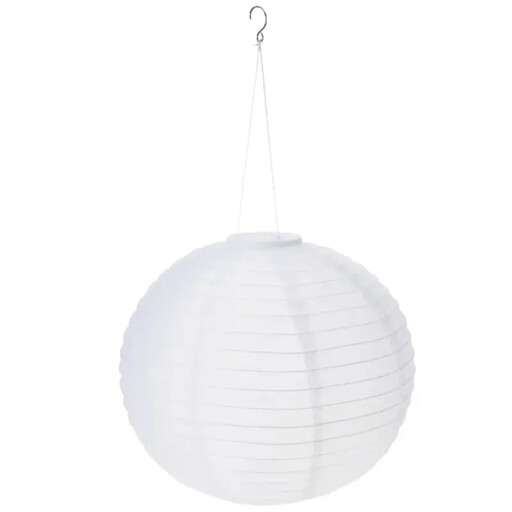
Why This Fits Their Persona: Perfect for users seeking a stylish design object. This ball-shaped outdoor solar lantern creates a diffuse, warm white light and serves as both a hanging lamp and a decorative element on the ground or tables.
The weather-resistant nylon material is more durable than cheap plastic and dries quickly. The specified runtime of approx. 6 hours is a realistic expectation for a decorative light of this type.
Elegant, minimalist design; automatic dusk-to-dawn sensor; can be flexibly hung or placed.
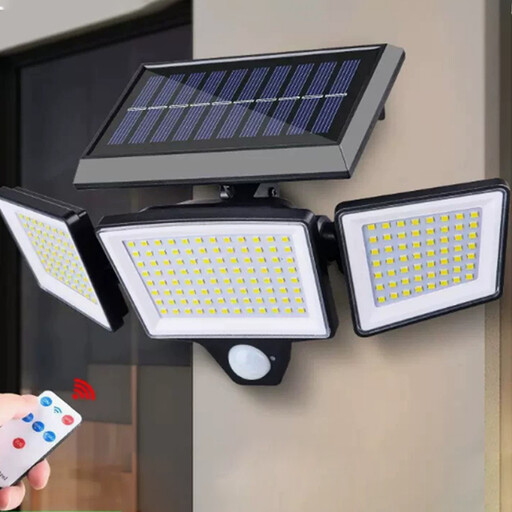
Why This Fits Their Persona: This solar floodlight with motion sensor is designed for bright, wide-area illumination of driveways, gardens, or entryways. The three adjustable heads allow for flexible customisation of the lighting angle.
With a brightness of 3000 lumens and an IP65 certification, this product delivers verifiable performance data instead of vague promises. The motion sensor, with a range of up to 18 metres, is specified for security purposes.
Very high brightness for security applications; 270° wide illumination angle; 3 customisable lighting modes.
We have compiled a complete, real-time list of products that fully satisfy these strict selection criteria and UK safety regulations.
The lifespan of a solar light depends on several components. The LEDs themselves have a very long life, often exceeding 20,000 hours. The critical factor is the battery, which can lose capacity after 2 to 4 years, depending on quality and usage. On some models, the battery (often a standard type like AA or AAA) can be replaced. The durability of the housing depends on the material; models made from high-quality ABS plastic or metal are more durable than those made from simple plastic.
Yes, solar lights do work in diffuse light, but with reduced efficiency. On cloudy days or in winter, when sunlight is less intense, the battery charges more slowly and may not reach full capacity. This results in a shorter runtime at night. For year-round use, a model with a high-performance solar panel and a high-capacity battery is recommended.
No, a major advantage of solar lights is their simple installation, which requires no specialist knowledge or wiring. Most models come with ground stakes, screws, or hanging fixtures. The only requirement is to place the solar panel in a location where it will receive as much direct sunlight as possible during the day.