
Lieferung heute & morgen

Qualitätsgarantie

Willkommens-Angebote freischalten: KOSTENLOSE Lieferung | Bis zu 80 % RABATT | Kostenlose 30-Tage-JoyPlus-Testphase
App herunterladen
The right lighting can completely transform a garden, balcony, or driveway. Outdoor solar lights offer an attractive solution: they are eco-friendly, cost-effective, and require no complex wiring. However, the market is flooded with products whose marketing promises often fall short in practice. Many buyers are quickly disappointed when the lights flicker, fail in the rain, or break down after just one winter.
As your Joybuy Product Recommendation Officer, I'll help you identify the common pitfalls and make an informed decision. We will focus on the technical facts that truly matter, ensuring your investment provides light and enjoyment for years to come.
Before we explore the solutions, it's important to understand the three most common problems that lead to buyer's remorse:
To avoid these pitfalls, you should carefully examine three technical features. These will give you an objective basis for comparing different outdoor solar lights for the garden or house wall.
The IP (Ingress Protection) rating is an international standard that indicates how well a housing is protected against the ingress of foreign objects (first digit) and water (second digit).
The battery capacity, measured in milliampere-hours (mAh), determines how long a light can operate on a full charge. A higher mAh value generally means a longer runtime. The technology used is just as important:
Consider carefully what purpose the light needs to serve. This will determine the required brightness and functionality.
Here are some product suggestions tailored to different needs, which take the criteria mentioned above into account.
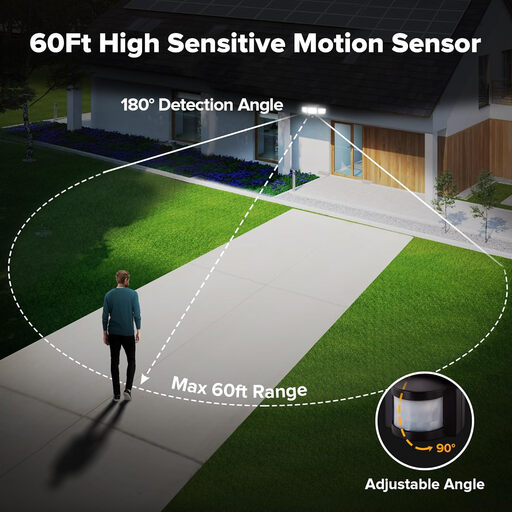
Why It's a Match: Ideal for illuminating driveways, garages, or dark corners of your property where high brightness is needed for deterrence and security.
The IP65 certification ensures protection against heavy rain, avoiding the pitfall of poor weather resistance. The high luminous flux of 3000 lumens is specified for security purposes and is used efficiently thanks to the motion sensor.
Three adjustable heads allow for a wide 270° illumination angle to cover large areas. The motion sensor has a range of up to 18 metres.
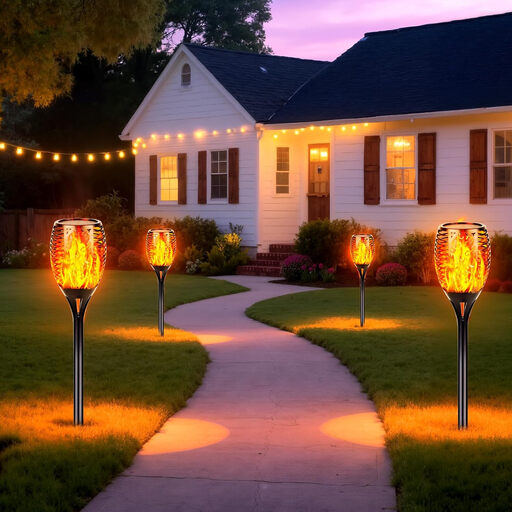
Why It's a Match: Perfect for anyone who wants to create an atmospheric and warm ambience in the garden, on the patio, or for parties, without resorting to real flames.
The focus is on the realistic flame effect, not maximum brightness, thus avoiding the lumen trap. The IP65 rating ensures durability in all weather conditions.
The 96 LEDs create a convincingly dancing flame effect. The automatic on/off function at dusk and dawn ensures convenient operation.
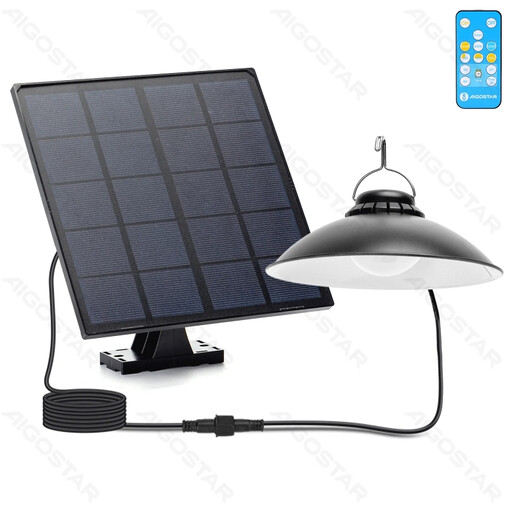
Why It's a Match: The solution for locations where the light fixture itself doesn't have direct sun exposure, such as in a garden shed, under a carport, or on a covered balcony.
The separate solar panel can be optimally placed in the sun while the light hangs in the shade. This bypasses the pitfall of inefficient charging. The durable LiFePO4 battery with 5000 mAh capacity avoids the weakness of short-lived batteries.
The 3-metre cable offers maximum flexibility during installation. Additionally, the colour temperature (warm, neutral, or cool white) can be adjusted to suit the desired atmosphere.
We have compiled a complete, up-to-date list of products that fully meet these strict selection criteria and safety regulations.
The lifespan depends on the quality of the components. The LEDs themselves often have a lifespan of 15,000 hours or more. The limiting factor is usually the battery. Ni-MH batteries often last 1–3 years, while higher-quality Li-Ion or LiFePO4 batteries can function for significantly longer. The robustness of the housing (material and IP rating) is also crucial for a long service life.
Yes, but with reduced performance. Modern polycrystalline or monocrystalline solar panels can generate energy even in diffuse light, but the charging efficiency is significantly lower than in direct sunlight. This results in shorter runtimes at night during the winter. For reliable year-round operation, models with large, efficient solar panels and high-capacity batteries are preferable.
No, one of their biggest advantages is the simple, DIY installation. Most models are designed as ground stakes, are screwed to a wall, or are simply hung up. Since no electrical wiring to your home's mains is necessary, you save the cost and hassle of hiring an electrician.