
Lieferung heute & morgen

Qualitätsgarantie

Willkommens-Angebote freischalten: KOSTENLOSE Lieferung | Bis zu 80 % RABATT | Kostenlose 30-Tage-JoyPlus-Testphase
App herunterladen
Outdoor solar lights offer an attractive way to illuminate gardens, balconies, and pathways without power cables or additional energy costs. However, the market is crowded, and not every product delivers on its promises. Many buyers are left disappointed when their lights lose brightness after a short time or fail to survive the first autumn storm. This guide will help you identify crucial quality features and avoid making a bad purchase.
As a Joybuy Product Recommendation Officer, I analyse product data to provide you with objective, practical guidance. Below, we'll explore the most common problems and the technical parameters you should pay close attention to.
To avoid these issues, a close look at the technical specifications is essential. Three parameters are particularly important.
The IP (Ingress Protection) rating indicates how well an electrical device is protected against the entry of foreign objects and water. For waterproof LED solar lights, this is a critical feature.
The runtime depends directly on the stored energy. The battery capacity, specified in milliampere-hours (mAh), is the crucial value here. A higher capacity allows for a longer runtime, especially with less sun exposure.
The efficiency of the solar panel is just as important:
The brightness of a light is measured in lumens (lm), not watts (W). Watts simply indicate energy consumption.
Based on the criteria above, we have compiled a selection of products for different user profiles.
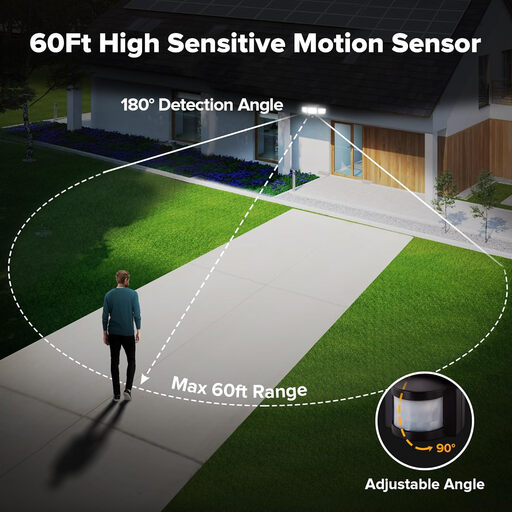
Why This Fits Their Persona: Ideal for securing driveways, garages, and dark corners of the garden. The high light output and sensitive motion sensor provide reliable security lighting without the hassle of wiring.
Bypasses the "Dim Light" disappointment with a powerful 3000 lumen output. The IP65 rating and robust ABS housing prevent the "Lasts-Only-One-Summer" trap.
Three adjustable light heads for 270° illumination and a long-range motion sensor. Three operating modes for flexible customisation.
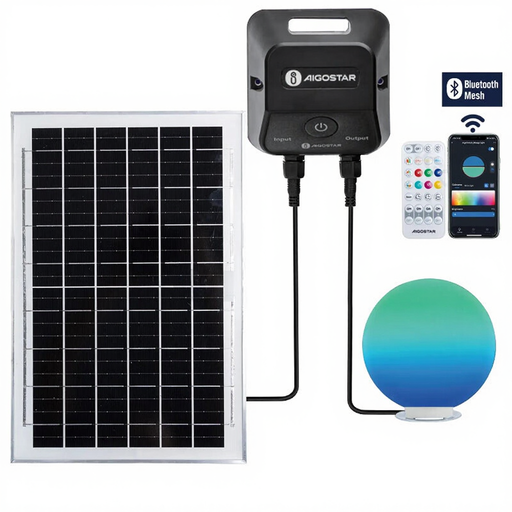
Why This Fits Their Persona: For users who want complete control over their lighting ambiance. The app allows you to manage colour, brightness, schedules, and scenes for a connected outdoor lighting experience.
It counters the "Short-Night" problem with a large 8000 mAh battery and an efficient 12W monocrystalline solar panel. The smart controls also enable energy-saving schedules.
Bluetooth Mesh technology to control over 200 lights. Full RGBCCT colour spectrum (RGB + tunable white light from 2700K to 6500K).
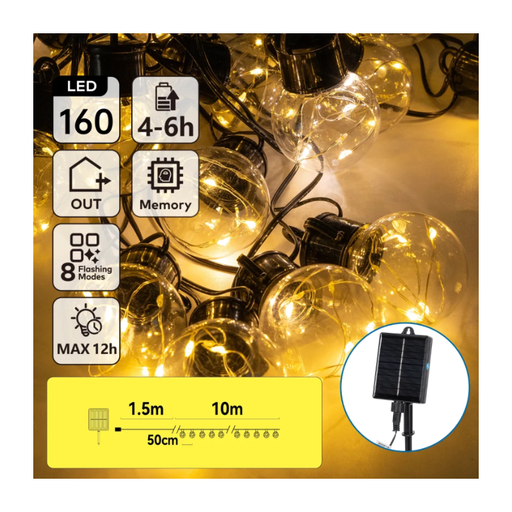
Why This Fits Their Persona: Perfect for creating a warm, inviting atmosphere on patios, pergolas, or for garden parties. The 10-metre-long outdoor solar string light offers great creative freedom.
The IP65 rating ensures the string light can withstand the elements, avoiding the "Lasts-Only-One-Summer" trap. The 1200 mAh battery provides a runtime of up to 12 hours.
10-metre length with 160 LEDs and 8 different lighting modes for versatile and atmospheric decoration. The warm white light creates a cosy ambiance.
We have compiled a complete, up-to-date list of products that fully meet these strict selection criteria.
The runtime in winter is reduced due to shorter days and less intense sunlight. The exact duration depends on the solar panel's efficiency, battery capacity, and your geographic location. Models with high-quality monocrystalline solar panels and high-capacity batteries (e.g., over 2000 mAh) perform better in these conditions. Look for manufacturer specifications on runtime, which are often specified for both summer and winter months.
The IP rating classifies the degree of protection against the ingress of foreign objects (first digit) and water (second digit). For outdoor use, the following values are relevant: IP44 offers protection against splashing water and is sufficient for sheltered areas. IP65 protects against water jets and is recommended for lights that are directly exposed to the weather. A higher rating signifies a more robust and durable design.
Yes, direct sunlight is crucial for optimal charging. Although the panels can still generate energy on cloudy days, the charging performance is significantly lower. Therefore, always position the solar panel so that it receives several hours of direct sunlight per day, without being shaded by trees, buildings, or other objects.