
Lieferung heute & morgen

Qualitätsgarantie

Willkommens-Angebote freischalten: KOSTENLOSE Lieferung | Bis zu 80 % RABATT | Kostenlose 30-Tage-JoyPlus-Testphase
App herunterladen
By Joy, Your Joybuy Product Recommendation Officer
Creating an inviting outdoor space, whether it's a garden, patio, or balcony, significantly enhances your quality of life. However, many are deterred by the effort and expense associated with installing conventional lighting. The solution lies in modern wire-free garden lighting: solar lights. They not only offer a cost-effective and eco-friendly alternative but also an impressive range of technology. This article serves as a guide to help you select the right models for your needs.
The technology has evolved significantly in recent years. To make an informed decision, a few technical aspects are important.
Modern solar lights are more than just standalone light sources. Models with smart garden lighting features offer a high degree of control and convenience. A key technology here is Bluetooth Mesh. Unlike standard Bluetooth, which only allows a one-to-one connection, a mesh network enables many lights to communicate with each other. This allows you to control, group, and automate entire lighting scenes via a single app on your smartphone, without needing a central hub or a Wi-Fi connection in your garden.
The type of light determines the atmosphere. There are key differences to consider:
The intended location determines the design. An outdoor solar wall light is ideal for illuminating house walls, entrance areas, or patio perimeters. In-ground spotlights or stake lights, on the other hand, are perfect for marking paths, showcasing plants, or creating accents on the lawn. When choosing, look for models with a separate solar panel connected to the light by a long cable. This allows you to place the light in a shaded area while the panel is positioned in full sun to maximise charging efficiency.
Based on these criteria, we have curated a selection of products that impress with their functionality and design.

Why It Stands Out This wall light combines a modern design with advanced technology. The Bluetooth Mesh feature allows you to connect and synchronously control over 200 devices. The separate 5-watt solar panel with a 5-metre cable offers maximum installation flexibility.
Advantages
Who It's For For homeowners who want to enhance facades, entrances, or patios with a smart, synchronised lighting solution, without having to compromise on solar panel placement.
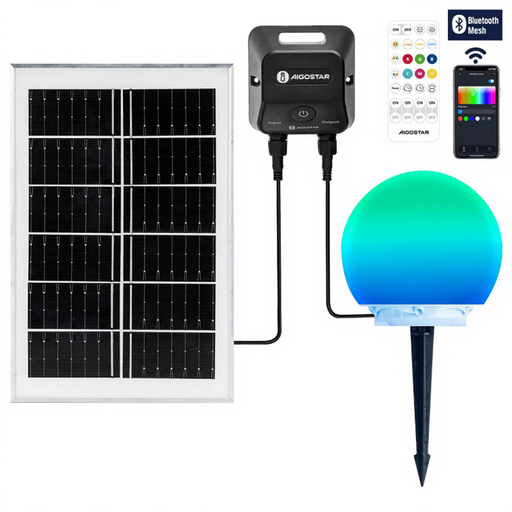
Why It Stands Out This ground light uses the same smart technology as the wall model but is designed for illumination from the ground up. Its design creates a dual-layer light effect that adds unique visual depth. With an IP65 rating, it is well-equipped for use in gardens and along pathways.
Advantages
Who It's For For garden enthusiasts looking to safely illuminate paths, accent plants, or create an atmospheric, low-level ambience.
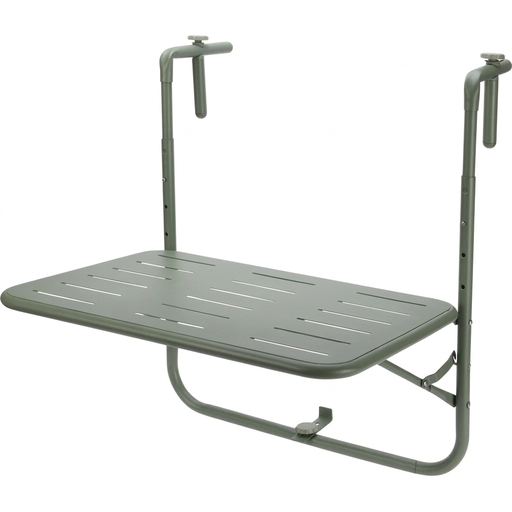
Why It Stands Out Good lighting creates atmosphere, but fully utilising an outdoor area also requires functionality. This folding balcony table is an example of smart, space-saving balcony furniture. It simply hooks onto the balcony railing, providing a stable surface when needed without permanently taking up valuable space.
Advantages
Who It's For For apartment dwellers with limited balcony space who are looking for a functional and flexible solution for dining, working, or relaxing outdoors.
The featured products offer great versatility with their RGBCCT technology. If you're specifically looking for other bulbs to equip existing fixtures with smart colours, you'll find a wider selection in our category.
? Discover more colour-changing outdoor light bulbs here
1. Do solar lights work in winter or on cloudy days? Yes, modern solar lights can function even in diffuse light, although their charging performance will be reduced. High-efficiency monocrystalline solar panels can generate energy even on overcast days. However, the illumination time during the winter months is typically shorter than in the summer. A large battery capacity helps to store energy for several days.
2. What is the lifespan of outdoor solar lights? The lifespan depends on three main components: the LED bulb, the battery, and the housing. LEDs have a very long lifespan, often exceeding 20,000 hours. The lithium-ion battery is the component most prone to wear; its lifespan is typically 2–4 years, depending on charging cycles and quality. A robust, UV- and weather-resistant housing protects the electronics and also contributes to longevity.
3. What does the IP rating mean for outdoor lights? The IP (Ingress Protection) rating classifies a housing's protection against the entry of foreign objects and water. The first digit (0–6) describes protection against solids (e.g., dust), while the second digit (0–9) describes protection against water. A light with an IP65 rating is completely dust-tight (6) and protected against water jets from any angle (5). This is a good standard for most applications in the garden and on the patio.