
Lieferung heute & morgen

Qualitätsgarantie

Willkommens-Angebote freischalten: KOSTENLOSE Lieferung | Bis zu 80 % RABATT | Kostenlose 30-Tage-JoyPlus-Testphase
App herunterladen
Outdoor solar lights promise a simple, cost-effective, and eco-friendly way to illuminate gardens, balconies, and pathways. However, the market is flooded with products whose real-world performance often fails to match their advertising claims. Before you invest, it's crucial to understand the common pitfalls that lead to disappointment and unnecessary expense. This guide will help you separate the wheat from the chaff and make an informed decision.
Many buyers find that their new solar lights lose power or fail completely after a short time. This is often due to three prevalent issues, which are obscured by opaque marketing.
To avoid these traps, you should focus on verifiable technical specifications. Three key metrics are crucial for selecting durable and reliable outdoor solar lights.
The IP (Ingress Protection) rating is the most reliable indicator of how well a light is protected against the entry of foreign objects and water.
For most applications in the garden, on the patio, or as a solar wall light, IP65 is a solid choice.
These three factors determine the actual performance and runtime.
Look for a balanced ratio: a high-power floodlight with a tiny solar panel is a contradiction in terms.
The longevity of your solar garden lights depends heavily on the materials used. Cheap PP plastic quickly becomes brittle and fragile from UV radiation. Higher-quality products use:
Solid construction without large gaps also prevents moisture from getting inside.
Instead of making a blanket recommendation, we have identified products tailored to specific needs and user profiles.

Why It's a Great Fit: Ideal for homeowners who want to reliably illuminate driveways, garages, or dark corners of the garden. The high brightness of 3000 lumens and the motion sensor provide a high level of security and deter unwanted visitors.
The clear IP65 certification ensures that the floodlight functions reliably even in heavy rain and snow, avoiding the trap of vague "waterproof" promises.
Three adjustable light heads allow for wide and flexible illumination of up to 270°. The motion sensor provides light on demand and conserves the battery.

Why It's a Great Fit: Perfect for anyone seeking atmospheric, decorative outdoor solar lighting. The flexible copper wire can be easily wrapped around railings, plants, or draped on a table, creating a cosy atmosphere for balconies and gardens.
The specified runtime of 8–14 hours is realistically tied to sun exposure, avoiding the trap of exaggerated promises. The IP65 rating ensures durability outdoors.
Eight different lighting modes (from steady on to flashing) with a memory function offer creative freedom without needing to be reset every evening.
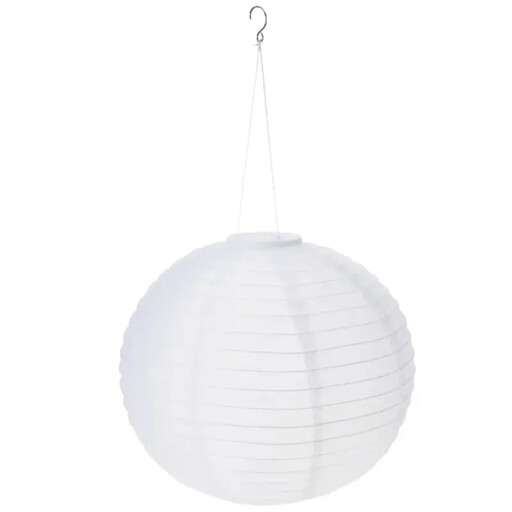
Why It's a Great Fit: For anyone looking for an LED solar light for the balcony or patio that is a design statement even when unlit. The minimalist spherical shape blends seamlessly into modern environments and creates a soft, diffuse light.
The product doesn't promise excessive brightness, but rather a realistic runtime of approx. 6 hours for ambient light. The weatherproof nylon material is clearly declared, avoiding the trap of vague durability claims.
The light is a decorative object for day and night. The integrated dusk sensor ensures fully automatic and maintenance-free operation.
We have compiled a complete, up-to-date list of products that fully meet these strict selection criteria and UK safety regulations.
1. Do solar lights work in winter or on cloudy days? Yes, but with reduced performance. Modern solar panels can generate energy even in diffuse light, but significantly less than in direct sunlight. The runtime in winter will therefore be shorter than in summer. Models with high-quality panels and large batteries are better suited for year-round use.
2. What is the lifespan of outdoor solar lights? The lifespan depends on the quality of the components. The most critical part is the battery, which typically loses capacity after 1-3 years (approx. 500-800 charge cycles). For models with a replaceable battery, the life of the light itself can be significantly extended with a simple battery swap. The LEDs have a very long lifespan, often exceeding 20,000 hours.
3. Do I need to change the battery in solar lights? In high-quality models, the battery (often a standard size like AA or 18650) is accessible and can be replaced. This is an important feature for sustainable use. In very cheap, permanently sealed lights, a replacement is not intended, which makes the entire light a disposable item once the battery is depleted.