
Lieferung heute & morgen

Qualitätsgarantie

Willkommens-Angebote freischalten: KOSTENLOSE Lieferung | Bis zu 80 % RABATT | Kostenlose 30-Tage-JoyPlus-Testphase
App herunterladen
A well-lit driveway, an atmospherically illuminated garden, or a securely lit entrance significantly contribute to your home's comfort and security. However, conventional outdoor lighting often involves complex installation and ongoing electricity costs. Outdoor solar lights offer a practical and cost-effective alternative. They harness the sun's energy, are wireless, and can be placed flexibly.
This article serves as a guide. It explains the key features of solar lamps and presents various models to help you choose the right one for your specific needs—whether for the garden, the balcony, or to enhance security.
The market offers a wide variety of models that differ in function, performance, and design. To make an informed decision, three criteria are particularly important.
The brightness of a lamp is measured in lumens (lm). The higher the lumen value, the brighter the lamp shines. For decorative outdoor solar string lights, low lumen values are often sufficient to create a pleasant ambiance. In contrast, an outdoor LED solar spotlight, used to illuminate pathways or as a security light, should have a much higher light output of several hundred or even a thousand lumens.
Closely related to this is the battery's capacity, specified in milliampere-hours (mAh). A powerful battery stores more energy and ensures a longer runtime, especially on overcast days or in winter when there is less sunlight.
Since solar garden lights are permanently exposed to the elements, their weather resistance is crucial. The protection level is indicated by the IP (Ingress Protection) code. The first digit describes protection against solid objects (e.g., dust), and the second describes protection against water.
For outdoor use, a protection rating of at least IP44 (protection against splashing water) is required. For greater durability and reliability, especially in heavy rain or snow, a rating of IP65 (dust-tight and protected against water jets) or higher is recommended. Many high-quality solar lights are classified as waterproof according to this standard.
Consider the purpose your lighting should serve. The most common types are:
Based on the criteria mentioned, we have compiled a selection of solar lights for various applications.
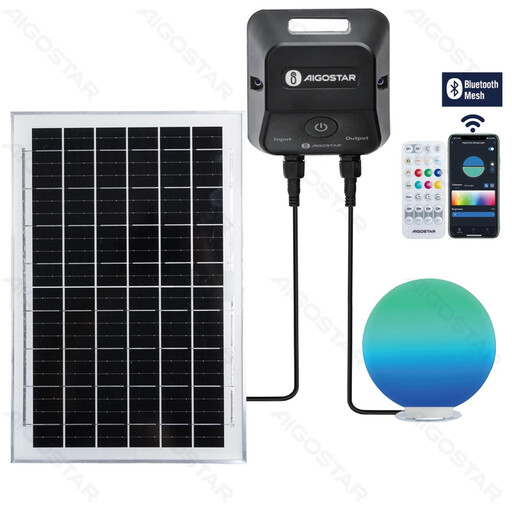
What Makes It Stand Out This solar spotlight combines solar efficiency with smart technology. Using Bluetooth Mesh and an app, you can network and control up to 200 lights. The RGBCCT function allows you to freely choose colors and adjust the color temperature from warm white (2700K) to cool white (6500K).
Advantages:
Who Is It For? For tech enthusiasts who want flexible and customizable lighting for their garden, patio, or events and value smart integration.
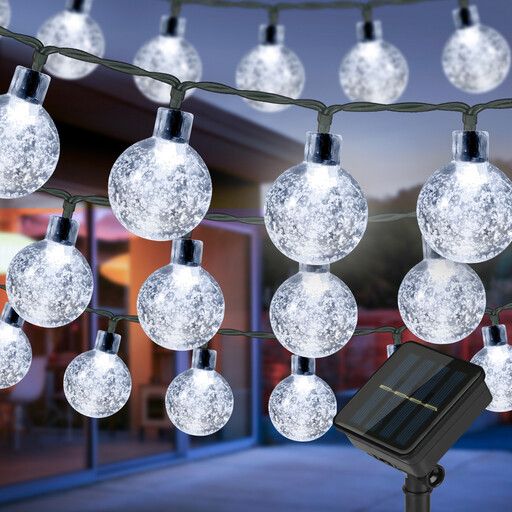
What Makes It Stand Out These outdoor solar string lights create an elegant atmosphere with 50 LEDs in a crystal ball design. The 7-meter-long string is ideal for decorating balconies, patios, pergolas, or for festive occasions.
Advantages:
Who Is It For? For anyone looking for a simple and decorative lighting solution to add a special touch to their outdoor space without any installation hassle.
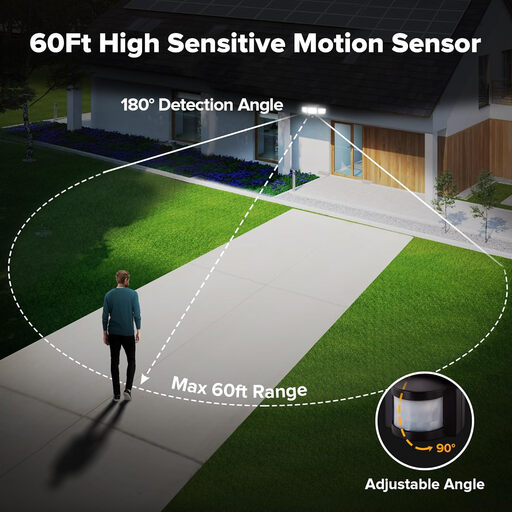
What Makes It Stand Out This set of two powerful solar lights with motion sensors is designed for security and wide-area illumination. With 302 LEDs per light, they achieve a light output of 3000 lumens, brightly illuminating driveways, garages, or yards.
Advantages:
Who Is It For? For homeowners who need reliable and very bright security lighting for security-critical areas of their property and prefer a wireless solution.
The products featured cover common use cases. If you haven't found the right model for your needs or are looking for specific designs, many other alternatives are available.
For a broader selection, especially in the area of permanently installed yet energy-efficient lighting, it's worth taking a look at other products.
? Discover more low-voltage outdoor lighting for patios here
1. Do solar lights work in the winter? Yes, solar lights do work in the winter, but with reduced performance. The shorter days and lower intensity of sunlight mean the battery doesn't fully charge. This shortens the runtime per night. Models with high-quality monocrystalline solar panels and large batteries perform better here than simpler versions. Placing them in the sunniest possible, south-facing location is especially important in winter.
2. What is the lifespan of outdoor solar lights? The lifespan depends on three components: the LED bulb, the battery, and the housing. Modern LEDs have a very long lifespan, often 20,000 hours or more. The battery is typically the component with the shortest lifespan, losing capacity after a few years (usually 2–4 years). In some models, the battery can be replaced. A robust, UV- and weather-resistant housing (e.g., ABS plastic with IP65 protection) also contributes to a long service life.
3. What does the IP rating mean for solar lights? The IP rating indicates how well a light's housing is protected against the ingress of foreign objects (first digit) and water (second digit). For outdoor solar lights, this is a key quality indicator. IP44 means protection against splashing water and is the minimum. IP65 means the light is dust-tight and can withstand powerful water jets (e.g., from a garden hose or during heavy rain), making it much more robust and durable.