
Lieferung heute & morgen

Qualitätsgarantie

Willkommens-Angebote freischalten: KOSTENLOSE Lieferung | Bis zu 80 % RABATT | Kostenlose 30-Tage-JoyPlus-Testphase
App herunterladen
A well-designed outdoor lighting system enhances any garden or patio, increases security, and creates a welcoming atmosphere. Outdoor solar lights offer a particularly appealing solution: they are eco-friendly, cost-effective, and require no complex wiring. However, the range of models is vast, and the technical differences are often crucial.
This article serves as a guide. We will introduce different types of solar lights and explain the key criteria you should consider when making your decision. The goal is to provide you with a solid foundation for choosing the right lighting for your specific needs.
Before you decide on a model, you should clarify some fundamental technical aspects and the intended use.
The primary purpose of your lighting determines the type of light.
The performance of a solar light depends on several factors found in the product specifications.
Modern solar-powered LED outdoor lights offer various control options.
Here is a selection of products that cover different requirements for modern garden lighting.
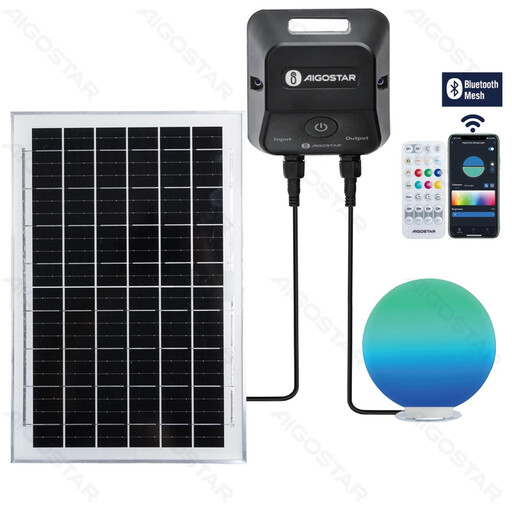
Why it stands out: This model combines solar technology with smart connectivity. Using Bluetooth Mesh technology, up to 200 lights can be networked together and controlled centrally via an app. The RGBCCT function allows for infinite adjustment of millions of colours as well as the white light temperature (2700K-6500K).
Advantages:
Who it's for: Users looking for a flexible and technologically advanced solution to create dynamic lighting scenes in their garden and manage them conveniently from their smartphone.
View Product: Aigostar Smart Solar Ground Light

Why they stand out: These outdoor solar string lights create a classic and cosy atmosphere with their 160 warm white LEDs in a G50 globe bulb design. With a total length of 10 metres, they are ideal for decorating pergolas, fences, or for garden parties.
Advantages:
Who they're for: Anyone looking for a straightforward and effective solar garden lighting solution for decoration, to quickly enhance outdoor areas without needing a power outlet.
View Product: Aigostar G50 Solar String Lights
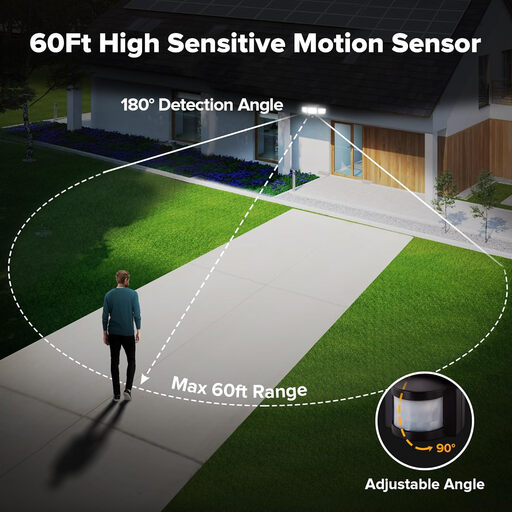
Why it stands out: This two-pack of solar spotlights is designed for maximum brightness and functionality as a solar security light. Each spotlight delivers a light output of 3000 lumens and features three flexibly adjustable light heads, enabling a 270° illumination angle.
Advantages:
Who it's for: Homeowners who need a powerful, motion-activated lighting solution to increase security on their property and want to avoid electrical wiring.
View Product: UME Solar Spotlights 2-Pack
The products featured here cover specific use cases. If you are looking for other designs, such as solar ground stakes, wall lights, or other decorative forms, a wider range of options is available.
Explore more models and find the perfect solution for your project in our comprehensive category for Low-Voltage LED Outdoor Lighting.
1. How long do solar lights stay on in winter? The illumination time in winter is shorter than in summer because the days have fewer hours of sunlight and the angle of the sun is lower. The actual duration depends on the solar panel's efficiency, the battery's capacity, and the selected light mode. Models with high-quality monocrystalline panels and large batteries achieve better charging performance even on cloudy days. Many lights with motion sensors work reliably in winter, as they only light up briefly when needed.
2. What does the IP rating mean for a solar garden lamp? The IP (Ingress Protection) rating indicates how well an electrical device is protected against the ingress of foreign objects (first digit) and water (second digit). For a solar garden lamp, IP44 (protection against splashing water) is the minimum. A higher rating like IP65 (protection against water jets) or IP67 (protection against temporary immersion) offers significantly better resistance to weather conditions and contributes to the product's longevity.
3. Do solar lights need direct sunlight to charge? Direct sunlight is ideal for optimal and fast charging. However, high-quality solar panels can also charge the battery in diffuse light on cloudy days, albeit much more slowly. To ensure the best performance, the solar panel should be south-facing and free from shadows cast by trees, overhangs, or dirt.