
Lieferung heute & morgen

Qualitätsgarantie

Willkommens-Angebote freischalten: KOSTENLOSE Lieferung | Bis zu 80 % RABATT | Kostenlose 30-Tage-JoyPlus-Testphase
App herunterladen
By the Joybuy Product Recommendation Officer, 29 July 2026
Outdoor solar lights offer a simple and cost-effective way to illuminate your garden, patio, or pathways. Their wire-free installation and automatic operation make them especially appealing. However, the market is vast, and not every product lives up to its promises. Often, overlooked flaws lead to disappointment as the lights quickly lose performance or fail completely. This guide will show you which critical features to look for to avoid making a bad purchase.
Many products on the market have weaknesses that aren't obvious at first glance. Pay close attention to these three points:
To make an informed decision, you should check three technical parameters. These will reveal the true performance and durability of a solar lamp.
The IP (Ingress Protection) rating indicates how well an electrical device is protected against the entry of foreign objects and water.
The combination of the solar panel and battery determines how much energy can be stored and how long the light can operate.
The type of light determines the atmosphere and the utility of your lighting.
Here are some product recommendations tailored to different user profiles that meet the quality criteria mentioned.
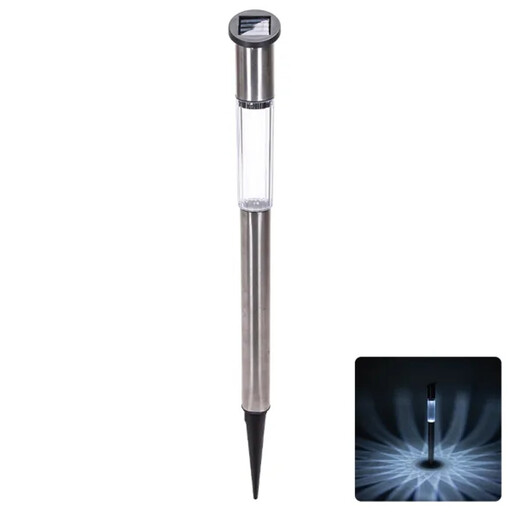
Why This Fits Their Persona: Ideal for users looking for straightforward and functional lighting for paths or flowerbeds. The installation via ground stake is incredibly simple, and the classic stainless steel design blends discreetly into any garden layout.
The IP44 protection rating is clearly stated and is sufficient for splash-proof locations. The 8-12 hour runtime is realistic with the polycrystalline panel given good sun exposure, which prevents false expectations.
Robust housing made of plastic and stainless steel; cool white light (6500K) for clear visibility on paths; simple, tool-free installation.
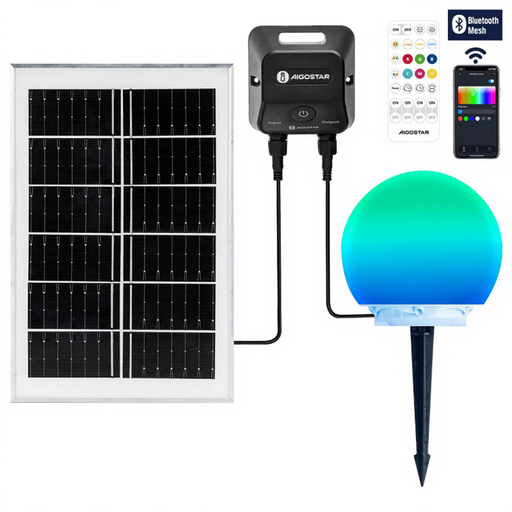
Why This Fits Their Persona: Perfect for anyone who wants to intelligently control their garden lighting and create custom light scenes. The Bluetooth-Mesh technology allows for networking and synchronising over 200 lights via an app.
With an IP65 rating, this light is excellently protected against rain and dirt. The powerful 4000 mAh battery and separate 5W monocrystalline panel ensure a reliable and long runtime of up to 24 hours.
Full control over light colour (RGB) and colour temperature (2700K-6500K); high energy autonomy thanks to a large panel and battery; scalable system.
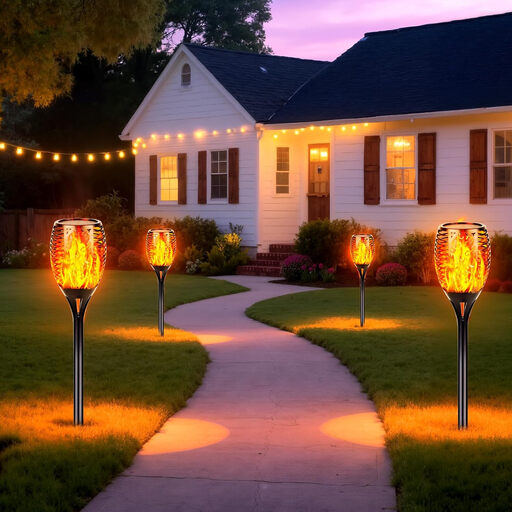
Why This Fits Their Persona: For those who want to create an especially atmospheric and decorative ambiance. The solar torches use 96 LEDs to imitate a dancing flame, making them perfect for parties, patios, or as accents along pathways.
The IP65 certification ensures these torches function reliably even in bad weather. The flame effect is convincing, avoiding the trap of a weak, unrealistic light display.
Realistic and atmospheric flame effect; high weather resistance for year-round use; automatic on/off function.
We have curated a comprehensive selection of products that meet objective quality criteria and are suitable for outdoor use.
The lifespan of a solar light depends on several components. The LEDs themselves often have a lifespan of 15,000 hours or more. The critical factor is the battery. NiMH batteries, which are commonly used, typically last 1-3 years, depending on the charging cycles and quality. On many models, the battery can be easily replaced, which significantly extends the light's lifespan.
Yes, but with limitations. In winter, the days are shorter and sunlight is weaker, which reduces charging time. At the same time, the nights are longer. This means the runtime in winter will be significantly shorter than in summer. Models with high-efficiency (monocrystalline) solar panels and large batteries are better suited for winter operation.
Maintenance is minimal. The most important task is to regularly clean the solar panel with a soft, damp cloth. Dirt, dust, or snow on the panel can significantly reduce its charging performance. You should also occasionally check that the lights are free of leaves or other debris that could block the light output.