
Lieferung heute & morgen

Qualitätsgarantie

Willkommens-Angebote freischalten: KOSTENLOSE Lieferung | Bis zu 80 % RABATT | Kostenlose 30-Tage-JoyPlus-Testphase
App herunterladen
Illuminating outdoor areas like gardens, patios, or balconies not only enhances the atmosphere but also increases safety. However, conventional lighting systems often come with high electricity costs and complex installation. Outdoor solar lights offer a practical and eco-friendly alternative. They harness the sun's energy, are wireless, and can be placed flexibly. This article serves as a guide to help you find the right models for your specific needs—from decorative solar string lights to a high-performance solar spotlight with a motion sensor.
The selection of solar lights is vast. To make an informed decision, a few technical specifications are crucial.
Since outdoor lights are exposed to the elements, their resistance to water and dust is of central importance. The IP (Ingress Protection) rating provides information on this. It consists of two digits: the first describes protection against solid objects (e.g., dust), and the second describes protection against water.
For long-lasting illumination in an unprotected garden or on a patio, a light with at least an IP65 certification is recommended.
The brightness of an LED light is measured in lumens (lm), not in watts. The higher the lumen value, the brighter the light.
The illumination time depends on the battery's capacity and the solar panel's efficiency. Models with different lighting modes (e.g., continuous low light and bright light upon motion detection) can use energy more efficiently, thereby extending the runtime.
Here is a selection of solar lights that are suited for various purposes due to their specific features.
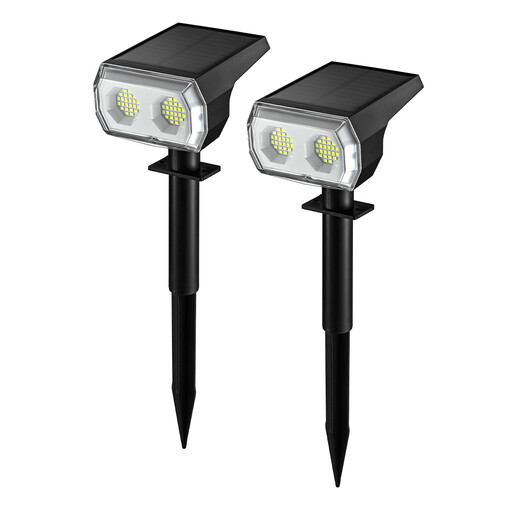
Why It Stands Out: This solar spotlight offers high flexibility with its two installation options—a ground stake for the garden or wall mounting. The warm white light is excellent for accentuating plants, paths, or architectural details.
Pros:
Who Is It For? For garden and homeowners who want to specifically highlight paths, shrubs, trees, or the house facade with warm white light.

Why It Stands Out: This solar string light is distinguished by its flexible copper wire, which can be easily wrapped around railings, plants, or other objects. With eight different lighting modes, it allows for versatile decoration.
Pros:
Who Is It For? Ideal for anyone looking for atmospheric and flexible decorative lighting for their balcony, patio, garden parties, or festive occasions.
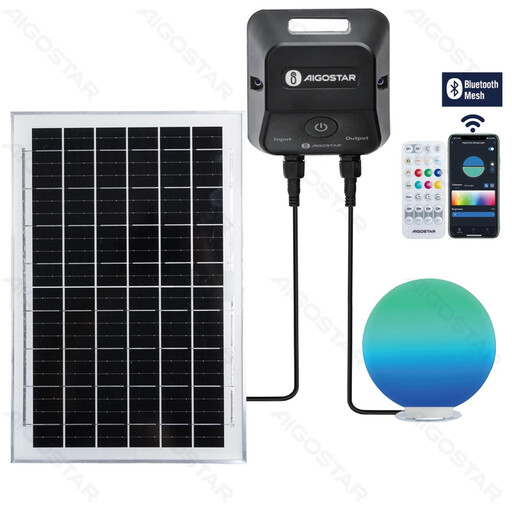
Why It Stands Out: This model combines solar technology with smart control. Colours (RGBCCT), brightness, and schedules can be set via an app. The Bluetooth Mesh technology allows for networking up to 200 devices.
Pros:
Who Is It For? For tech-savvy users who want a customisable and connected lighting solution for their garden or driveway.
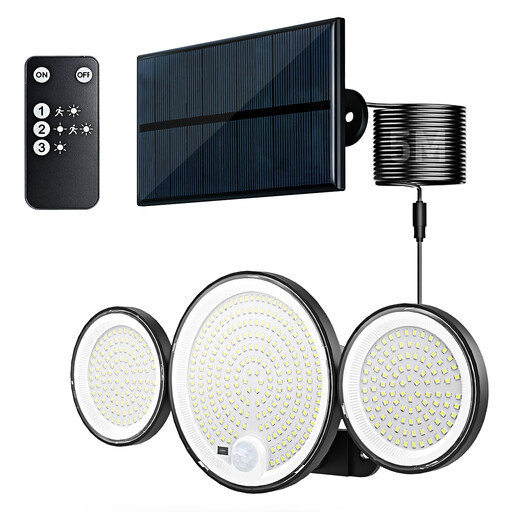
Why It Stands Out: With a brightness of 3500 lumens and three adjustable light heads, this solar wall light is designed for maximum illumination and security. It is a high-performance solution for areas requiring intense lighting.
Pros:
Who Is It For? For homeowners who need very bright and reliable security lighting for driveways, garages, backyards, or entryways.
The products presented here cover common use cases. However, if you are looking for a different type of lighting or a specific design, there are many other possibilities.
Looking for a different kind of outdoor lighting? Discover our wide range of outdoor lights without bulbs to find the right solution for your home.
1. How long do outdoor solar lights last? The lifespan of solar lights depends on two main components: the battery and the LEDs. The rechargeable batteries typically have a lifespan of one to three years before their capacity noticeably degrades, and they can be replaced in many models. The LED bulbs themselves are extremely durable, often lasting 50,000 hours or more. Regularly cleaning the solar panel of dust and dirt helps to maximise its lifespan and performance.
2. Do solar lights work in winter or on cloudy days? Yes, solar lights also charge on cloudy days and in winter, but less efficiently than in direct sunlight. The illumination time in the evening may be shorter as a result. Models with high-quality monocrystalline solar panels often show better performance in low light.
3. Do I need to bring solar lights inside during winter? Models with a high protection rating like IP65 or higher are designed to withstand rain, snow, and low temperatures. Bringing them inside is therefore generally not necessary. However, extreme cold can temporarily affect the battery's performance. To maximise battery life, you can store the lights in a sheltered location during extreme weather conditions (e.g., prolonged hard frost).