
Lieferung heute & morgen

Qualitätsgarantie

Willkommens-Angebote freischalten: KOSTENLOSE Lieferung | Bis zu 80 % RABATT | Kostenlose 30-Tage-JoyPlus-Testphase
App herunterladen
Choosing the right solar-powered garden lighting can be a daunting task. Promises of long-lasting illumination and high weather resistance are common, but the reality is often disappointing. As a Joybuy Product Recommendation Officer, I'm here to help you identify the key features that matter and avoid making the wrong choice, ensuring your garden, balcony, or driveway is lit reliably and beautifully.
Many buyers are disappointed shortly after their purchase because their new solar lights fail to meet expectations. This is often due to three common problems that can be avoided with a closer look.
LED solar lights only have an IP44 rating, which merely protects against splashing water. During heavy rain or snow, moisture can penetrate and damage the electronics, leading to a quick failure.solar floodlight with a motion sensor is needed.To avoid these issues, you should check three technical specifications. These will give you an objective basis for your decision.
The actual runtime depends directly on the battery's capacity, measured in milliampere-hours (mAh), and the solar panel's efficiency.
The IP (Ingress Protection) rating indicates how well a light is protected against the entry of foreign objects and water. For waterproof outdoor solar lights, the following classes are relevant:
solar path lights or wall lights.These two values determine the ambience of your solar-powered garden lighting.
Warm white solar lights with 2700 K to 3000 K produce a cosy, yellowish light. Neutral white (around 4000 K) is well-suited for task areas. Cool white (over 5000 K) has an energising effect and is often used for security lighting.Instead of making a one-size-fits-all recommendation, we have selected products for specific user profiles.
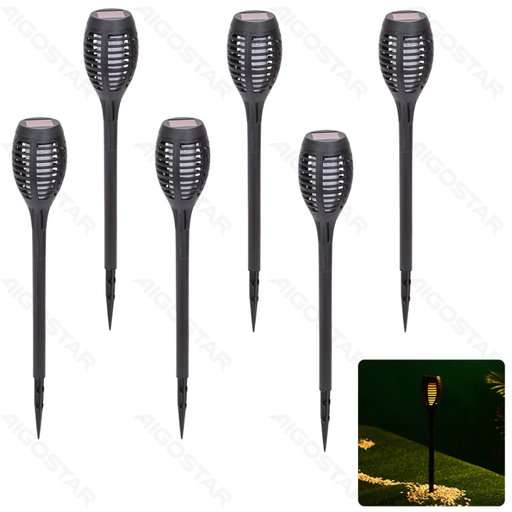
Why it's a great fit: Perfect for users who want to create an atmospheric ambience in the garden or along pathways. The realistic flame effect and warm white light (2700 K) provide a cosy feel without being overpowering. The convenient solar light set allows for a uniform design.
The focus is clearly on decoration, not high brightness. The IP44 rating is sufficient for use in flowerbeds and along sheltered paths. The expected runtime of 8-12 hours is tied to the 200 mAh batteries, which sets realistic expectations.
The flame effect creates dynamic and inviting lighting. Installation with the ground stake is straightforward and requires no wiring.
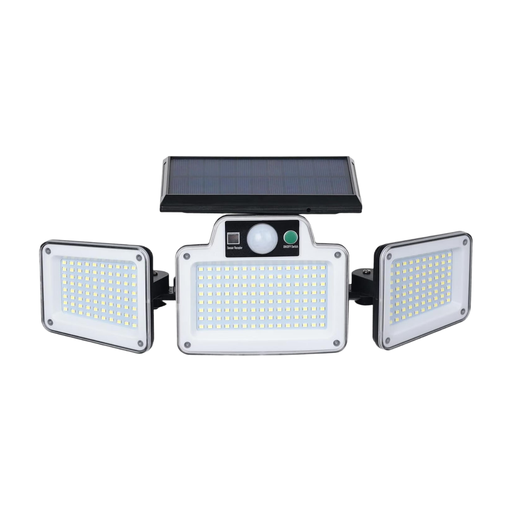
Why it's a great fit: Designed for reliably illuminating driveways, garages, and dark corners. The three adjustable heads and 280 LEDs ensure wide and bright coverage. The motion sensor enhances security while also saving energy.
With an IP65 rating, this floodlight is robust against bad weather. The large 2400 mAh battery and separate solar panel with a long cable ensure reliable charging and runtime, even if the light isn't mounted in direct sunlight.
Three adjustable lighting modes (including constant-on or motion-activated) via remote control offer maximum flexibility for security and convenience needs.
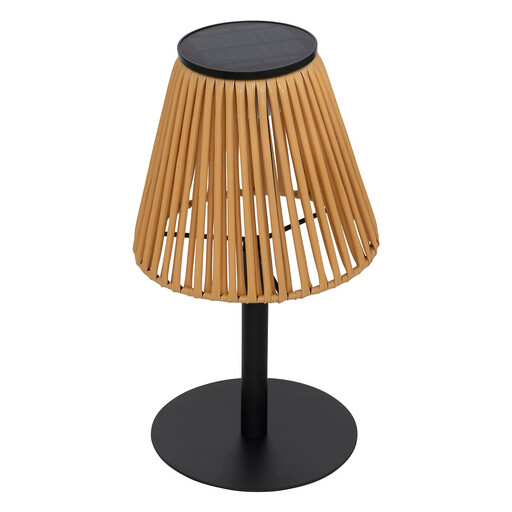
Why it's a great fit: This solar table lamp combines stylish design with functionality. It's perfect for the dining table on a balcony or patio, creating a pleasant brightness for social evenings with 90 lumens and warm white light.
The dual charging function (solar and USB) makes the lamp independent of sun exposure, thus avoiding the pitfall of unreliable runtime. The specified battery life of 6 hours is perfectly sufficient for an evening.
The combination of solar and USB charging offers maximum flexibility and reliability. The shade's woven design creates an especially warm and diffused light distribution.
We have compiled a complete, up-to-date list of products that fully meet these strict selection criteria and rigorous safety standards.
A solar light's lifespan is mainly determined by its battery and the LED. LEDs often have a rated life of 15,000 hours or more. The battery is the most common wear-and-tear component. Its performance degrades after several hundred charge cycles (typically 2-3 years). In winter, the runtime is naturally much shorter due to fewer daylight hours and the lower angle of the sun. Regularly cleaning dirt or snow off the solar panel can improve charging efficiency.
Yes, direct sunlight is ideal for optimal charging. However, modern solar panels, especially monocrystalline ones, can still generate power in diffuse light on overcast days, albeit with significantly lower efficiency. For reliable performance, the location should be chosen to ensure the panel receives several hours of direct sunlight daily.
That depends on the model. Some, often more budget-friendly, garden solar lights use standard batteries (e.g., AA or AAA Ni-MH type) that are easily accessible and replaceable. In many sealed or higher-end models, the battery is permanently integrated and cannot be easily changed by the user. Checking the product description or manual will provide this information.