
Lieferung heute & morgen

Qualitätsgarantie

Willkommens-Angebote freischalten: KOSTENLOSE Lieferung | Bis zu 80 % RABATT | Kostenlose 30-Tage-JoyPlus-Testphase
App herunterladen
Solar lights promise a simple and energy-efficient way to illuminate your garden, balcony, or patio. However, the market is flooded with products whose real-world performance often fails to live up to their advertising claims. Many buyers are left disappointed when the lights break after a short time or provide barely any illumination. This guide will show you which technical features to look for to make an informed decision and avoid a poor investment.
Before we dive into the important specifications, let's look at the three most common issues that lead to dissatisfaction. By understanding these, you can specifically look for products that don't have these weaknesses.
To avoid the problems mentioned above, you should check three core parameters before buying. These will give you an objective basis for comparing different models.
The combination of the battery and solar panel is the heart of every LED solar light.
The IP (Ingress Protection) rating indicates how well a housing is protected against the entry of foreign objects and water. For making waterproof solar lights, this is the crucial value.
These two values determine the visual impact of your garden lighting.
Here are some models tailored to specific needs that meet the criteria mentioned above.
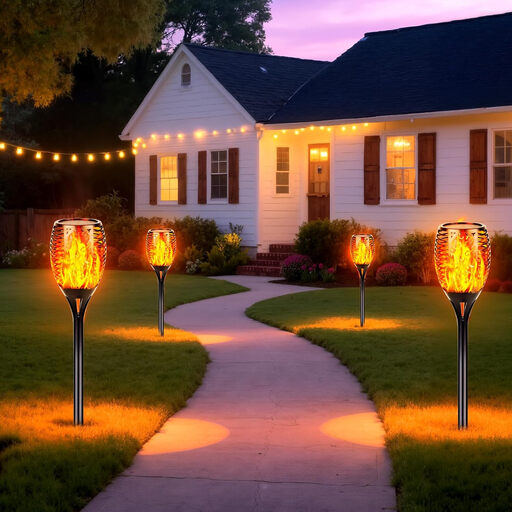
Why it's a great fit: Ideal for users looking for an atmospheric and safe alternative to real torches. Perfect for lining pathways or creating a cosy atmosphere on the patio.
With an IP65 rating, this solar torch is explicitly protected against water jets, making it suitable for unprotected use in typical British weather, thus avoiding the pitfall of poor weather resistance.
The 96 LEDs create a realistic, dancing flame effect that produces a warm and inviting atmosphere. The automatic on/off function ensures convenient operation.
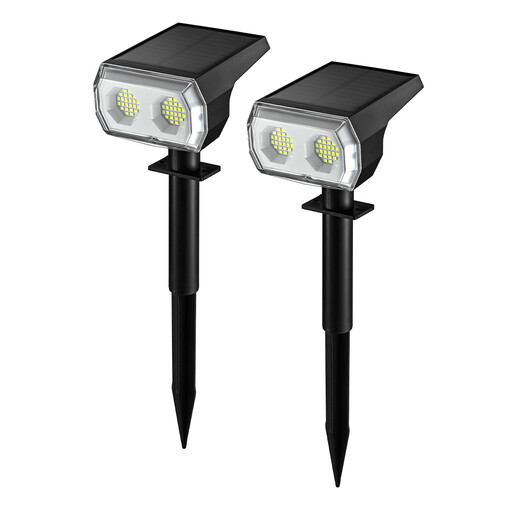
Why it's a great fit: Perfect for functional illumination of driveways, paths, or dark corners of the garden. The combination of brightness and an optional motion sensor enhances security.
This model avoids the pitfall of unrealistic runtimes by offering two adjustable modes. The motion sensor mode conserves the battery and provides light only when needed, maximising its operational duration.
The 2-in-1 installation (ground stake or wall mount) offers maximum flexibility. With 48 LEDs per spotlight, it delivers high brightness suitable for security purposes.
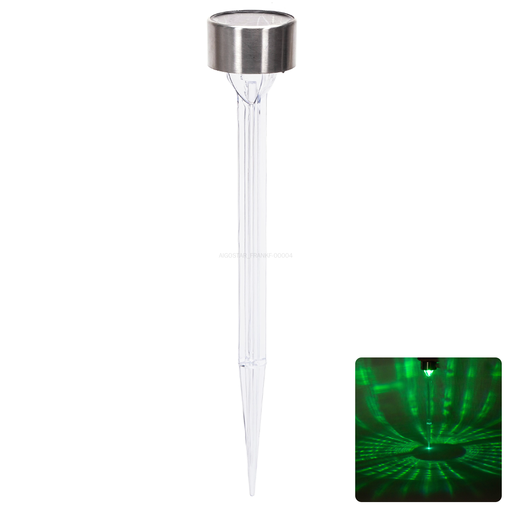
Why it's a great fit: A straightforward and affordable solution for anyone wanting to add colourful accents to flowerbeds, balconies, or along pathways without a large investment.
This model focuses on a clear use case: decoration. It doesn't promise extreme brightness but reliably delivers colourful mood lighting. The IP44 rating is sufficient and honestly communicated for this purpose in sheltered locations.
The automatic RGB colour-changing feature provides a dynamic and playful lighting effect. Installation via the ground stake is incredibly simple and requires no tools.
We've compiled a complete, up-to-date list of products that fully meet these strict selection criteria and safety standards.
The lifespan of a solar light depends on several components. The LEDs themselves have a very long life, often 15,000 hours or more. The limiting factor is usually the battery. Ni-MH batteries typically last for 500 to 1,000 charge cycles, which translates to a usage period of about two to three years. The quality of the housing and its weather resistance (IP rating) are also crucial for the overall lifespan.
Yes, but with reduced performance. Modern solar panels can generate energy even in diffuse light, but significantly less than in direct sunlight. In winter, the days are shorter and the sun is lower in the sky, which further reduces charging time. As a result, the runtime will be shorter during the winter months. Models with high-quality panels and large batteries have an advantage here.
This depends on the quality and IP rating of the light. Models with a high rating like IP65 or IP67 and robust materials (e.g., stainless steel, impact-resistant ABS plastic) are designed for year-round use. However, to extend the battery's life, it can be a good idea to bring the lights inside during extreme sub-zero temperatures or prolonged snowfall, as cold affects battery performance. Lights with a lower rating (e.g., IP44) should be stored in a sheltered place over winter.