
Lieferung heute & morgen

Qualitätsgarantie

Willkommens-Angebote freischalten: KOSTENLOSE Lieferung | Bis zu 80 % RABATT | Kostenlose 30-Tage-JoyPlus-Testphase
App herunterladen
Outdoor solar lights promise an easy and cost-effective way to illuminate gardens, balconies, and pathways. With no wiring required and no extra electricity costs, they offer flexibility for both decorative and functional purposes. However, the market is flooded with options, and many products fail to live up to their advertising claims. Before you make a decision, it's crucial to understand the typical weaknesses that often only become apparent after your purchase.
This guide, created by the Joybuy Product Recommendation Officer, will help you separate the wheat from the chaff. We focus on objective criteria so you can make an informed choice and avoid a bad investment.
Many buyers are left disappointed because products fail to meet the basic requirements for outdoor use. Pay special attention to these three points:
To avoid the problems mentioned above, you should focus on verifiable technical specifications. These three metrics are crucial for selecting LED solar lights.
The IP (Ingress Protection) rating is an international standard that indicates how well an enclosure is protected against the ingress of foreign objects (first digit) and water (second digit). For outdoor use, the following values are relevant:
A high IP rating is a reliable indicator of the longevity of a waterproof solar lamp.
The runtime depends directly on the stored energy. Two factors are decisive here:
A good solar garden light should still be able to provide several hours of light even after an overcast day.
The atmosphere and functionality of a light are determined by its colour temperature and brightness.
Here are some product recommendations tailored to specific needs that meet the quality criteria mentioned above.
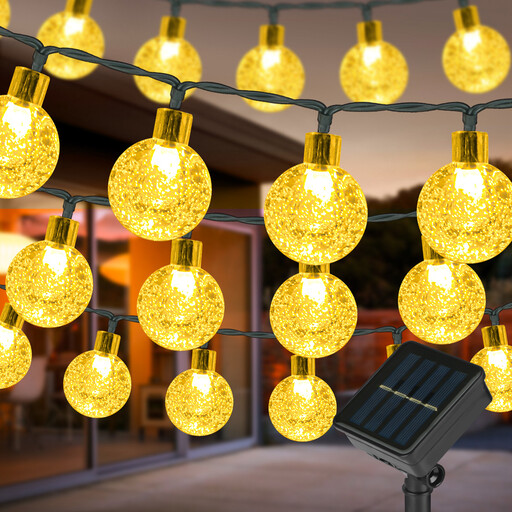
Why This Fits Their Persona: Ideal for renters or homeowners who want to create a cosy atmosphere on their balcony, patio, or in a small garden nook. The warm white light and decorative bubble design provide an inviting ambience without complex installation.
The IP65 rating ensures the string lights can withstand heavy rain and won't fail after a short time. The specified runtime of 8–14 hours (weather-dependent) addresses the problem of short-lived lighting.
Combines atmospheric warm white light with a robust, weatherproof design. The 8 different lighting modes offer additional creative flexibility.
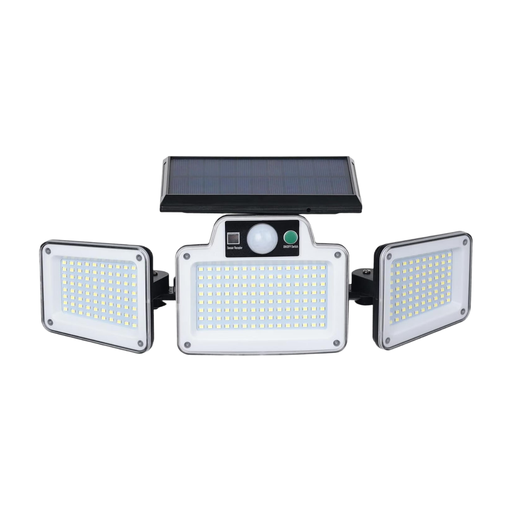
Why This Fits Their Persona: Perfect for homeowners who want to brightly and efficiently illuminate dark areas like driveways, garages, or the main entrance. High functionality is the top priority here.
The separate solar panel with a long cable (approx. 4.7 m / 15.4 ft) solves the problem of shady installation spots. The 2400mAh battery ensures reliable performance, and the IP65 rating guarantees durability in all weather.
High flexibility thanks to the detached solar panel and three individually adjustable light heads. The 280 LEDs provide high brightness for security purposes, which can be controlled via remote.
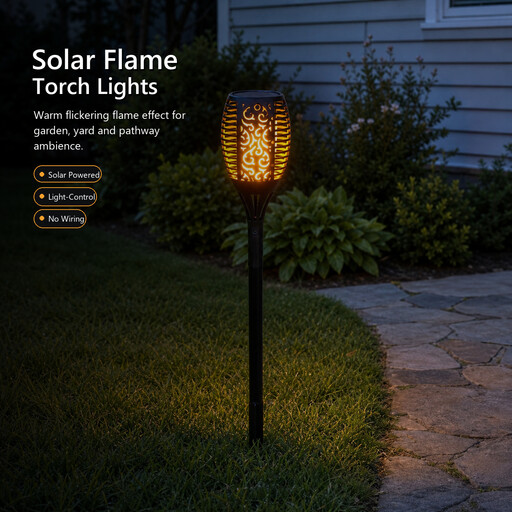
Why This Fits Their Persona: For garden owners looking for decorative yet functional lighting for paths, flowerbeds, or the edge of a patio. These solar garden torches combine function with a special visual effect.
With 96 LEDs per torch, the flame effect is significantly more realistic and brighter than on simple models with only a few LEDs. The IP65 certification ensures that the electronics inside the ground stake are protected from moisture and frost.
The high number of LEDs creates a convincing, dancing flame effect. The automatic on/off function ensures maintenance-free operation from dusk till dawn.
We have compiled a complete, up-to-date list of products that fully meet these strict selection criteria and safety standards.
The lifespan of a solar light depends on the quality of its components, especially the battery and LEDs. High-quality models can function for several years. The most important maintenance step is to regularly clean the solar panel with a soft, dry cloth. Dust, pollen, or bird droppings can significantly reduce charging performance. For models with a replaceable battery, changing it can extend the light's lifespan.
Yes, but with reduced performance. Modern solar panels don't require direct sunlight; they also charge in diffuse daylight. However, on short, overcast winter days, the charging time is shorter and the amount of energy absorbed is lower. This results in a shorter runtime at night. Models with high-efficiency panels and large batteries perform better in these conditions.
The crucial factor is the orientation of the solar panel. It should be placed in a location where it receives as much light as possible throughout the day, ideally facing south and free from shadows cast by trees, buildings, or eaves. For security lights with motion sensors, you should also consider the sensor's detection range and angle to ensure reliable operation.