
Lieferung heute & morgen

Qualitätsgarantie

Willkommens-Angebote freischalten: KOSTENLOSE Lieferung | Bis zu 80 % RABATT | Kostenlose 30-Tage-JoyPlus-Testphase
App herunterladen
By the Joybuy Product Recommendation Officer, August 30, 2026
Outdoor solar lights promise a simple, cost-effective, and eco-friendly way to illuminate your garden, balcony, or driveway. However, the reality is often quite different: lights that fail after a rain shower, have a disappointingly short runtime, or are barely bright enough to light a path. Before you make a decision, it's crucial to understand the common pitfalls that lead to frustration and unnecessary expense.
The two most common problems with solar lights are:
To avoid these issues, a close look at the technical specifications is essential.
A well-informed purchasing decision is based on objective metrics, not marketing promises. Three technical features are critical for the performance and longevity of solar garden lights.
The IP (Ingress Protection) rating indicates how well an electrical device is protected against the intrusion of foreign objects (first digit) and water (second digit).
The power supply is the heart of every LED solar light. The combination of the solar panel and battery determines how reliably the light will function, especially during months with less sunshine.
The quality of light determines both atmosphere and functionality.
Based on these objective criteria, we have identified several models that are well-suited for specific user profiles.
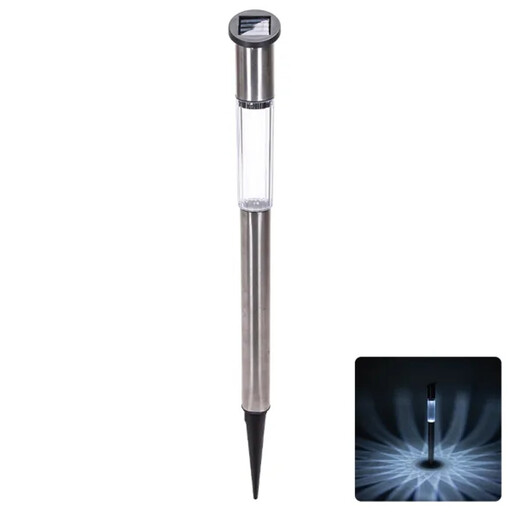
Why This Fits Their Persona: Ideal for users seeking a straightforward and affordable solution for marking garden paths or flowerbeds. The ground stake installation is incredibly simple and requires no tools.
The product description clearly states the IP44 rating. This informs the user that the light is splash-proof and should ideally be placed in somewhat sheltered locations, which prevents unrealistic expectations.
Simple, tool-free installation; Cool white light (6500 K) ensures clear visibility on paths; Stainless steel housing.
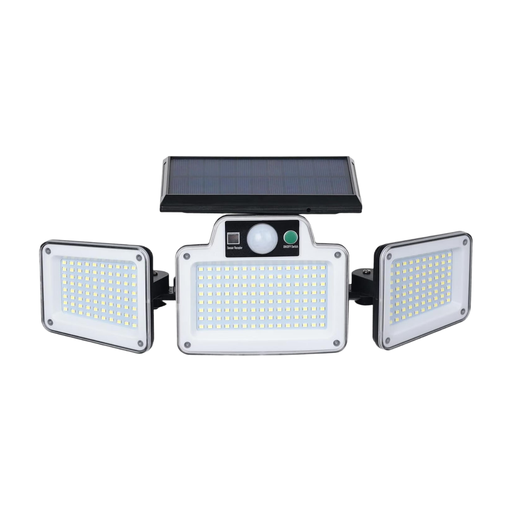
Why This Fits Their Persona: Perfect for illuminating driveways, garages, or dark corners of the property. The motion sensor enhances security and saves energy, while the three adjustable heads allow for wide, targeted coverage.
With an IP65 rating, this floodlight is dust-tight and protected against powerful water jets, qualifying it for unprotected outdoor use. The separate solar panel with a long cable solves the problem of the ideal mounting location not being the sunniest spot.
High brightness from 280 LEDs; 3 adjustable lighting modes via remote control; Separate solar panel for flexible and optimal alignment with the sun.
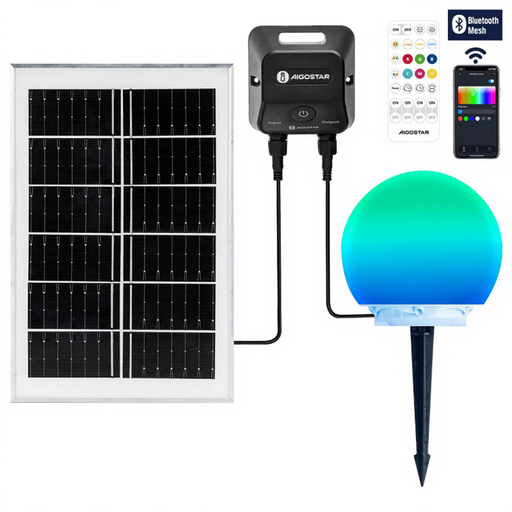
Why This Fits Their Persona: For tech and design-savvy users who want atmospheric and individually controllable lighting for their patio, garden, or events. The ability to control colours and white tones via an app allows for maximum creative freedom.
This model combines high-end technology with robustness. The IP65 rating, a high-performance monocrystalline solar panel, and a large 4000 mAh battery ensure that the smart functionality is not compromised by subpar hardware.
Full control over colours (RGB) and white tones (CCT 2700K-6500K) via app; Control over 200 lights simultaneously via Bluetooth Mesh; Modern design with a layered effect.
We've compiled a complete, up-to-date list of products that fully meet these strict selection criteria and safety regulations.
The lifespan of a solar light depends on two main components: the battery and the LED. A high-quality NiMH or lithium-ion battery can last for several years (approx. 500-1000 charge cycles) with proper care. The LEDs themselves have a very long lifespan, often 15,000 hours or more. To maximise longevity, you should regularly clean the solar panel with a soft cloth to ensure maximum charging efficiency.
Yes, but with limitations. The shorter days and lower intensity of sunlight in winter lead to a shorter charging time. Models with high-efficiency (monocrystalline) solar panels and large batteries have a clear advantage here. The runtime will be shorter in winter than in summer. A solar floodlight with a motion sensor is particularly practical for winter use, as it only lights up when needed, thus conserving energy.
The most important factor is the placement of the solar panel. It should be positioned to receive as much direct sunlight as possible throughout the day, ideally facing south and free from shadows cast by trees, walls, or eaves. Also, be careful not to place the light directly under another light source (e.g., a streetlamp), as the dusk-to-dawn sensor may not trigger correctly, preventing the light from turning on.