
Lieferung heute & morgen

Qualitätsgarantie

Willkommens-Angebote freischalten: KOSTENLOSE Lieferung | Bis zu 80 % RABATT | Kostenlose 30-Tage-JoyPlus-Testphase
App herunterladen
The right lighting can transform a garden, patio, or balcony into an atmospheric space. However, installing conventional lamps is often complex and costly, requiring wiring and access to power outlets. Outdoor solar lights offer a practical and cost-effective alternative. They harness the sun's energy, are simple to install, and create a pleasant ambiance as dusk falls.
This guide will help you navigate your options. We'll explain the key technical features to look for and present a selection of different models to make choosing the right wire-free garden lighting easier.
To make an informed decision, understanding a few technical basics is crucial. Instead of being swayed by marketing jargon, use the following three criteria to objectively evaluate a solar light's performance and durability.
Since these lights remain outdoors year-round, their resistance to the elements is a key quality indicator. This weather-resistant property is defined by the IP (Ingress Protection) rating, which consists of two digits:
The following ratings are relevant for outdoor use:
A solar lamp's runtime is directly dependent on the battery's capacity (measured in milliampere-hours, mAh) and the solar panel's efficiency. A larger battery can store more energy, but it also requires a powerful panel to fully charge during the day.
Pay attention to the specified runtime (e.g., 6–8 hours) and remember that this figure is based on an optimal charge in direct sunlight. In winter or on cloudy days, the runtime may be shorter. Most modern LED solar lights are equipped with a dusk-to-dawn sensor that automatically activates the lamp at nightfall and deactivates it at dawn to conserve energy.
The ambiance is largely determined by the light's color temperature, measured in Kelvin (K):
Some models offer additional features like color-changing (RGB) capabilities, which can be controlled via a button or remote to create special accents.
Here is a curated collection of four distinct solar lights, each designed for different needs and outdoor spaces.
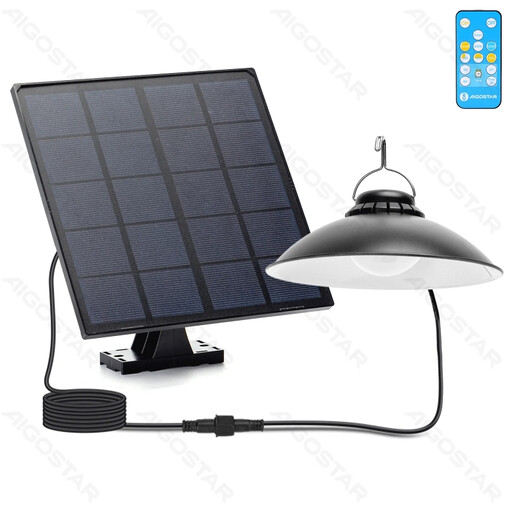
Why it stands out: The standout feature of this solar pendant light is its separate solar panel, connected to the light by a 3-meter cable. This allows for flexible installation: the light can hang in a covered area (like a gazebo, balcony, or garden shed), while the panel is placed in a sunny spot.
Advantages:
Best for: Users who need reliable, bright lighting for covered outdoor areas and value the flexibility of a separate solar panel.
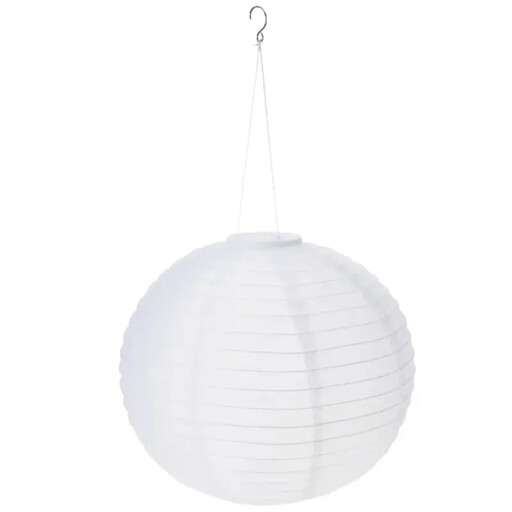
Why it stands out: This light combines functionality with an elegant, minimalist design. Its spherical shape and weather-resistant nylon fabric are reminiscent of a classic lantern, providing an exceptionally soft, diffused light.
Advantages:
Best for: Anyone looking for decorative and atmospheric lighting for garden parties, patios, or as balcony decor.

Why it stands out: This set includes five individual lights that can be easily anchored in the ground with stakes. Its key feature is the option to choose between a steady warm white light and an automatic color-changing (RGB) mode.
Advantages:
Best for: Garden owners who want to mark pathways, accent flowerbeds, or switch between subtle and colorful lighting.

Why it stands out: These outdoor solar string lights offer maximum creative freedom with a 12-meter flexible copper wire and 120 warm white LEDs. The eight different lighting modes provide versatile effects for any occasion.
Advantages:
Best for: Creative decorators looking for a versatile and durable string light for festive occasions or for permanently enhancing a garden, patio, or balcony.
The products featured here cover a wide range of applications. However, if you are specifically looking for more hanging lighting solutions for trees or pergolas, you can find an expanded selection in our category.
? Discover more outdoor hanging tree lights here
1. Do outdoor solar lights work in the winter? Yes, solar lights do work in winter, but with reduced performance. Fewer daylight hours and the lower angle of the sun mean the batteries may not fully charge. This results in a shorter runtime in the evening. For optimal performance, always keep the solar panel free of snow and debris.
2. What is the lifespan of solar garden lights? The lifespan depends on two main components: the LEDs and the battery. Modern LEDs have a very long lifespan, often exceeding 20,000 hours. The battery is the component most likely to wear out. Depending on its type and quality, a battery can last for several hundred charge cycles, which corresponds to a service life of two to four years. On many models, the battery can be easily replaced.
3. What does "weatherproof" mean for solar lights? The term "weatherproof" is specified by the IP rating. A light with an IP44 rating is protected against splashing water from all directions and is suitable for most normal weather conditions. A light with an IP65 rating is dust-tight and also protected against water jets (e.g., heavy rain or a garden hose), making it even more robust for exposed locations.