
Lieferung heute & morgen

Qualitätsgarantie

Willkommens-Angebote freischalten: KOSTENLOSE Lieferung | Bis zu 80 % RABATT | Kostenlose 30-Tage-JoyPlus-Testphase
App herunterladen
Outdoor solar lights promise a simple and cost-effective way to illuminate your garden, patio, or balcony. With no power cables and no running costs, they are an attractive solution for many homeowners. However, the market is flooded with products whose real-world performance often fails to match the promises on the packaging. Many buyers are quickly disappointed by dim light, short runtimes, or failures after the first downpour.
As your Joybuy Product Recommendation Officer, I'm here to help you identify the common pitfalls and define the right criteria for your selection. We'll focus on the technical specs that truly matter.
Before you make a purchase, you should be aware of the three most common flaws found in budget or poorly designed models:
To avoid these problems, let verifiable technical data—not marketing buzzwords—guide your decision. Here are the three most important metrics for your selection:
The "Watt" specification on LED products is often a misleading comparison to old incandescent bulbs and says nothing about the actual brightness. The relevant unit of measurement is Lumen (lm).
The IP (Ingress Protection) rating indicates how well a light is protected against the entry of foreign objects (first digit) and water (second digit). For waterproof outdoor solar lights, the following values are relevant:
The battery is the heart of every solar light. Its capacity, measured in milliampere-hours (mAh), is a key determinant of the runtime. A higher mAh number generally means a longer runtime. Also, pay attention to the battery type: Lithium-ion (Li-ion) or Lithium Iron Phosphate (LiFePO4) batteries often offer a longer lifespan and better performance in cooler temperatures compared to older Nickel-Metal Hydride (NiMH) types. This is crucial for reliable off-grid garden lighting.
Here are a few product recommendations tailored to specific needs that meet the criteria mentioned above.
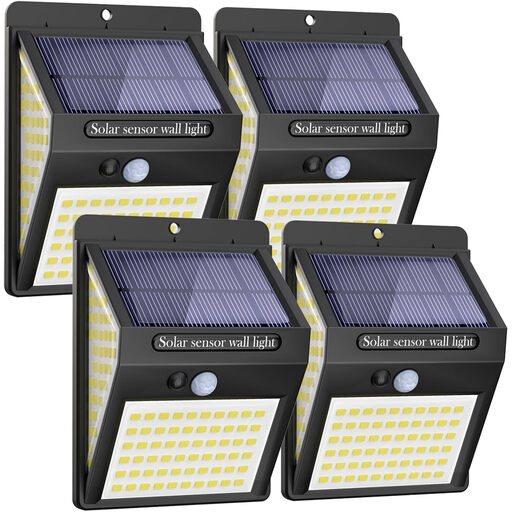
Why This Fits Their Persona: Ideal for homeowners looking for cost-effective and comprehensive security lighting for multiple areas like the driveway, garden path, and back door. The 4-pack offers an out-of-the-box complete solution.
With a clear IP65 rating, this light is protected against heavy rain, avoiding the trap of products that are only seemingly waterproof. The three adjustable modes help tailor battery life to your needs.
A wide 270° lighting angle provides broad coverage. The integrated motion sensor ensures light is available exactly when needed, boosting efficiency.

Why This Fits Their Persona: Perfect for anyone who wants to bathe their garden, pergola, or balcony in atmospheric light for cosy evenings or parties, without having to worry about power outlets.
Unlike many fragile decorative string lights, this model features an IP65 certification and a 1200mAh lithium battery. This ensures reliable operation throughout the night and in all weather conditions.
Eight different lighting modes provide varied effects. The total length of 10 metres offers plenty of creative flexibility for larger areas.
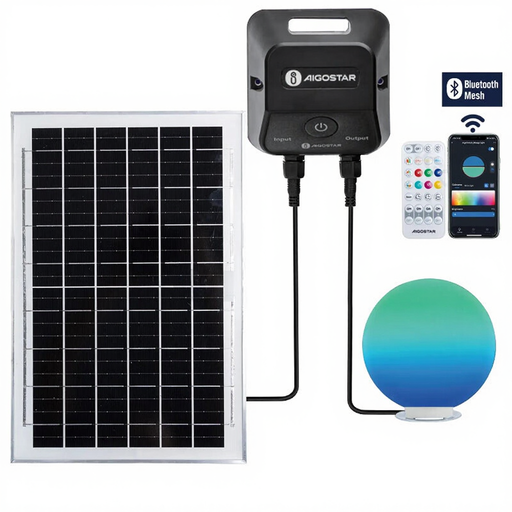
Why This Fits Their Persona: For tech-savvy users who want full control over their lighting. Ideal for integration into a smart outdoor concept with customisable colours, schedules, and scenes via an app.
This model surpasses the limitations of basic solar lights. The large 8000mAh battery and efficient monocrystalline panel ensure a long runtime, while smart control allows for precise adjustment of brightness and colour.
Bluetooth Mesh technology allows for networking over 200 devices. Full control over the colour spectrum (RGB) and colour temperature (CCT, 2700K-6500K) via the app.
We have compiled a complete, up-to-date list of products that fully meet these strict selection criteria and local safety regulations.
Yes, solar lights do work in winter, but with reduced performance. The shorter days and the lower angle of the sun reduce charging time and intensity. Models with high-efficiency monocrystalline solar panels have an advantage here, as they charge better in diffuse light than polycrystalline panels. The runtime per night will typically be shorter in winter than in summer.
The lifespan heavily depends on the quality of the individual components. A high-quality product with a robust, UV-resistant housing (e.g., aluminium or high-grade ABS plastic), an IP65 rating, and a durable lithium battery can last for several years (3-5 years or more). On many models, the battery is the component with the shortest lifespan. If the battery is replaceable, it can significantly extend the light's usability.
A solar spotlight (often just called a spot) produces a focused, directional beam of light. It's excellent for accenting specific objects like trees, sculptures, or architectural details, or for illuminating dark corners as a deterrent. A solar wall light, on the other hand, typically casts its light more broadly and diffusely to evenly illuminate a larger area like an entryway or patio. Many wall lights are also equipped with a motion sensor to enhance security.