
Lieferung heute & morgen

Qualitätsgarantie

Willkommens-Angebote freischalten: KOSTENLOSE Lieferung | Bis zu 80 % RABATT | Kostenlose 30-Tage-JoyPlus-Testphase
App herunterladen
Outdoor solar lights promise a simple, cost-effective, and eco-friendly way to illuminate gardens, balconies, and driveways. However, the market is flooded with products whose real-world performance often falls short of their marketing claims. Many buyers are left disappointed when the lights fail after a short time or provide only a few hours of light.
As your Joybuy Product Recommendation Officer, I'm here to help you identify the common pitfalls and understand the technical specifications that truly matter. This will enable you to make an informed decision that perfectly suits your needs.
Before you invest, you should be aware of the three most common issues that lead to disappointment:
To avoid a bad purchase, focus on objective, technical data. These three criteria are crucial for the performance and longevity of your solar garden lights.
The IP (Ingress Protection) rating indicates how well a housing is protected against the entry of foreign objects (first digit) and water (second digit).
A light with IP65 certification, such as a robust solar wall light or a solar floodlight, is a much more durable investment.
The battery's capacity, measured in milliampere-hours (mAh), directly determines how long your light will operate after sunset. A larger battery can store more energy. Look for a capacity of at least 1200 mAh for decorative string lights and 2000 mAh or more for brighter security lights. Products with high-quality Lithium-Ion (Li-Ion) or Lithium Iron Phosphate (LiFePO4) batteries generally offer a longer lifespan and more charge cycles.
Forget wattage and pay attention to the lumen (lm) value. Lumens are the standardised unit for luminous flux and describe the actual brightness of an LED solar light.
The light colour is specified in Kelvin (K). Warm white solar lights (approx. 2700–3300 K) produce a cozy, yellowish light. Cool white light (approx. 5300–6500 K) has a more energizing effect and is well-suited for work or security areas.
Here are some models tailored to specific needs that meet the quality criteria mentioned above.
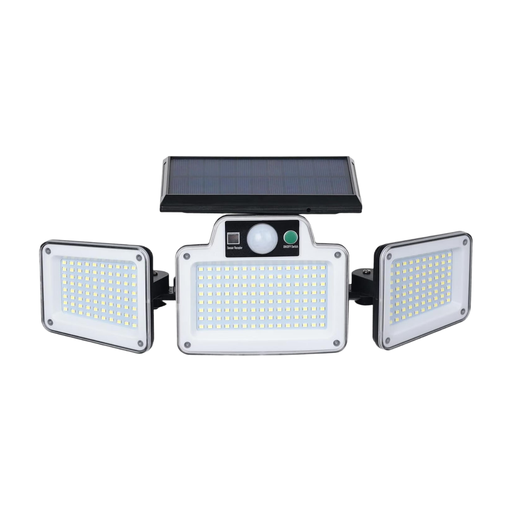
Why This Fits Their Persona: Ideal for homeowners who want to reliably illuminate driveways, garages, or dark garden areas. The combination of high brightness and a motion sensor provides security with no electricity costs.
With an IP65 rating, the light is equipped to handle heavy rain. The 2400mAh battery, combined with the motion sensor, ensures a reliable runtime throughout the night.
Three individually adjustable light heads allow for wide and targeted illumination (180°). The remote control with three modes offers high flexibility.

Why This Fits Their Persona: Perfect for anyone wanting to bathe their balcony, patio, or garden in atmospheric light for parties or cozy evenings. The classic bulb aesthetic is a real eye-catcher.
The IP65 certification ensures these string lights function reliably even in bad weather. The 1200mAh battery provides a realistic runtime of up to 12 hours.
The combination of a 10-meter length and 160 LEDs in a G50 globe design provides large-area, aesthetic decorative lighting. Eight different lighting modes offer variety.
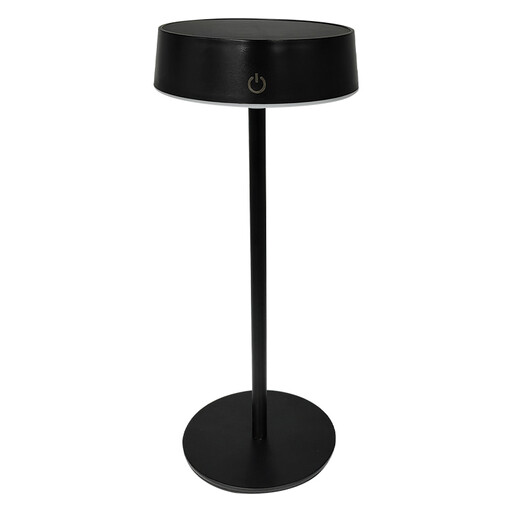
Why This Fits Their Persona: For users seeking a portable and versatile light source for the dining table on the balcony, as a reading light in the garden, or even for camping trips. The modern design complements many decor styles.
The dual charging capability (Solar and USB-C) makes it independent of sunny days. On cloudy days, it can simply be charged via cable, which avoids the frustration of a dead solar lamp.
High flexibility thanks to stepless dimming and three adjustable colour temperatures (3000K-6000K). The memory function saves the last setting for maximum convenience.
We have compiled a complete, real-time updated list of products that fully meet these strict selection criteria and UK safety regulations.
Yes, but with limitations. The runtime is shorter in winter because the days are shorter and sunlight is weaker. Models with high-efficiency solar panels and large batteries are better suited for winter use. Angling the solar panel can help to better capture the low-angled winter sun.
The lifespan depends on two main components: the LEDs and the battery. Modern LEDs have a lifespan of up to 50,000 hours. The battery is typically the first component to degrade in performance. A high-quality lithium-ion battery usually lasts for 500 to 1,000 charge cycles, which corresponds to a service life of about two to four years. On many models, the battery can be replaced.
Installation is usually very simple as no wiring is required. The most important factor is the placement of the solar panel. It should be south-facing and receive as many hours of direct sunlight as possible each day. Avoid locations in the shade of trees, buildings, or overhangs, as this will significantly reduce charging performance. Occasionally clean the solar panel of dust and debris to maintain its efficiency.