
Lieferung heute & morgen

Qualitätsgarantie

Willkommens-Angebote freischalten: KOSTENLOSE Lieferung | Bis zu 80 % RABATT | Kostenlose 30-Tage-JoyPlus-Testphase
App herunterladen
Solar lights promise a simple, cost-effective, and eco-friendly way to illuminate gardens, balconies, and pathways. However, the reality is often different: many buyers are disappointed after a short time because the products fail to live up to their advertising claims. Before you invest, it's crucial to understand the most common pitfalls that can lead to a bad purchase.
To avoid these problems, a close look at the technical specifications is essential.
To make an informed decision, you should check three core parameters. These are the primary determinants of the longevity and functionality of your outdoor lighting.
The term "waterproof" is flexible. What's crucial is the IP Rating (Ingress Protection), which consists of two digits. The second digit indicates the level of protection against water.
The runtime depends directly on the stored energy. Battery capacity is specified in milliampere-hours (mAh). A higher mAh value generally allows for a longer runtime. For reliable operation throughout the night, even after cloudy days, models with batteries of 1200 mAh or more are often a good choice.
Equally important is the efficiency of the solar panel. Monocrystalline panels typically offer higher efficiency than polycrystalline ones, meaning they charge more effectively even in less-than-optimal light conditions. An integrated dusk-to-dawn sensor is standard today and ensures the light only turns on in darkness, thus saving energy.
The brightness of an LED outdoor solar light is measured in Lumen (lm), not in Watts. The Watt rating on LED products refers to energy consumption.
The light colour, measured in Kelvin (K), determines the atmosphere:
Based on these objective criteria, we have identified several models suitable for specific needs and locations in the UK.
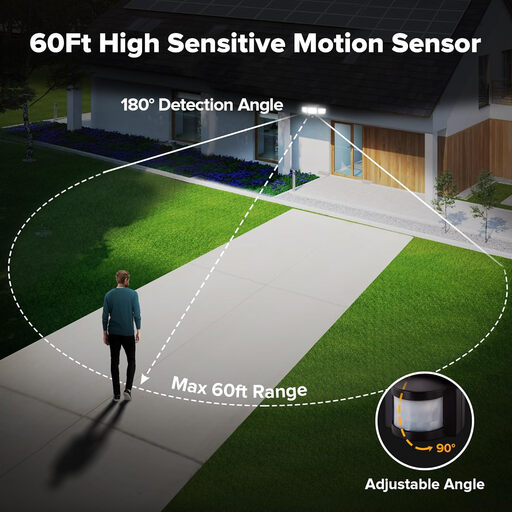
Why This Fits Their Persona: Ideal for users who want to reliably illuminate driveways, garages, or dark corners of the garden. The high brightness and wide detection range of the motion sensor are primarily for security.
Avoids the brightness trap with a light output of 3000 lumens. The IP65 certification ensures the light remains functional even in heavy rain and snow.
Three flexibly adjustable light heads with a 270° illumination angle and a long-range motion sensor provide comprehensive coverage.

Why This Fits Their Persona: Perfect for creating a cosy atmosphere on the balcony, patio, or for garden parties. The warm white light colour and various lighting modes allow for individualised decoration.
Bypasses the battery trap with a 1200 mAh capacity, which provides up to 12 hours of runtime according to the manufacturer. The IP65 rating protects against the elements and prevents the durability trap.
A total length of 10 metres with 160 LEDs offers generous coverage. Eight different lighting functions provide variety.
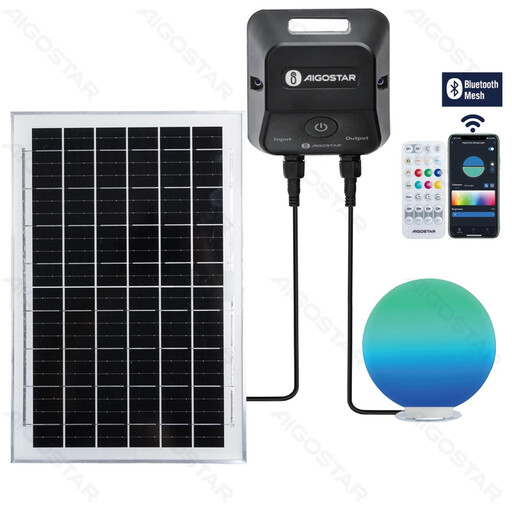
Why This Fits Their Persona: For users who want full control and customisation. Ideal for integration into a smart home system to conveniently manage light scenes, schedules, and colours via an app.
Offers far more than a standard light. The RGBCCT technology allows for a free choice of colours and colour temperatures. The large 8 Ah battery (8000 mAh) ensures an exceptionally long runtime of up to 24 hours.
Control up to 200 devices via Bluetooth Mesh technology. Complete customisation of brightness, colour, and schedules through an app.
We've compiled a complete, up-to-date list of products that fully meet these strict selection criteria and UK safety regulations.
The runtime in winter is shorter than in summer because the days have fewer hours of sunshine and the angle of incidence of light is lower. However, high-quality solar garden lights with efficient monocrystalline panels and large batteries (e.g., over 1800 mAh) can still provide several hours of light per night, even in winter. Models with energy-saving modes or motion sensors are particularly advantageous here, as they only deliver full brightness when needed.
Direct sunlight is ideal for optimal charging. However, modern solar panels can also generate energy on cloudy days, albeit to a lesser extent. The location is crucial: position the panel facing south as much as possible and avoid shade from trees, canopies, or buildings.
No, simple installation is one of their biggest advantages. Most models for the garden are simply staked into the ground with a ground spike. Wall lights or floodlights can be mounted with just a few screws. No wiring is required, making them a flexible solution for solar balcony lighting and other areas without a power connection.