
Lieferung heute & morgen

Qualitätsgarantie

Willkommens-Angebote freischalten: KOSTENLOSE Lieferung | Bis zu 80 % RABATT | Kostenlose 30-Tage-JoyPlus-Testphase
App herunterladen
Outdoor solar lights are an attractive way to illuminate gardens, balconies, and pathways without additional electricity costs or complex wiring. However, the market is filled with products whose performance claims often don't hold up in practice. Many buyers are disappointed by lights that quickly lose their brightness or fail to withstand the local weather. This guide shows you which technical details are crucial and how to find models that will perform reliably.
Before we dive into recommended features, it's important to understand the most common issues that can lead to a purchase you'll regret.
To avoid these pitfalls, you should focus on three objective technical parameters. These are the primary determinants of your garden lighting's performance and longevity.
The IP (Ingress Protection) rating is an international standard that indicates how well a housing is protected against the intrusion of foreign objects and water. For outdoor use, two ratings are particularly relevant:
Don't rely on wattage figures; look for the lumen (lm) value, which describes the actual brightness of a light source.
The light color, measured in Kelvin (K), significantly influences the mood:
The combination of battery capacity (measured in milliampere-hours, mAh) and the solar panel's efficiency determines how long your light will shine after dark. A larger battery can store more energy, but it also needs a powerful panel to fully charge during the day. Monocrystalline solar panels generally have a higher efficiency rating than polycrystalline ones, which is particularly advantageous on days with less sunshine.
Based on these objective criteria, we have selected a few products for various applications.
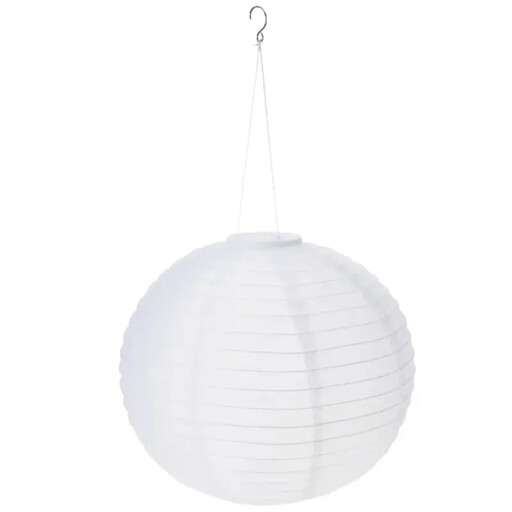
Why it's a match: Ideal for users seeking a subtle yet elegant light accent for a balcony, patio, or garden corner. The minimalist spherical design blends seamlessly into modern and classic settings, creating a soft, diffused light.
The focus is clearly on atmospheric lighting, not misleading brightness claims. The weatherproof nylon material is designed for outdoor use and is more durable than simple plastic housings.
Creates a uniform, warm white ambient light. The integrated dusk sensor ensures fully automatic operation without any manual intervention.
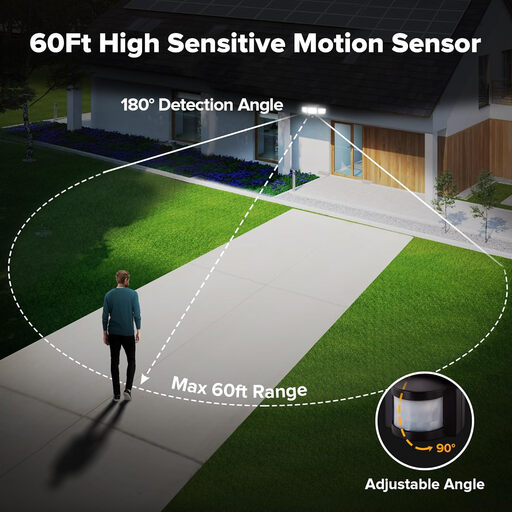
Why it's a match: Designed for bright, wide-area illumination of driveways, garages, and dark areas of a property. The high light output and sensitive motion detector serve to increase security.
This model provides a clear lumen value of 3000 lm, which is a reliable indicator of its brightness. The IP65 certification ensures the light is durable and functions reliably even in adverse weather conditions.
Very high light output and a wide 270° illumination angle thanks to three adjustable heads. The long-range motion sensor activates the light exactly when it's needed.
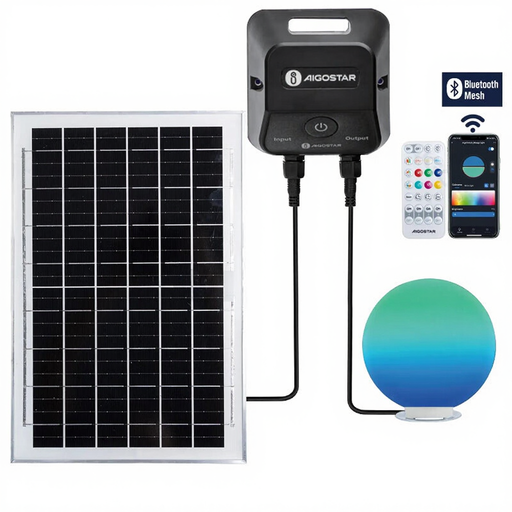
Why it's a match: For users who want full control over their garden lighting. The app allows you to control brightness, color (RGB), and color temperature (CCT), create schedules, and network multiple lights into one system.
The large 8000 mAh battery and efficient monocrystalline solar panel ensure that there is enough energy for a long runtime, even when using the smart features. The IP65 rating also guarantees weather resistance.
Complete control over lighting scenarios via an app, thanks to Bluetooth Mesh technology. The RGBCCT function allows for seamless adjustment of millions of colors and shades of white.
We have compiled a full, up-to-date list of products that fully meet these strict selection criteria and safety regulations.
Yes, solar lights do work in the darker months, but with reduced performance. The shorter days and more frequent cloud cover reduce charging time and intensity. Models with high-efficiency monocrystalline solar panels and large battery capacities are better suited for winter operation. Placement with maximum, unshaded sun exposure is crucial.
The IP rating indicates how well a light is protected against the ingress of solids (first digit) and liquids (second digit). IP44 means protection against splashing water and is sufficient for sheltered areas. IP65 offers protection against jets of water and is a reliable choice for lights that are directly exposed to rain.
The lifespan varies greatly depending on quality. The LED bulbs themselves are very durable (often 15,000 hours or more). The limiting factor is usually the battery, which, depending on the type and usage, loses capacity after about 1 to 3 years and may need to be replaced. High-quality materials and a high IP rating also contribute significantly to the overall lifespan of the light.