
Lieferung heute & morgen

Qualitätsgarantie

Willkommens-Angebote freischalten: KOSTENLOSE Lieferung | Bis zu 80 % RABATT | Kostenlose 30-Tage-JoyPlus-Testphase
App herunterladen
Solar lights for outdoor areas do not require a fixed power connection and can be used flexibly in many locations. However, not every light automatically provides reliable illumination. The installation location, IP rating, battery capacity and realistically expected lighting duration are all crucial factors.
With LED lights, the wattage alone is not a reliable indication of visible brightness. It primarily describes electrical power consumption. When choosing a solar light, lumens, beam angle and the position of the light source are also relevant. Decorative solar garden lighting, for example, does not need to provide the same light output as a solar floodlight for a driveway.
The ratings IP44, IP65 and IP67 describe protection against the ingress of foreign objects and water:
A waterproof solar light should therefore be chosen to suit its location. IP44 may be sufficient for a sheltered balcony or flower bed, while an exposed light mounted on a house wall may require a higher level of protection. However, no IP rating replaces correct installation or regular checks for cracks and damaged seals.
Claims such as ‘up to 12 hours’ generally refer to specific conditions. In winter, during heavy cloud or in a shaded location, the battery will charge less. Dirt on the solar panel also reduces charging performance. The panel should therefore receive as much direct sunlight as possible and should not be positioned beneath trees, roof overhangs or next to tall walls.
A solar path light with a ground spike is suitable for soft ground such as lawns or flower beds. In hard, stony soil, installation can be difficult. For a house wall or driveway, a solar floodlight with a separate solar panel is more practical if the light itself would be in the shade. Also check that the installation location provides enough space for the desired beam area.
Pay attention to the battery type, stated capacity and charging time. A model with 10,000 mAh, such as the Aigostar floodlight listed below, offers different performance potential from a small decorative light with 40 mAh. Actual operating time also depends on light intensity, operating mode, temperature and sunlight levels.
With automatic solar lighting, the on/off switch should be activated before first use. After that, depending on the model, the light switches on in darkness and off in daylight. Motion-activated lighting can help conserve the battery, as full brightness is only activated when movement is detected.
For paths, steps and driveways, consistent illumination for orientation is the priority. For flower beds, balconies or patios, light colour and design may be more important. An LED solar light with neutral or cool white light improves visibility, while a solar string light or RGB solar garden light is mainly used to create decorative accents. With coloured products, check whether the lighting modes are saved permanently and how many LEDs are actually included.
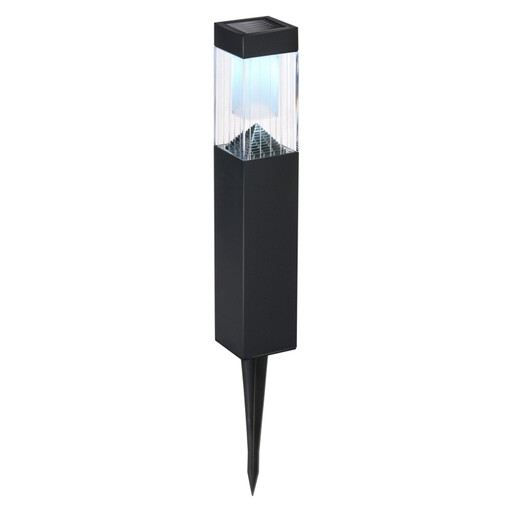
Why this product suits this profile: Standing 34 centimetres tall and fitted with a ground spike, this compact solar light is designed for simple marking along garden paths, flower beds or small driveways. Two LEDs and one AAA battery are specified.
The clear dimensions make it easier to plan where to place the light. However, buyers should not expect high area-wide brightness for functional illumination and should choose a location with direct sunlight.
Ground spike for tool-free installation; black design; two integrated LEDs.
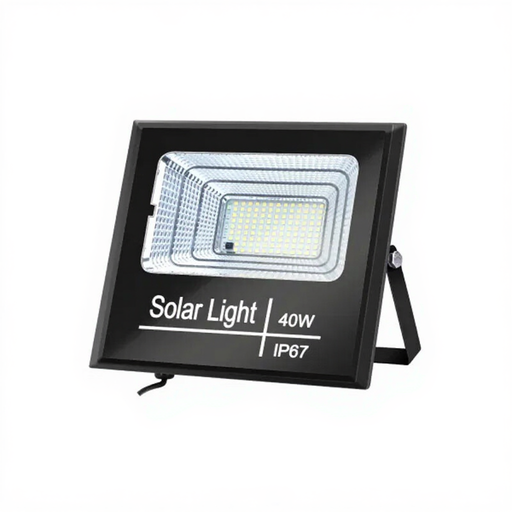
Why this product suits this profile: This floodlight has a separate solar panel, a stated battery capacity of 10,000 mAh and a possible lighting duration of up to 12 hours. This makes it easier to position around buildings, walls or larger outdoor areas.
The stated IP67 rating and separate panel position address two typical issues: exposure to the weather and insufficient sunlight at the light head. Installation must still be carried out according to the instructions.
Aluminium and glass construction; separate solar panel; IP67 according to the product specifications.
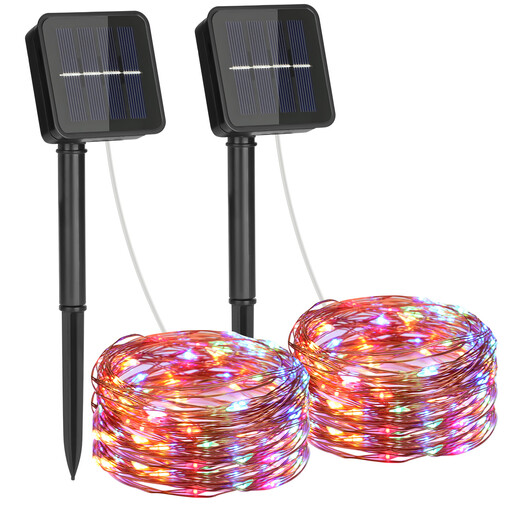
Why this product suits this profile: Two 12-metre string lights, each with 120 multicoloured LEDs, are suitable for patios, balconies, garden parties and seasonal decorations. Eight lighting modes and a memory function are specified.
The product details specify the charging time, expected lighting duration and IP65 rating. It is important to remember that IP65 protects against rain and splashing water, not immersion. The solar panel must not be left permanently in water.
Two 12-metre string lights; 120 LEDs per string; eight modes with memory function.
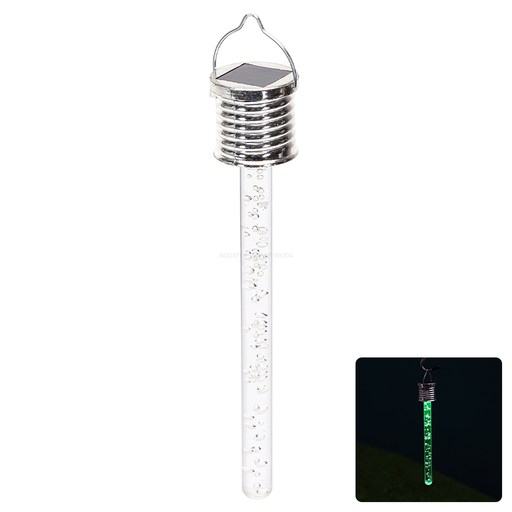
Why this product suits this profile: With its Bubble Stick design, this RGB solar garden light is intended to add colourful accents to flower beds, lawns and patios. The product specifications state a charging time of four to six hours and 8 to 12 hours of illumination.
The IP44 rating is explicitly stated. The light should therefore not be placed in water and is better suited to a location with controlled exposure to splashing water.
RGB light; stainless-steel look; automatic switching on at dusk and off in daylight.
Solar lights do not incur ongoing electricity costs through the household power supply while in operation. However, the battery is a wear part and may lose capacity depending on usage, temperature and charging cycles. Clean the solar panel regularly with a soft, dry cloth. Before the colder season begins, check the housing, cables and fixings. With string lights, the panel should be positioned so that it is not shaded by overhanging branches or decorations.
This depends on the model and the amount of sunlight. The product specifications, for example, state four to six hours for the Aigostar Bubble Stick RGB and six to eight hours for the VIVREAL string lights. In winter or cloudy weather, charging may take longer.
Many models are designed for outdoor use. The stated IP rating and permitted temperature range are the key considerations. Frost, snow and prolonged periods of bad weather can reduce the lighting duration. Products with damaged housings or batteries should not be used further.
During normal operation, no electricity is drawn from the household power supply because the solar panel charges the battery. Costs may arise later from replacing the battery or purchasing spare parts. When choosing a product, it is therefore sensible to look for accessible batteries, clear manufacturer information and a suitable IP rating.
We have put together a complete, regularly updated list of products that fully meet these strict selection criteria and the safety regulations applicable in the EU.