
Lieferung heute & morgen

Qualitätsgarantie

Willkommens-Angebote freischalten: KOSTENLOSE Lieferung | Bis zu 80 % RABATT | Kostenlose 30-Tage-JoyPlus-Testphase
App herunterladen
The right lighting can transform a garden, patio, or balcony. It not only creates ambiance but also enhances usability and safety after dark. However, many are deterred by the effort and cost of permanently installed outdoor lighting. Outdoor solar lights offer a practical and energy-efficient alternative. They require no wiring, incur no electricity costs, and can be placed flexibly.
This article serves as a guide. We will introduce various types of solar lights and present a selection of models designed for different applications—from decoration to security.
The selection of solar garden lights is vast. To make an informed decision, a few technical specifications are crucial.
The brightness of a light is measured in lumens (lm). For subtle balcony decor or accent lighting, models with 10 to 100 lumens are often sufficient. However, if you are looking for a functional light to illuminate paths or a security light, you should consider models with 300 lumens or more. The light colour, measured in Kelvin (K), influences the mood:
Since outdoor lights are exposed to the elements, the IP rating is a critical quality feature. It indicates how well a light is protected against the ingress of foreign objects and water. For outdoor use, an LED outdoor solar light should have at least an IP44 rating (protection against splashing water). For unprotected locations exposed to heavy rain, a higher rating like IP65 (dust-tight and protected against water jets) or higher is recommended to ensure longevity. Therefore, make sure the light is declared as waterproof.
The core component of any solar light is the battery, which stores the energy collected during the day. Its capacity (in mAh) determines the runtime. Many modern lights come with useful additional features. A dusk-to-dawn sensor automatically switches the light on at dark and off at dawn. A solar floodlight with a motion sensor activates full brightness only when movement is detected, which saves energy while also enhancing security.
Based on different use cases, we have compiled a selection of solar lights that cater to various needs.

Why it stands out: This solar string light is distinguished by its flexible copper wire, which can be effortlessly wrapped around railings, plants, or other objects. With eight different lighting modes, it offers versatile design options for a personalised atmosphere.
Features:
Who is it for? Ideal for anyone looking for flexible and decorative lighting for garden parties, holidays, or simply to enhance a balcony, patio, or garden.
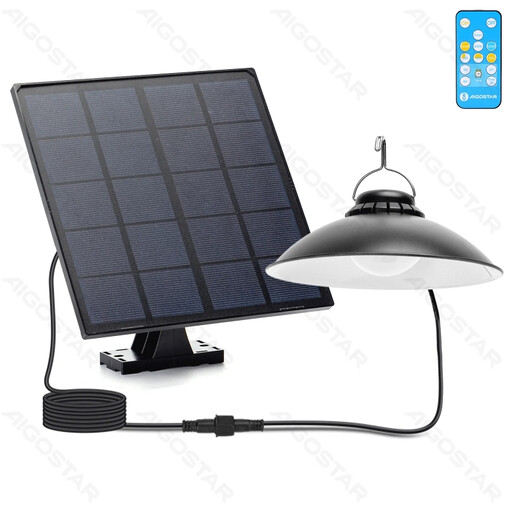
Why it stands out: This pendant light solves a common problem: lighting covered areas. Thanks to the separate solar panel, connected to the light via a 3-metre cable, the lamp can hang inside a garden shed, gazebo, or under an awning, while the panel is placed in full sun.
Features:
Who is it for? Perfect for garden shed lighting or for covered patios and balconies where the light itself is not exposed to direct sunlight.
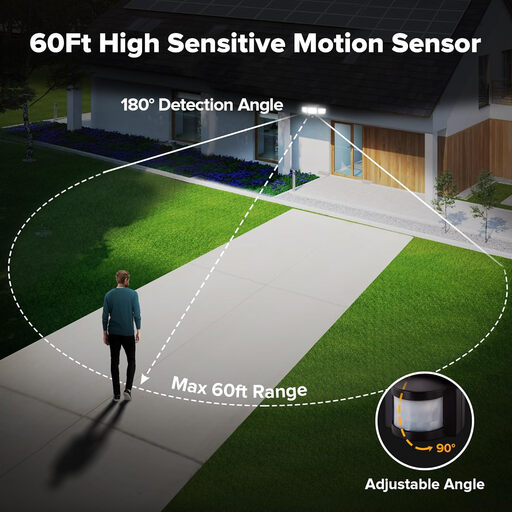
Why it stands out: This solar floodlight with a motion sensor is designed for maximum brightness and wide coverage. With 3000 lumens and three adjustable light heads, it provides intense illumination for driveways, garages, or dark areas of your property as soon as motion is detected.
Features:
Who is it for? An excellent choice for homeowners who need a powerful security light for deterrence and to safely illuminate paths and entrance areas.
The models presented here already cover a wide range. However, every outdoor space is unique and may require a different solution. If you are looking for more inspiration or specific designs, you will find a great variety with us.
Discover our wide selection of patio lighting and find the right solar solution for your home.
1. Do solar lights work in winter or on cloudy days? Yes, solar panels also charge in diffuse light, although much more slowly than in direct sunlight. On cloudy days or in winter, the runtime is therefore often shorter. Optimal positioning of the solar panel facing south can improve charging performance during the darker months.
2. What is the lifespan of outdoor solar lights? The lifespan depends on the quality of the components. The LEDs themselves are very durable (often 50,000 hours or more). The limiting factor is usually the battery, which loses capacity after about 1 to 3 years, depending on the type and usage. However, on many models, the battery can be easily replaced.
3. Do solar lights need to be brought indoors during winter? Models with a high protection rating like IP65 are designed for year-round use and can withstand rain, snow, and frost. Extreme cold can temporarily affect battery performance. If you have decorative lights with a lower protection rating, it may be wise to bring them indoors over the winter to extend their lifespan.