
Lieferung heute & morgen

Qualitätsgarantie

Willkommens-Angebote freischalten: KOSTENLOSE Lieferung | Bis zu 80 % RABATT | Kostenlose 30-Tage-JoyPlus-Testphase
App herunterladen
Outdoor solar lights combine wireless installation with decorative lighting. However, not every model is automatically the right choice. What matters is the actual light output, protection from the weather and how you plan to use it. If you focus only on wattage or eye-catching design, you could miss important details.
For LED lights, the stated wattage alone tells you little about how bright a light will appear. Luminous flux, measured in lumens, is a more useful guide. A decorative solar table lamp with 90 lumens gives off soft light for a table or side table. A larger LED garden lamp with 350 lumens can illuminate a wider area.
As a general guide:
The actual effect also depends on the beam angle, mounting height and light colour.
An IP44 solar light is protected against solid objects larger than 1 millimetre and splashing water from different directions. It could, for example, suit a partially sheltered balcony or a covered patio.
An IP65 solar light is dust-tight and protected against water jets. This can be useful in more exposed outdoor areas. However, the IP rating is no substitute for correct installation. Follow the manufacturer’s instructions for openings, charging ports and moving parts.
Solar lights need enough daylight to charge. A shady balcony, a north-facing wall or a dirty solar panel can reduce charging performance. The light may also stay on for less time in winter or after several overcast days.
So check:
A warm-white solar light of around 2700 to 3000 Kelvin usually gives a subtle effect outdoors, making it well suited to meals, conversation and decorative patio lighting. Neutral white light can feel more practical. An RGB solar light lets you add splashes of colour, but it should not automatically be treated as a replacement for bright path or security lighting.
For products with several light colours, check how you change the settings: using a switch, remote control, app or Bluetooth. A Bluetooth solar light can be useful if you have several lights, but it requires a compatible smartphone and a stable connection in the intended area.
A solar table lamp needs a stable, level surface. Avoid placing it somewhere water will collect on the surface. A solar floor lamp is designed for paths, flower beds or larger patio areas, but it needs enough floor space and a sturdy construction.
Compact models with a carry handle or a lightweight design are handy for balconies and patios. In the garden, also consider whether the solar panel will remain out of the shade and whether you can position the light somewhere it is less likely to be knocked over.
Plastic, polycarbonate, steel and wood can all have different care requirements. Clean solar panels regularly with a soft cloth. For wooden surfaces, follow the manufacturer’s care instructions. Whatever the model, keep charging ports closed and protect the light in exceptional weather conditions as directed by the manufacturer.
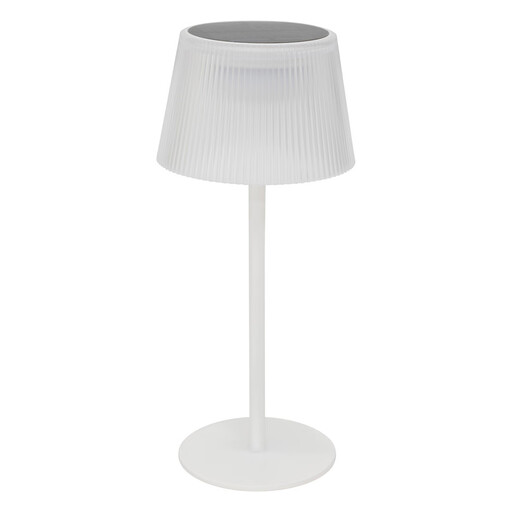
Why this product suits this profile: This compact solar table lamp is designed for smaller seating areas on balconies or patios, and gives off warm-white light at 90 lumens.
Details on its IP44 rating, 5 to 6-hour charging time and battery life of around 6 hours make its limitations clearer than a design description alone.
30 cm tall, with 12 LEDs, warm-white light and a timer function.
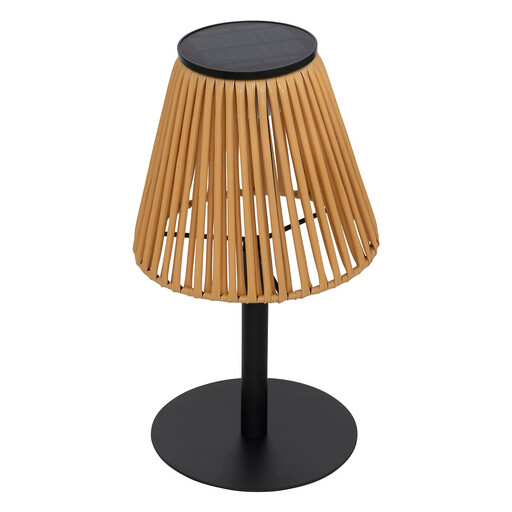
Why this product suits this profile: This model combines a steel stand, a woven shade and warm-white light to create decorative patio lighting.
Dual charging via solar power and USB means you’re less reliant on the weather. Its IP44 rating also indicates that it’s better suited to a relatively sheltered spot.
90 lumens, 12 LEDs, a timer, a stated battery life of 6 hours and a stated two-year warranty.
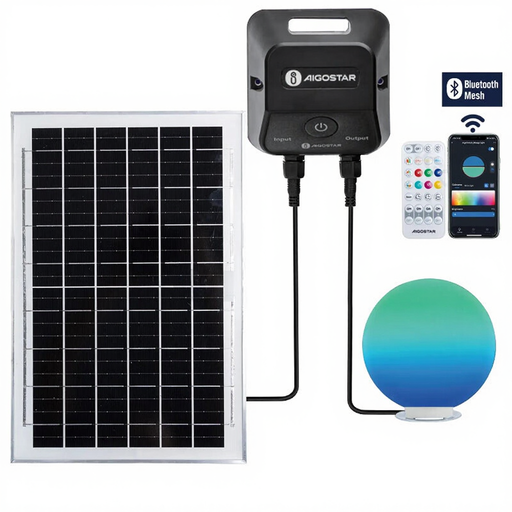
Why this product suits this profile: This solar floor lamp is for anyone looking to combine garden lighting with RGB colours, warm and daylight tones, and several control options.
The specifications list an IP65 rating, a charging time of 4 to 6 hours, 350 lumens and a maximum battery life of up to 24 hours. This makes it easier to assess the design and performance separately.
RGB, warm white and daylight; Bluetooth mesh control for over 200 devices, according to the product details; and a 12 W solar panel.
We’ve put together a complete, regularly updated list of products that meet these strict selection criteria and fully comply with the safety regulations in force in the EU.
Keep the solar panel as free as possible from shade and dirt. Avoid placing it close to bright artificial light sources, as these may cause the dusk sensor to switch on later or not at all. Table lamps need a firm, dry surface. Position floor lamps where they won’t be damaged by gardening or foot traffic.
Run time depends on battery capacity, charge level, light mode and weather. Manufacturer claims such as ‘up to 24 hours’ usually refer to specific operating conditions. The light may stay on for less time at high brightness or when running RGB colours continuously. Always check that the stated run time applies to the light mode you want to use.
During normal solar operation, they don’t use electricity from the mains. The solar panel collects energy during the day and stores it in the battery. Models with USB charging may also need mains electricity if shade or overcast weather prevents the solar panel from charging the battery sufficiently.