Solar lights use photovoltaics to convert solar energy into electrical power, which is stored in an integrated rechargeable battery. At dusk, this battery powers the LED light source. This process enables off-grid garden lighting without relying on the public power supply. The efficiency and reliability of a solar light depend on the quality of its core components: the solar panel, the battery, and the LED unit.
Buyer's Guide: Technical Selection Criteria for Solar Lights
Choosing the right solar light is based on objective technical parameters that define its intended application and expected performance.
1. The Solar Panel: Monocrystalline vs. Polycrystalline
The performance of the solar panel determines the battery's charging speed.
- Monocrystalline Panels: These have a higher efficiency rating and perform relatively well even in diffuse light (e.g., on overcast days). They are often recognisable by their uniform dark colour.
- Polycrystalline Panels: These are less expensive to manufacture but require more direct sunlight to achieve the same charging performance. Their characteristic blue, shimmering texture makes them easy to identify.
2. The Battery: Capacity and Type
The battery capacity, specified in milliampere-hours (mAh), is crucial for the light's runtime. A higher mAh value allows for a longer illumination period on a full charge.
- Nickel-Metal Hydride (Ni-MH) Batteries: An established standard for many garden lights. They offer a solid lifespan for seasonal applications.
- Lithium Iron Phosphate (LiFePO4) Batteries: This newer technology is distinguished by a longer cycle life, improved thermal stability, and a greater overall lifespan. They are often found in more powerful, high-performance models.
3. Protection Rating (IP Class)
The IP (Ingress Protection) rating indicates how resistant the housing is to the ingress of foreign objects and water. For outdoor use, waterproof solar lights are essential.
- IP44: Protection against splashing water from all directions. Sufficient for sheltered areas, such as a covered solar balcony light setup.
- IP65: Complete protection against dust and water jets from any angle. This is a robust standard for lights fully exposed to the elements, such as solar path lights.
4. Light Specifications: Lumens and Colour Temperature
- Lumens (lm): Indicates the brightness of the light source. For pathway orientation, 10–50 lumens per light is often sufficient. To illuminate a patio with solar terrace lights, models with 100–500 lumens are a practical choice.
- Colour Temperature (Kelvin, K): Describes the colour of the light.
- Warm White (< 3300 K): Creates a cosy, inviting atmosphere.
- Neutral White (3300–5300 K): Provides functional, clear illumination.
- Cool White (> 5300 K): Has a modern feel and is often used for functional security lighting.
5. Sensors and Automation
An integrated dusk-to-dawn sensor is standard for solar lights. It activates the light as ambient light fades and deactivates it at sunrise to begin the charging cycle. Some models also feature motion sensors that temporarily increase brightness when movement is detected.
Our Top Solar Light Picks for 2026
Based on technical specifications and practical utility, here are our recommendations for various applications.
1. Vivreal Solar Deck Lights (12-Pack)
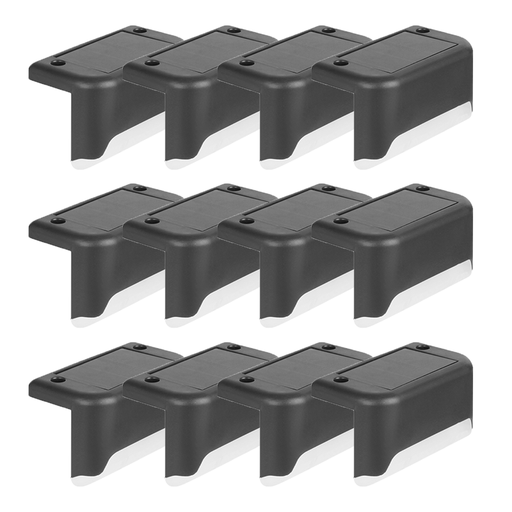
- Why We Recommend It: This set is designed for subtle marking of paths, steps, and railings. The corrosion-resistant ABS plastic housing and compact design minimise tripping hazards. The automatic on/off function ensures low-maintenance operation.
- Advantages:
- Solar-Powered: No wiring or electricity costs.
- Warm White Light: The glare-free, warm white light enhances safety on stairs and pathways.
- Automatic Mode: Charges in 4–5 hours in direct sunlight and turns on automatically at dusk.
- Easy Installation: Mounts easily with the included screws.
- Weatherproof: The ABS construction and sealed solar panel are designed for outdoor use.
- Best For: Users looking for functional and discreet safety lighting for decks, fences, stairs, or patio edges. The 12-pack offers a cost-effective solution for covering larger areas.
2. VIVREAL L1549 Solar Garden Lights (8-Pack)
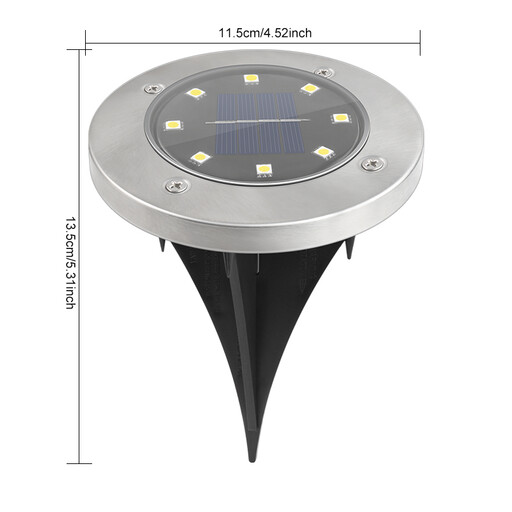
- Why We Recommend It: These solar garden lights combine a classic aesthetic with robust materials. The use of stainless steel for the body and an IP65 protection rating make them a durable choice for exposed garden areas. The monocrystalline solar panel ensures reliable charging.
- Advantages:
- Material Combination: Housing made of stainless steel and weather-resistant ABS plastic.
- IP65 Protection Rating: High resistance to rain, snow, and dust.
- Dusk-to-Dawn Sensor: Fully automatic operation from dusk until dawn.
- Wide Coverage: The 8-pack is ideal for illuminating garden paths, flowerbeds, or lawns.
- Best For: Garden owners seeking a classic and weatherproof lighting solution in the form of ground stakes to accent pathways and plants.
3. Aigostar Solar LED Pendant Light
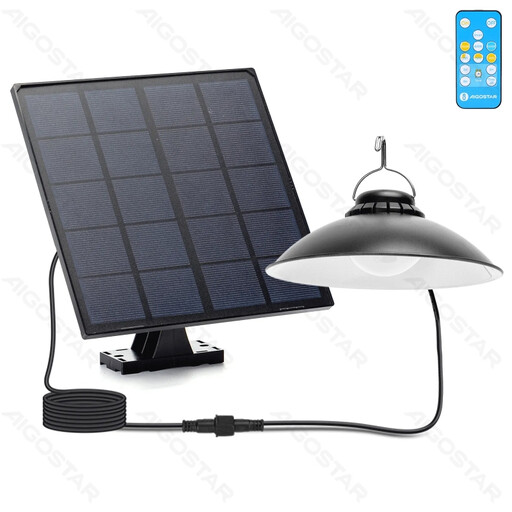
- Why We Recommend It: This outdoor solar pendant light offers excellent flexibility thanks to its separate solar panel, connected to the light via a 3-metre cable. This allows the light to be installed in a covered area (e.g., a gazebo or balcony) while the panel is placed in direct sunlight. The high-performance LiFePO4 battery and adjustable colour temperature are notable technical features.
- Advantages:
- Adjustable Colour Temperature: Choose between Warm White (3000 K), Neutral White (4000 K), and Cool White (6500 K).
- LiFePO4 Battery Technology: Offers superior longevity and safety.
- High Brightness: At 500 lumens, this light is suitable for illuminating work or seating areas.
- Flexible Installation: The long cable allows the panel and light to be placed in separate locations.
- IP65 Protection Rating: Both the light and the panel are dust-tight and protected against water jets.
- Best For: Users who need powerful and versatile lighting for covered outdoor areas like balconies, patios, gazebos, or carports, where the light fixture itself cannot be exposed to direct sunlight.
More Lighting Options for Your Outdoor Space
If the featured models don't perfectly match your requirements, you can find other specialised solutions in our collection. Discover additional designs and functional lighting concepts in our Outdoor Ceiling category.
Frequently Asked Questions (FAQ)
1. How long do solar lights stay on? The runtime depends on the battery capacity (mAh), the intensity and duration of sunlight during the day, and the LED's power consumption. After a full charge on a sunny day, the typical runtime is between 6 and 12 hours.
2. Do solar lights work in winter or on cloudy days? Yes, but with reduced performance. Monocrystalline solar panels can still use diffuse light to charge the battery. However, the charging time will be longer, and the runtime at night may be shorter than in the summer.
3. Do I need to bring solar lights inside during the winter? Models with a high IP rating (e.g., IP65) and robust materials like stainless steel or high-quality ABS are designed for year-round use. In extreme sub-zero temperatures, battery performance may temporarily decrease. Regularly cleaning snow and debris from the solar panels will ensure they continue to charge effectively.
Written by: Joybuy Product Recommendation Officer

