
Lieferung heute & morgen

Qualitätsgarantie

Willkommens-Angebote freischalten: KOSTENLOSE Lieferung | Bis zu 80 % RABATT | Kostenlose 30-Tage-JoyPlus-Testphase
App herunterladen
Choosing the right outdoor solar lights can be a challenge. The market is filled with promises of extreme brightness and durability. However, the products often fail to meet expectations, leading to disappointment. As your Joybuy Product Recommendation Officer, I'll help you recognise the typical pitfalls and make an informed decision based on facts, not marketing hype.
Before you invest, you should be aware of the most common issues that can lead to a bad purchase. Many products fail to meet basic requirements for outdoor use.
To avoid these traps, focus on verifiable technical data. These three parameters are crucial for the performance and longevity of your outdoor lighting.
The IP (Ingress Protection) rating indicates how well an electrical device is protected against the ingress of foreign objects (first digit) and water (second digit). For outdoor use, the following values are relevant:
Lumen is the unit of measurement for luminous flux and describes the total amount of light a lamp emits. However, the lumen number alone is only half the story. The intended use is crucial:
A solar lamp with a motion sensor not only increases security but also significantly conserves the battery. Instead of staying on all night, it activates only when needed. Look for models with adjustable modes:
Here are some recommendations tailored to specific user profiles that take the above criteria into account.
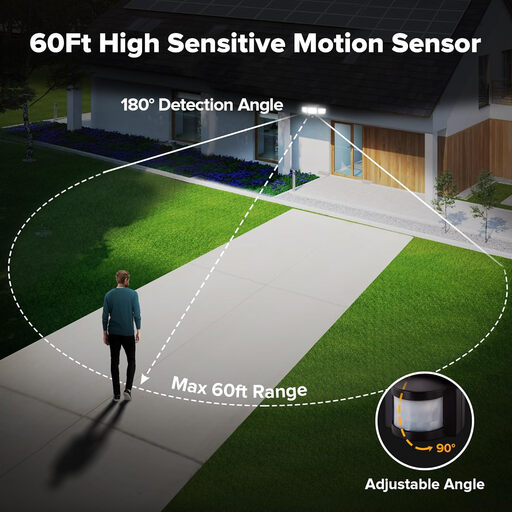
Why This Fits Their Persona: Ideal for wide-area monitoring of driveways, gardens, or backyards. The high brightness and sensitive motion sensor serve as a deterrent and increase property security.
The IP65 certification ensures that the light functions reliably even in heavy rain and snow and won't fail after a short time. The three lighting modes prevent unnecessary battery drain.
Three flexibly adjustable light heads for a 270° illumination angle. Motion detection with a range of up to 18 metres (according to the manufacturer).
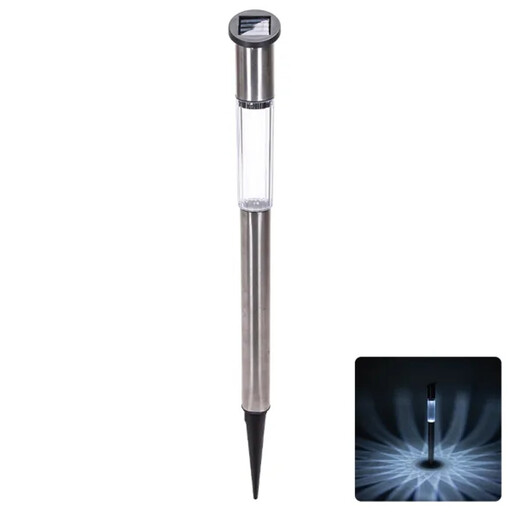
Why This Fits Their Persona: Perfect for creating an atmospheric ambiance along garden paths, in flower beds, or on the patio. The stainless steel design elegantly blends into the garden landscape.
This model doesn't promise excessive brightness but is clearly positioned as an accent light. The IP44 rating is sufficient for this purpose (splash protection) and is honestly declared.
No wiring required, simple installation by staking into the ground. The polycrystalline solar panel ensures reliable charging.

Why This Fits Their Persona: A versatile solar outdoor wall light for patios, balconies, or entrance areas. It provides strong illumination when needed without being obtrusive and is easy to install.
The combination of IP65 protection and a tempered glass panel on the solar module ensures high durability and weather resistance, which is a weak point in many all-rounder models.
Three adjustable lighting modes for different needs (security, ambiance, energy saving). The high light output of 3000 lumens (according to the manufacturer) ensures reliable illumination.
We have compiled a complete, up-to-date list of products that fully meet these strict selection criteria and safety regulations.
The lifespan of a solar light depends on the quality of its components. The LEDs themselves often have a very long life of 15,000 hours or more. The critical factor is the battery. High-quality lithium-ion batteries can last for several years before their capacity noticeably decreases. On many models, the battery can be replaced. The robustness of the housing and the quality of the solar panel are also crucial for a long service life of several years.
Yes, solar lights do work in winter, but with reduced performance. The shorter days and more frequent cloud cover reduce the charging time of the solar panel. This results in a shorter runtime at night. Models with high-efficiency solar panels and large battery capacities are better suited for winter use. Using a motion-activated mode instead of constant-on also helps to save energy and ensure functionality throughout the night.
No, and that is one of their biggest advantages. Solar lights are self-sufficient systems that draw their energy from the sun and store it in an internal battery. They do not require a connection to the power grid. Installation is therefore incredibly simple and requires no electrical work. Depending on the model, they are simply staked into the ground (ground spike) or mounted to a wall or post with a few screws.