
Lieferung heute & morgen

Qualitätsgarantie

Willkommens-Angebote freischalten: KOSTENLOSE Lieferung | Bis zu 80 % RABATT | Kostenlose 30-Tage-JoyPlus-Testphase
App herunterladen
Outdoor solar lights promise an easy and cost-effective way to illuminate gardens, pathways, and patios. With no wiring and no additional electricity costs, they are an attractive solution. However, the market is flooded with products whose performance claims often don't hold up in practice. Before you make a purchase, it's crucial to understand the most common pitfalls to avoid a bad investment.
Many buyers report lights that fail after a single rainy season or whose brightness is insufficient to safely light a path. The cause often lies in misleading product descriptions and exaggerated marketing claims.
The 3 Most Common Pitfalls When Buying Solar Lights:
To make an informed decision, you should check three core technical parameters. These will reveal the true performance and durability of a solar light.
The IP (Ingress Protection) rating indicates how well an electrical device is protected against the ingress of foreign objects (first digit) and water (second digit). For waterproof outdoor lights that are exposed to the elements, this is a critical criterion.
The brightness of a light is measured in lumens (lm). The required value depends entirely on the intended use case:
Also, pay attention to different lighting modes. Many models offer a dusk-to-dawn sensor with continuous light, a motion-sensor-only mode, or a combination of both.
The interplay between the battery and the solar panel determines how long your light will stay on after dark.
Based on these objective criteria, we have compiled a selection of products suitable for specific user profiles and requirements.
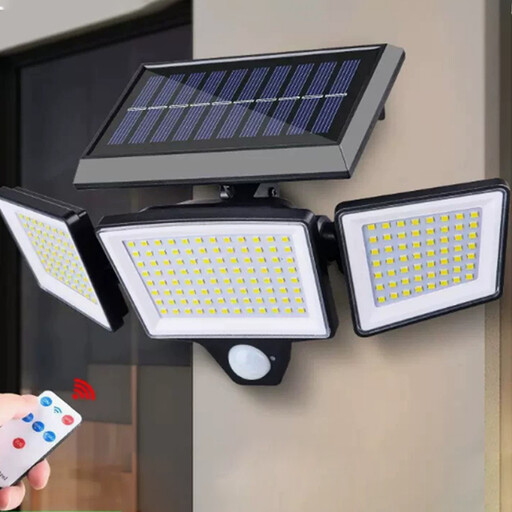
Why It's a Match: Ideal for large-area illumination of driveways, garages, or dark garden areas. The three adjustable heads allow for flexible customisation of the light field, while the sensitive motion sensor ensures reliable security.
The IP65 certification ensures protection against heavy rain. The 3000-lumen brightness is clearly declared for security purposes and is not marketed as purely ambient lighting.
Very high brightness and a wide 270° illumination angle thanks to three adjustable heads. According to the manufacturer, the motion sensor has a range of up to 18 metres.
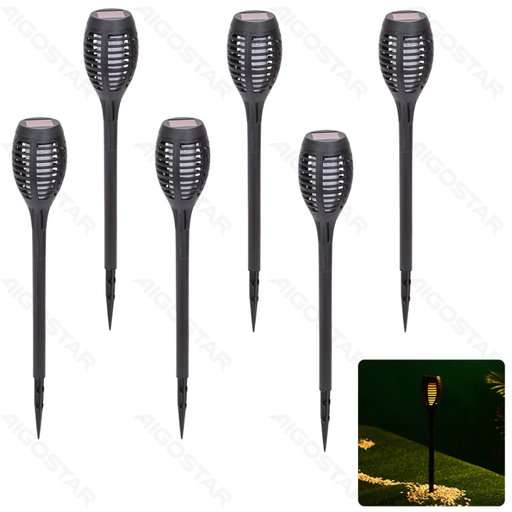
Why It's a Match: Perfect for anyone looking to create a warm and inviting atmosphere. The realistic flame effect of these solar garden torches is excellent for decorating pathways, flowerbeds, or for garden parties.
The focus is clearly on the decorative effect (warm white light at 2700K), not on misleading brightness claims. The IP44 rating is sufficient for its intended decorative use and is communicated transparently.
Creates an atmospheric mood with a realistic, flickering flame effect. Installation is straightforward by simply staking them into the ground.
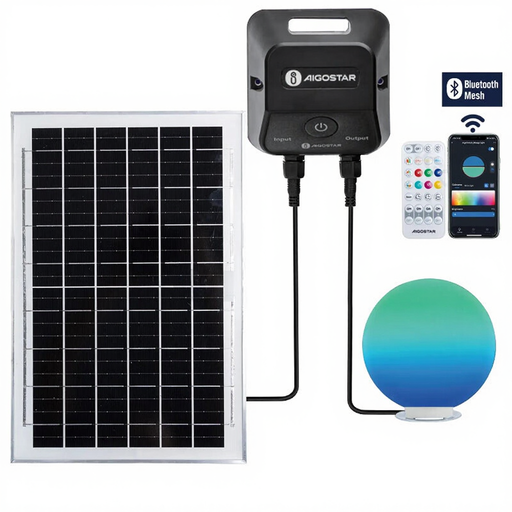
Why It's a Match: This light combines modern design with smart functionality. It is ideal for users who want to control their garden lighting via an app and create custom light scenes with different colours and effects.
Offers verifiable smart features instead of simple on/off automation. The robust construction with IP65 protection and a monocrystalline solar panel with an 8000mAh battery ensure reliable performance.
Control colour (RGBCCT), brightness, and effects via Bluetooth Mesh, which allows for networking over 200 devices. Ideal for a cohesive smart lighting concept.
We have compiled a complete, up-to-date list of products that fully meet these strict selection criteria and local safety regulations.
The lifespan of a solar light depends on several components. The LED solar lights themselves have a very long durability, often 15,000 hours or more. The battery is typically the component with the shortest lifespan and, depending on quality and use, may need to be replaced after a few years (if possible). With proper care and the appropriate IP rating, the solar panel and housing are very durable.
Yes, solar lights do work in winter and on cloudy days, but with reduced performance. The shorter days and lower sun angle mean the battery won't fully charge. This results in a shorter runtime at night. Models with high-quality monocrystalline panels and large batteries are better suited for winter operation.
The key to maximum performance is the orientation of the solar panel. Place the light so that the panel receives direct, unobstructed sunlight for several hours. Avoid locations in the shade of trees, buildings, or eaves. Also, regularly clean the panel of dust, leaves, or snow to maintain charging efficiency.